
What Exactly Is Arthritis?
Arthritis isn’t just one disease. It’s a group of over 100 conditions that cause joint pain, swelling, and stiffness. But not all joint pain is the same. Two types-osteoarthritis and rheumatoid arthritis-make up the vast majority of cases. If you’re dealing with aching knees, swollen fingers, or morning stiffness that won’t go away, knowing which type you have changes everything. The wrong treatment can waste time, waste money, and even make things worse.
Osteoarthritis: The Wear-and-Tear Type
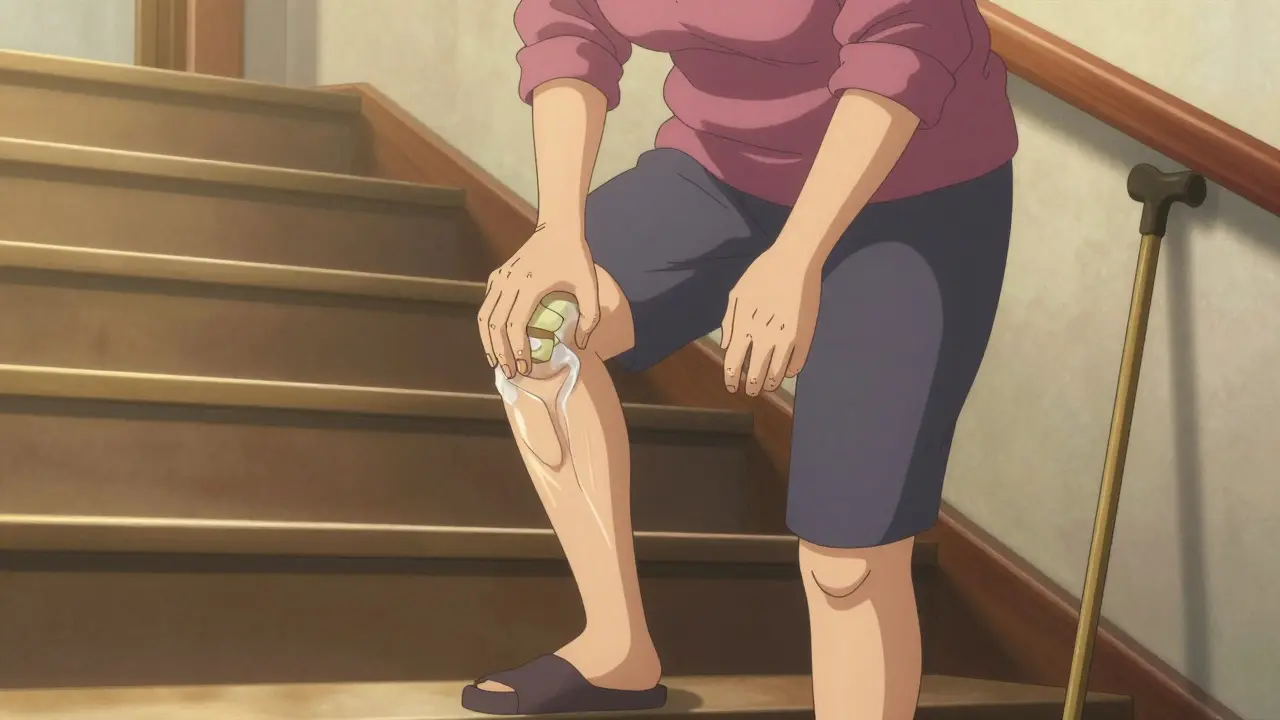
Osteoarthritis (OA) is what most people think of when they hear "arthritis." It’s the result of your joints breaking down over time. Cartilage-the soft cushion between bones-wears thin. Without it, bones rub against each other. That’s when pain, creaking, and swelling show up.
It usually starts slowly. You might notice stiffness after sitting for a while, or pain when climbing stairs or carrying groceries. The most common spots are knees, hips, lower back, and hands-especially the joints at the ends of your fingers. You might even see bony bumps there, called Heberden’s nodes.
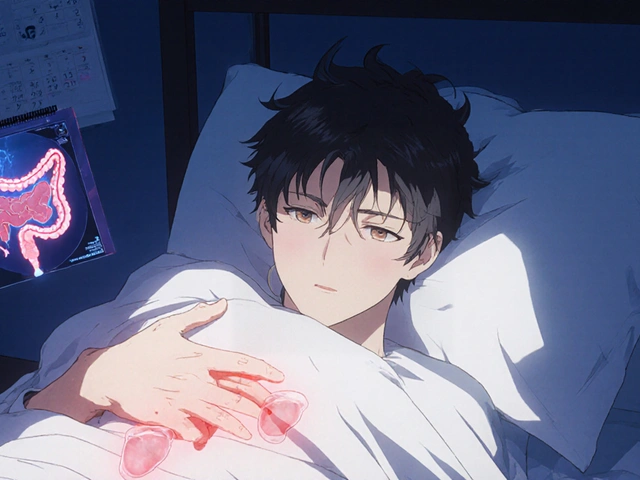
Unlike other types, OA doesn’t flare up suddenly. It creeps in. Morning stiffness usually lasts less than 30 minutes. Pain gets worse when you use the joint and improves with rest. There’s no fever, no fatigue, no rash. It’s localized. Just your joints.
Age is the biggest risk factor. After 50, your risk goes up fast. But weight matters too. Carrying extra pounds puts pressure on your knees. Losing just 5 kilograms can cut knee pain in half. Smoking doesn’t cause OA, but it slows healing. And if you’ve had a joint injury-like a torn ACL-you’re more likely to develop OA there later.
Rheumatoid Arthritis: The Body Turns on Itself
Rheumatoid arthritis (RA) is different. It’s not about wear and tear. It’s about your immune system going rogue. Instead of protecting you, it attacks the lining of your joints. That causes inflammation. And inflammation doesn’t just hurt-it destroys.
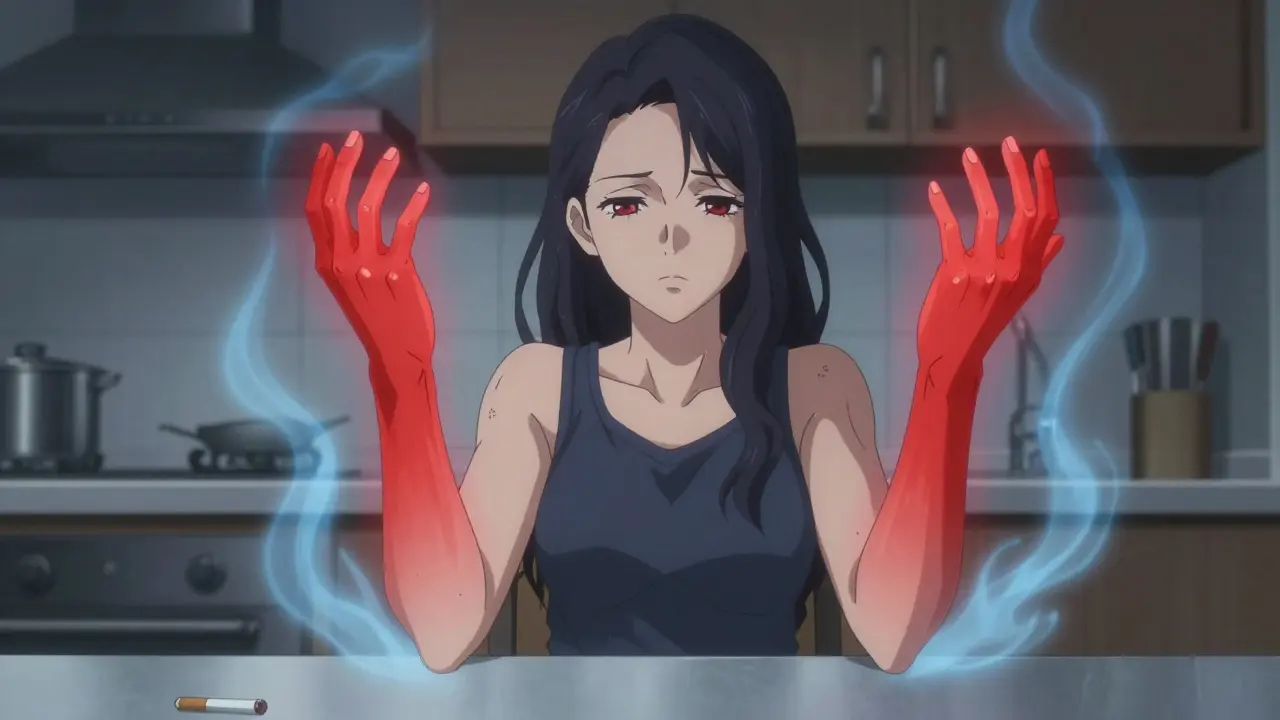
RA doesn’t wait until you’re old. It can strike in your 30s, 40s, or even earlier. Women are three times more likely to get it than men. Genetics play a role, but smoking is the biggest environmental trigger. Smokers are two to three times more likely to develop RA.
Here’s how you can tell it’s RA, not OA: stiffness lasts longer than an hour in the morning. Pain hits both sides of your body at once-both wrists, both knees, both ankles. It’s symmetrical. You might feel tired all the time, lose your appetite, or get low-grade fevers. Some people even develop hard lumps under the skin near their elbows-called rheumatoid nodules.
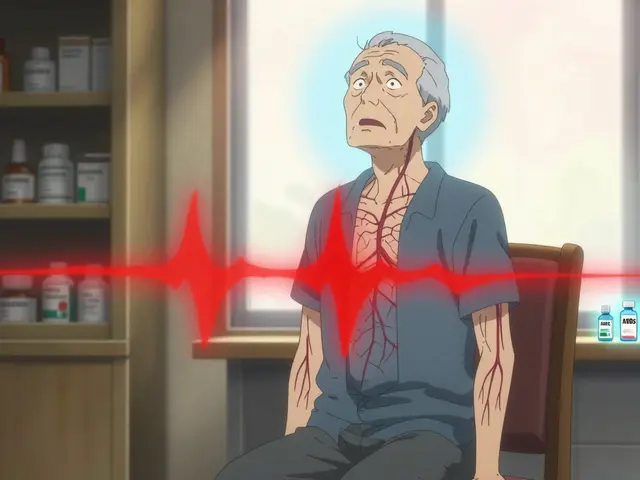
RA doesn’t stop at the joints. It can hurt your lungs, heart, eyes, and blood vessels. That’s why it’s called a "systemic" disease. Left untreated, it can cause permanent joint damage in just a few months. That’s why early diagnosis is critical. The first three to six months after symptoms start are the most important window to start treatment.
How Doctors Tell Them Apart
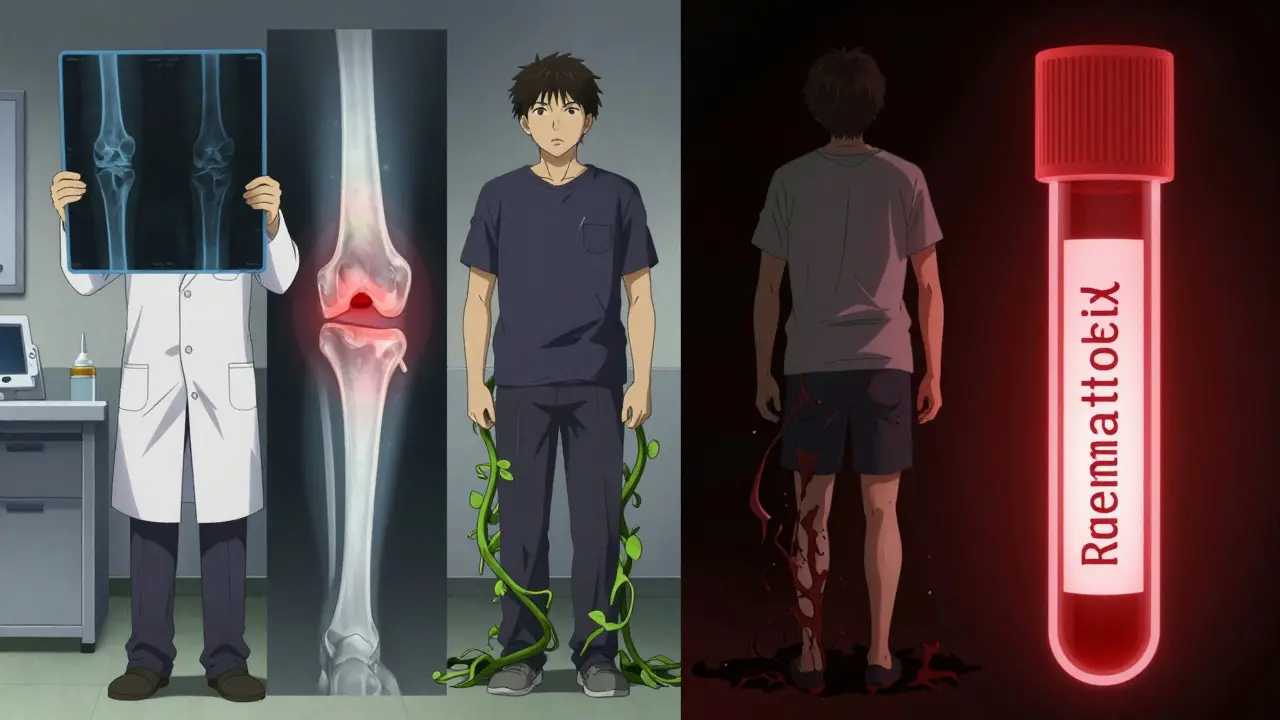
Doctors don’t guess. They test. For osteoarthritis, they usually start with an X-ray. You’ll see narrowed joint space, bone spurs, or changes in the bone shape. No blood test is needed.
For rheumatoid arthritis, blood tests are key. They look for rheumatoid factor (RF) and anti-CCP antibodies. These markers show your immune system is attacking your joints. But even if those tests are negative, RA can still be there. That’s why doctors also check for swelling patterns, morning stiffness, and systemic symptoms.
Ultrasound and MRI are becoming more common for early RA. They can spot inflammation before X-rays show damage. For OA, these scans are rarely needed unless the diagnosis is unclear.
Other Types of Arthritis You Should Know
Not all arthritis is OA or RA. Here are two others you might hear about:
- Psoriatic Arthritis: This one shows up in people with psoriasis-a skin condition with scaly patches. It can cause swollen fingers that look like sausages, and pain where tendons attach to bones. It often affects the spine too.
- Gout: Gout hits suddenly. One joint, usually the big toe, turns red, hot, and excruciatingly painful. It’s caused by uric acid crystals building up in the joint. Diet plays a big role-red meat, alcohol, and sugary drinks can trigger it.
There are also juvenile forms of arthritis that affect kids, and post-infection arthritis after illnesses like Lyme disease. But OA and RA are the big two-accounting for over 90% of all arthritis cases.
Treatment: One Size Does Not Fit All
OA and RA need completely different treatments.
For OA, the goal is to protect the joint and manage pain. Weight loss helps. Physical therapy strengthens muscles around the joint. Over-the-counter pain relievers like acetaminophen or NSAIDs (ibuprofen, naproxen) are first-line. Injections of corticosteroids or hyaluronic acid can give temporary relief. For severe cases, joint replacement surgery is common-over 90% of all knee and hip replacements are for OA.
For RA, you can’t just treat the pain. You have to stop the immune system from attacking. That means disease-modifying drugs, or DMARDs. Methotrexate is the most common. It can slow or even stop joint damage. If that’s not enough, biologics-injectable drugs that target specific parts of the immune system-are used. These can cost $20,000 to $50,000 a year, but they work. About half of people with RA can reach remission if treated early.
Here’s the bottom line: If you have RA and get treated like you have OA, your joints could be destroyed before you even realize what’s happening. That’s why getting the right diagnosis isn’t just helpful-it’s life-changing.
What You Can Do Right Now
If you’re experiencing joint pain:
- Track your symptoms. When does it hurt? How long is the stiffness? Are both sides affected?
- See a doctor if pain lasts more than a few weeks or wakes you up at night.
- Don’t assume it’s just "getting old." Early RA can be stopped. Late OA can be slowed.
- Keep moving. Even gentle exercise like walking or swimming helps both types.
- If you smoke, quit. It’s the biggest modifiable risk for RA.
Arthritis doesn’t have to mean giving up your life. But you need to know what you’re dealing with. Get tested. Get informed. And don’t let a misdiagnosis steal your mobility.
Can osteoarthritis turn into rheumatoid arthritis?
No. Osteoarthritis and rheumatoid arthritis are completely different diseases with different causes. OA is mechanical wear and tear. RA is an autoimmune condition. One doesn’t become the other. But it’s possible to have both at the same time-especially as you age. That’s why accurate diagnosis matters.
Is arthritis only a problem for older people?
Not at all. While osteoarthritis is more common after 50, rheumatoid arthritis can start anytime-even in your 20s or 30s. Juvenile idiopathic arthritis affects children under 16. Gout often hits men in their 40s. Arthritis doesn’t discriminate by age.
Can blood tests confirm osteoarthritis?
No. There’s no blood test for osteoarthritis. Diagnosis is based on symptoms, physical exam, and X-rays. Blood tests are used to rule out other types, like rheumatoid arthritis or lupus. If your doctor orders blood work for joint pain, they’re likely trying to exclude an autoimmune cause.
Does weather really affect arthritis pain?
Many people report worse pain in cold, damp weather. While science hasn’t proven a direct link, it’s likely related to changes in barometric pressure affecting joint tissues. It doesn’t mean the disease is getting worse-just that the pain feels more intense. Staying warm and moving regularly can help.
Are natural remedies like turmeric or fish oil effective?
Some studies show turmeric and omega-3s from fish oil may reduce inflammation slightly. They’re not replacements for medical treatment, especially for RA. But they can be helpful as part of a broader plan-along with exercise, weight control, and prescribed meds. Always talk to your doctor before starting supplements, especially if you’re on blood thinners or DMARDs.
What Happens If You Wait Too Long?
With osteoarthritis, waiting might mean more pain and slower movement. You might need surgery sooner. But with rheumatoid arthritis, waiting can mean permanent damage. Joint deformities, loss of function, and damage to organs can happen within months if RA isn’t treated. That’s why the phrase "time is joint" is used by rheumatologists. Every day counts.
If you’ve been told it’s "just arthritis" and no one’s checked which kind-you need a second opinion. Don’t settle for a label. Get the facts. Your future mobility depends on it.

Comments
I’ve been dealing with knee pain for years and thought it was just aging. This post broke it down so clearly - OA vs RA is night and day. I finally got tested and turns out it’s OA. Lost 6 kilos, started swimming twice a week, and my pain’s cut in half. No magic pill, just consistency.
lol so you're telling me Big Pharma doesn't want us to know that arthritis is just caused by 5G towers and glyphosate?? 🤔 I stopped eating gluten and now my joints glow at night. Also my cat says I'm cured.
As an American who’s seen too many ‘alternative medicine’ scams, I’m tired of people treating OA like it’s some mystical mystery. It’s wear and tear. You get old, you hurt. No need for biologics or $50k injections. Just move your body, stop whining, and get off the couch. Also, why are we even talking about India and Australia in a post about American healthcare? This is a U.S. problem, folks.
This is the kind of info I wish my doctor had given me when I was 32 and my fingers locked up. I had RA and thought I was just ‘stressed’. Took 18 months to get diagnosed. Now I’m on methotrexate and I can hold my coffee again. 🙌 Don’t ignore early signs - your future self will thank you. Also, turmeric tea helps a bit. Not a cure, but it’s cozy.
There’s something poetic about how OA is the quiet thief - slow, patient, stealing mobility one step at a time. RA is the wildfire - sudden, furious, burning through your whole system. We treat them like cousins when they’re strangers. The real tragedy isn’t the pain - it’s how long we wait to listen to our bodies. I’ve seen grandmas with OA walk 5 miles daily. I’ve seen RA patients in wheelchairs by 40. Diagnosis isn’t just medical - it’s a lifeline.
Interesting how the language of medicine mirrors cultural attitudes: OA is framed as inevitable, natural - almost honorable. RA is framed as betrayal, chaos, failure of the self. We accept joint wear as fate, but autoimmune disease as personal tragedy. Maybe that’s why RA patients feel so isolated. We don’t just need better drugs - we need better narratives.
My grandfather had OA. He’d say, ‘Son, your knees ain’t broken - they’re just tired.’ He walked 3 miles every morning till he was 89. Never took a pill. Just coffee, a good belt, and stubbornness. Maybe the real cure isn’t in the lab - it’s in the walk.
I’ve had both OA and RA. I didn’t know it until I got my first rheumatoid nodule - a hard lump under my elbow that looked like a marble someone had shoved in there. I screamed. My wife thought I was having a stroke. Turns out it was my immune system screaming back. I went from thinking I was just ‘getting old’ to realizing my body was at war. The difference? OA made me slow. RA made me feel like I was dying inside. One is aging. The other is betrayal. And no, you can’t just ‘tough it out’ with RA. That’s not strength - that’s suicide.
Just to clarify: anti-CCP antibodies are more specific than RF for RA, with a specificity of over 95%. False negatives occur in about 20–30% of early RA cases, so clinical presentation must guide diagnosis. Also, hyaluronic acid injections for OA have mixed evidence - meta-analyses show minimal clinical benefit beyond placebo. Please don’t misinterpret this as medical advice - consult your rheumatologist.
So OA is natural and RA is evil and we should fear the immune system like it's a villain in a Marvel movie? What a childish way to frame biology. The body doesn't have enemies. Only imbalances. You're not fighting your immune system. You're negotiating with it. Also why are we treating this like a war? We need peace not pills
I just... I just... I can't believe... I've been living with this for years... and no one... ever... told me... this...
Hey everyone - if you’re reading this and you’re scared, I get it. I was there. But here’s what I learned: you’re not alone. I started a local support group for people with RA and OA. We meet every Tuesday at the library. No meds, no judgment - just coffee, stories, and someone who gets it. If you’re in the U.S., DM me. We’ve got chairs. We’ve got tea. We’ve got time.