

Imagine sitting down to a meal and knowing exactly how it will affect your blood sugar before you take the first bite. For many people living with diabetes, that feeling of control seems impossible. You might have felt like your glucose levels are a rollercoaster, spiking after a sandwich or dipping unexpectedly after a walk. The secret to flattening that curve isn't about eating bland food or following a rigid, boring meal plan; it's about mastering carbohydrate counting.
Whether you have type 1 diabetes or you're managing type 2 with insulin, tracking your carbs is one of the most effective ways to keep your numbers in range. It gives you the freedom to eat a wider variety of foods because you're no longer guessing-you're calculating. While it takes a bit of practice at first, the payoff is a massive reduction in post-meal spikes and a lot more peace of mind.
- One standard carb serving is roughly 15 grams of total carbohydrates.
- Total carbs include sugars, starches, and fiber, but fiber can often be subtracted.
- The goal is to match your carb intake with the right amount of insulin.
- Using tools like food scales and apps helps eliminate guessing errors.
- Consistency leads to better HbA1c levels and fewer glucose swings.
What exactly is carbohydrate counting?
At its core, Carbohydrate Counting is a meal planning method where you track the grams of carbs in your food to manage blood glucose levels. Unlike the "plate method," which relies on visual estimates, this technique uses actual numbers. Because carbohydrates break down into glucose once you digest them, they have the most direct and immediate impact on your blood sugar.
The primary goal here is balance. If you're using insulin, you want the amount of medication in your system to match the amount of glucose entering your bloodstream. When these two are in sync, you avoid the dreaded "spike" and the subsequent "crash." Major health organizations, including the American Diabetes Association, back this method because it's flexible. You don't have to give up pizza or fruit; you just need to know how many grams are in that slice or apple and adjust accordingly.
Understanding the numbers: Grams, Servings, and Fiber
To get started, you need to know the magic number: 15. In the world of diabetes management, one "carb choice" or serving is typically defined as 15 grams of total carbohydrates. To give you a real-world idea, 15 grams of carbs looks like:
- One slice of whole-wheat bread.
- A small apple (about 4 ounces).
- Half a cup of cooked pasta or rice.
- Half a cup of beans.
When you look at a nutrition label, don't just look at "Sugars." You need to look at Total Carbohydrates. This category includes starches, sugars, and fiber. However, not all carbs are created equal. Dietary Fiber is a type of carbohydrate that your body doesn't digest as sugar. Because of this, many healthcare providers suggest subtracting the fiber grams from the total carb count to get "net carbs," which more accurately reflects how the food affects your blood sugar.
Sugar alcohols (often found in "sugar-free" snacks) are another tricky area. They provide only about half the calories and have a smaller impact on glucose. A common rule of thumb is to divide the sugar alcohol grams by two and subtract that number from the total carbohydrate count.
| Food Group | Portion Size | Carb Content |
|---|---|---|
| Grains | 1 slice of bread / 1/3 cup cooked rice | ~15g |
| Fruit | 1 small piece of fruit / 1/2 cup berries | ~15g |
| Starchy Veggies | 1/2 cup peas or corn / 1 small potato | ~15g |
| Dairy | 1 cup milk / 3/4 cup plain yogurt | ~12-15g |
Matching carbs to insulin: The Ratio
For those using insulin, the most powerful part of this process is the carb-to-insulin ratio. This is a personalized formula that tells you how many grams of carbohydrates are covered by one unit of insulin. For example, if your doctor determines your ratio is 1:10, it means 1 unit of insulin covers 10 grams of carbs.
If you're about to eat a meal containing 60 grams of carbs and your ratio is 1:10, you would take 6 units of insulin. It sounds simple, but your ratio can change. You might be more sensitive to insulin in the morning than in the evening, or your ratio might shift after a heavy workout. This is why keeping a log is so important-it helps you and your doctor tweak the numbers until they are perfect for your specific body.
How to start counting (without getting overwhelmed)
If you've never done this before, don't try to be perfect on day one. The learning curve usually takes about a month of consistent practice before you can eyeball portions accurately. Start with these steps:
- Track your baseline: For three days, write down everything you eat and drink. Don't change your diet yet; just see where you stand.
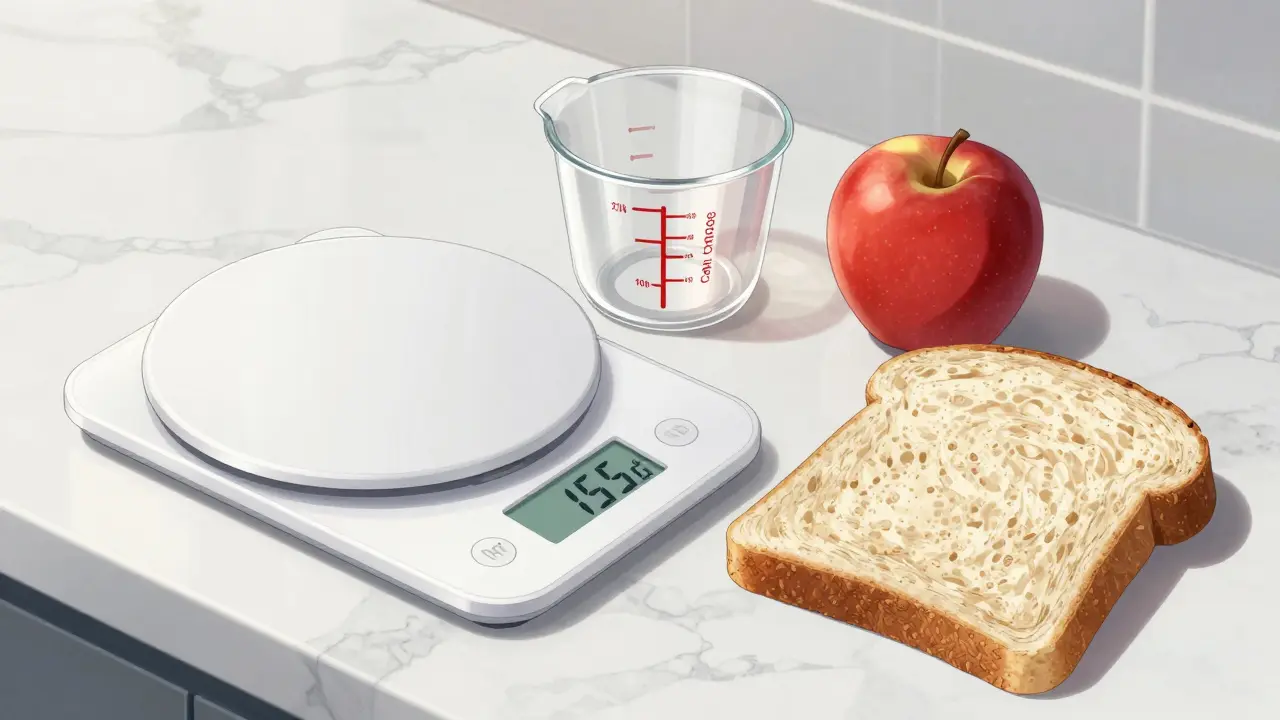
- Get the right tools: Use a digital food scale and measuring cups. Guessing "a cup of rice" is often off by 20-30%, which can lead to unexpected glucose spikes.
- Leverage technology: Use apps like MyFitnessPal or Carb Manager. These apps have massive databases that do the math for you, which is a lifesaver when you're eating out.
- Focus on quality: While counting quantity, don't ignore quality. Swapping white rice for quinoa or refined flour for whole grains slows down the absorption of glucose, making your numbers even steadier.
A common trap for beginners is forgetting "hidden" carbs. Many people remember the bread and pasta but forget that milk, yogurt, and starchy vegetables like carrots and peas also contain significant carbohydrates. These hidden sources often account for a quarter of a person's daily intake.
Real-world challenges: Restaurants and Mixed Dishes
Counting carbs at home is easy; doing it at a restaurant is where it gets messy. Menu labels are notoriously inaccurate, often underestimating the actual carb count by 20% or more. When you're dining out, the best strategy is to check the restaurant's official nutrition website if available, or make a conservative estimate based on the ingredients you can see.
For mixed dishes like stews, casseroles, or salads with multiple toppings, break the meal down into its individual components. Count the grams for the protein, the vegetable, and the starch separately, then add them up. If you're using a Continuous Glucose Monitor (CGM), you have a huge advantage. A CGM gives you real-time feedback, showing you exactly how that "estimated" meal actually affected your blood sugar, allowing you to adjust your counts for next time.

Comparing Carb Counting to Other Methods
You might have heard of the Plate Method or the Glycemic Index. While those are helpful, they serve different purposes. The Plate Method is great for people who want a simple visual guide without doing math. However, it lacks the precision needed for insulin dosing. The Glycemic Index tells you how fast a carb hits your system, but not how many carbs are there.
Carb counting is the "gold standard" for anyone on intensive insulin therapy. It offers a level of flexibility that rigid meal plans can't match. Instead of being told you cannot have a certain food, you are taught how to incorporate that food safely. Research shows that people who consistently practice carb counting often see a reduction in their HbA1c (average blood sugar over three months) by 0.5% to 1.0%.
Do I have to count every single gram of carbs?
For most people, getting within 10-15% of the actual count is enough to maintain stable glucose levels. While precision is the goal, stressing over a single gram of carb can lead to burnout. Focus on the major sources first and refine your skills over time.
What happens if I miscalculate my carbs?
If you underestimate, you might experience a blood sugar spike. If you overestimate and take too much insulin, you could face hypoglycemia (low blood sugar). This is why it's vital to monitor your levels and keep fast-acting glucose (like tabs or juice) nearby while you're learning.
Can I still eat fruit if I'm counting carbs?
Absolutely. Fruit contains natural sugars and fiber, which are counted as carbohydrates. The key is to choose fiber-rich fruits like berries and account for them in your total daily limit and insulin dose.
How long does it take to get good at carb counting?
Most people achieve a high level of accuracy (around 85%) after about 30 days of consistent practice using measuring tools and apps. It's a skill that improves with repetition.
Should I subtract fiber from my total carbs?
In many cases, yes. Because fiber isn't digested into glucose, it doesn't raise blood sugar the way starch or sugar does. Subtracting fiber helps you find the "net carbs," which is often a more useful number for insulin dosing. Always confirm this approach with your doctor.
Next Steps for Success
If you're feeling overwhelmed, start small. Pick one meal a day-maybe breakfast-and focus on counting those carbs perfectly for a week. Once you're comfortable, add lunch, then dinner. If you're using a pump or CGM, look for ways to integrate your carb data into your device's logs to see patterns emerge.
If you find that your numbers are still swinging wildly despite accurate counting, it's time to revisit your carb-to-insulin ratio with your healthcare provider. Your body changes; your activity levels shift, and your medication needs may evolve. Regular check-ins with a Certified Diabetes Care and Education Specialist (CDCES) can help you turn carb counting from a chore into a powerful tool for a healthier life.






Write a comment