
Why Language Access for Medication Counseling Matters
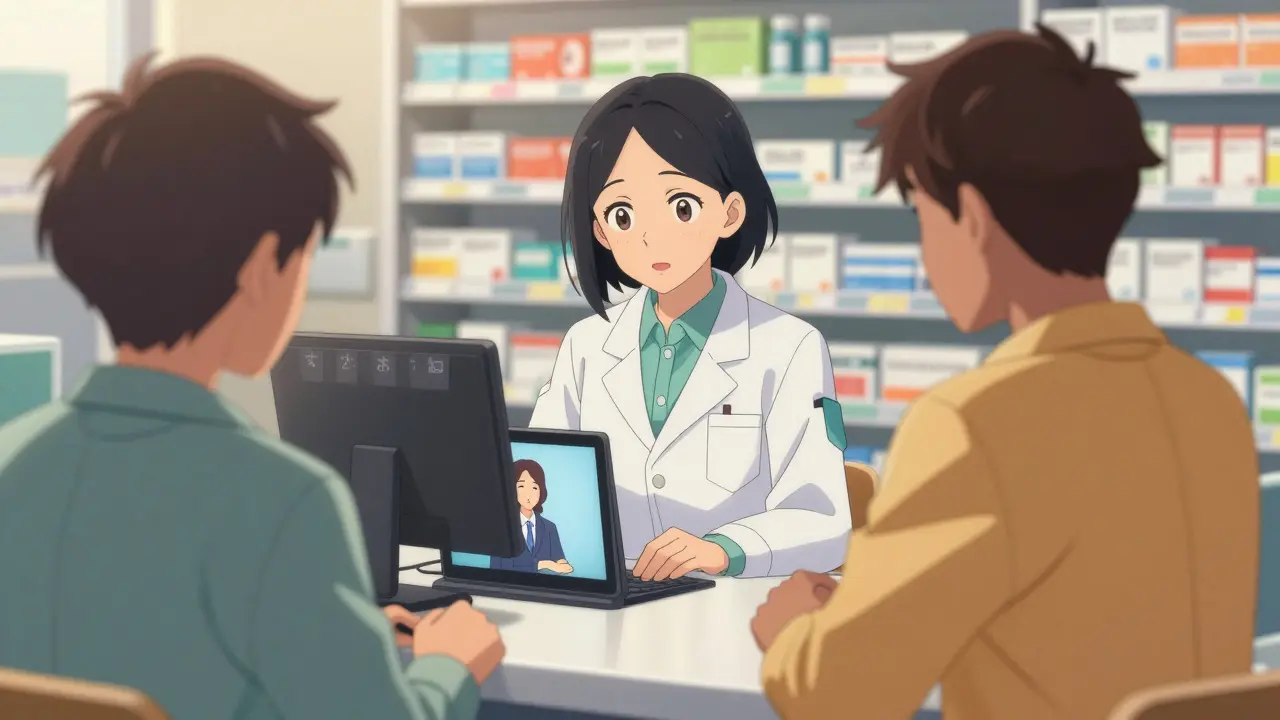
Every year, thousands of people face dangerous medication errors because they can't understand their prescriptions. Federal law ensures your medication counseling interpreter rights when you need help understanding prescriptions. This means pharmacies must provide free interpreter services and translated materials for Limited English Proficient (LEP) patients. Without these services, you risk taking the wrong dose, mixing dangerous drug interactions, or skipping essential medication. But how exactly do these rights work? Let's break it down.
What Federal Law Says About Language Access
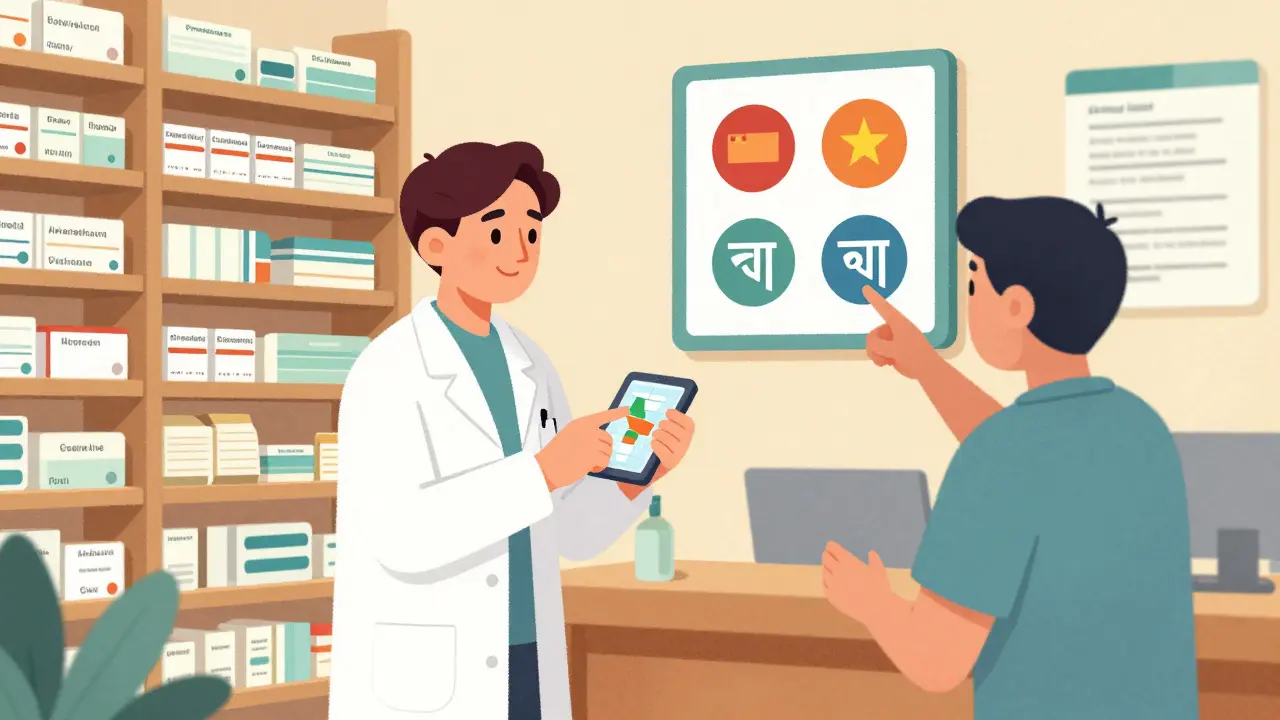
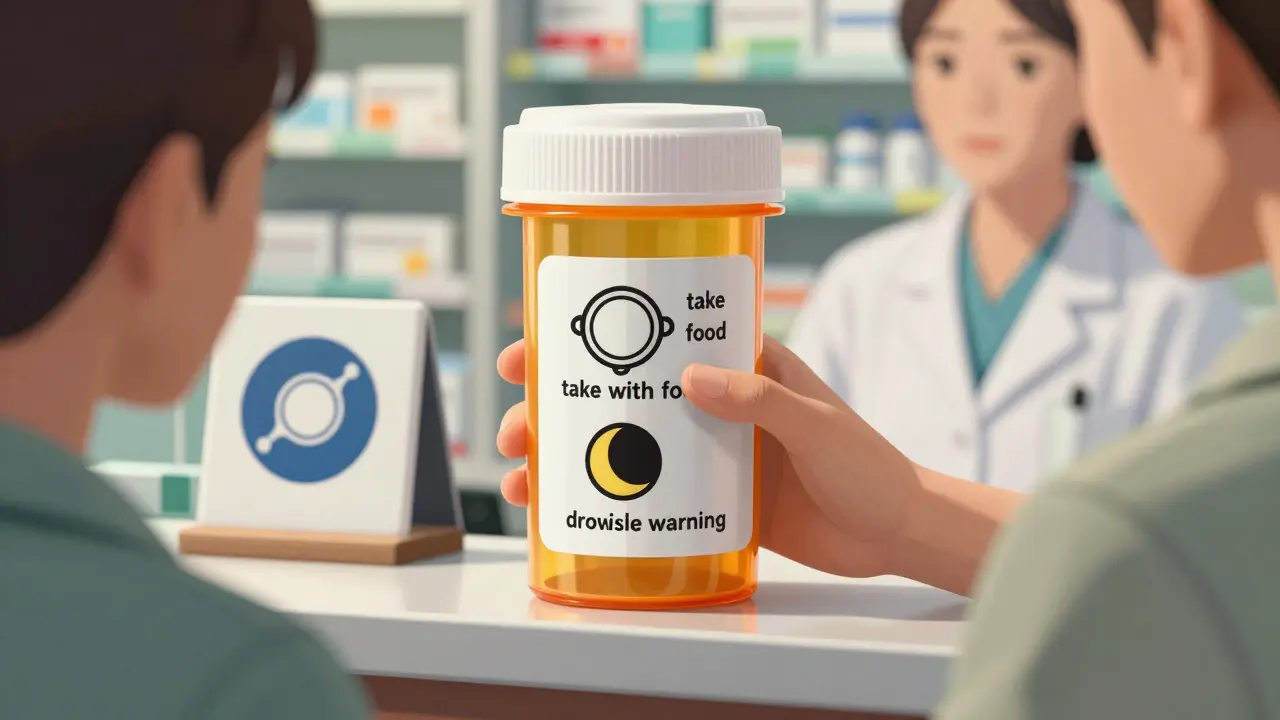
Starting July 5, 2024, ACA Section 1557is a key federal regulation requiring healthcare providers receiving federal funds to provide meaningful language access to Limited English Proficient patients mandates that pharmacies must offer free interpretation services for medication counseling. Qualified interpreters-professionals trained in medical terminology-must be available. Family members can't serve as interpreters unless the patient specifically requests it. Pharmacies must also translate prescription labels and warning instructions like "Take with food" or "May cause drowsiness" into the patient's language. A clear sign near the counter saying "Point to your language" must be visible.
State-Specific Rules Compared
| State | Key Requirements | Unique Features |
|---|---|---|
| New York | Requires free interpretation, translation of all labels, "Point to your language" signs | 1% population threshold for languages; max 7 languages per region; includes auxiliary warnings like "May cause drowsiness" |
| California | Similar to New York since SB 856 in 2022 | Requires translation of all prescription materials; 24/7 phone interpretation |
| Texas | Focused on hospitals, not pharmacies | Minimal pharmacy-specific requirements; relies on general healthcare language access rules |
| Florida | General healthcare language access | No specific pharmacy regulations; varies by facility |
What Pharmacies Must Do to Comply
Pharmacies need a clear system to provide language services. They must ask patients about their language needs during check-in and document this in their profiles. For interpretation, they can use phone or video services-no need for in-person interpreters. They must translate all prescription labels and warning instructions. Signs with "Point to your language" must be posted visibly near the counter. Pharmacies also need to update their language lists based on U.S. Census data. If 1% of the local population speaks a language, they must offer services for it, up to seven languages per region. Staff training is required. Major chains like CVS and Walgreens now require 10 hours of language access training for all pharmacy staff.
Real-World Impact of Language Access Services
Studies show these rules work. Weiss et al. (2018) found NYC pharmacies improved translation from 42% to 78% between 2006-2015. Phone interpretation rose from 38% to 92%. A verified pharmacist on Reddit (u/NYCPharmTech) shared: "Since implementing the new ACA requirements, we've had zero medication errors related to language barriers in our Bronx location serving large Spanish and Bengali populations." Yelp reviews show chain pharmacies average 4.2/5 for language services. However, some patients report issues. A Chinese-speaking patient wrote on Google Reviews (CVS Queens, June 3, 2024): "They have the signs but no one knows how to access the interpretation service when I need it." Despite this, a 2023 survey found 68% of LEP patients in NYC felt more confident taking meds after language access improvements.
Challenges and How Pharmacies Overcome Them
Small independent pharmacies struggle with compliance costs. A 2023 Rxtran.com analysis found 23% of New York pharmacies report difficulties maintaining compliance due to expenses. Training staff takes 8-12 hours. But support exists: New York State Office of Language Access Services offers free compliance help. The federal Language Access Help Desk (1-800-688-8814) provides 24/7 guidance. Pharmacies also use services like LanguageLine Solutions for affordable interpretation. Chain pharmacies like CVS and Walgreens have integrated these services smoothly, but smaller shops often need more assistance to stay compliant.
Current Developments in Language Access Regulations
The July 5, 2024 enforcement of ACA Section 1557 prohibits healthcare providers from requiring LEP patients to use family members as interpreters (except when requested). The FDA is working on standardized pictograms for medication labels to supplement language services. By 2026, all Medicare and Medicaid providers must fully comply with language access rules. A 2024 Congressional Budget Office analysis projects these regulations will prevent 14,000 adverse drug events annually among LEP patients, saving $187 million in healthcare costs. New York State is reviewing its language access requirements based on 2020 Census data, with updates expected in Q1 2025.
What languages must pharmacies provide services for?
Pharmacies must offer services for languages spoken by 1% or more of the local population, based on U.S. Census data. For example, in New York City, this includes Spanish, Chinese, Bengali, Russian, and Arabic. States can set a maximum of seven languages per region. If a language meets the 1% threshold, the pharmacy must provide interpretation and translated materials for that language.
Can I use a family member as an interpreter?
Generally, no. Federal law prohibits healthcare providers from requiring LEP patients to use family members as interpreters. However, patients can choose to use a family member if they prefer. Pharmacies must still offer professional interpreters regardless of the patient's choice.
What if a pharmacy doesn't offer language services?
If a pharmacy fails to provide required language services, you can file a complaint with the U.S. Department of Health and Human Services (HHS) Office for Civil Rights. New York State also has a specific complaint process through the Department of Health. The HHS enforces ACA Section 1557, and violations can lead to fines or loss of federal funding for the pharmacy.
How do I know if a pharmacy is compliant?
Look for "Point to your language" signs near the counter. Ask if they have professional interpreters available. Check if prescription labels are translated into your language. Chain pharmacies like CVS and Walgreens typically display compliance through visible signage and staff training. You can also check the pharmacy's website or call their customer service to confirm their language access services.
Are there exceptions to these rules?
Yes. Pharmacies can apply for a one-year waiver if they can't meet requirements due to extraordinary circumstances, but they must prove they're actively seeking alternative interpretation sources. Waivers require approval from state health authorities. Additionally, if a patient refuses language services after being offered, the pharmacy is not required to provide them. However, the pharmacy must document this refusal in the patient's record.




Comments
Federal law requires pharmacies to provide free interpreters for medication counseling. No family members unless the patient requests it. If a pharmacy doesn't comply, file a complaint with HHS. Simple.
States like NY and CA have stricter rules but all must follow federal law.
In India, we handle language access better.
Our healthcare system doesn't have these ridiculous rules.
Everyone just speaks Hindi or English.
This US system is overcomplicated and inefficient.
It's a symptom of overregulation.
this is really important for people who need help with their meds
pharmacies should make sure everyone can understand what they're taking
it's not just about the law it's about safety
when people don't understand their prescriptions
they could take the wrong dose
or mix dangerous drugs
and that's life-threatening
we need to have clear communication
pharmacies must train staff properly
and have interpreters available
it's a basic human right
everyone deserves to know what they're taking
and the risks
this is why federal law exists
and why we need to enforce it
I agree with Jesse. Safety is paramount.
But we also need to address systemic issues.
Some pharmacies still don't train staff properly.
Maybe we need more funding for training programs.
Collaboration is key here.
you're right paula but we need to act faster
the data shows that 68% of LEP patients feel more confident now
but some still have issues like in NYC CVS
we need to push for better implemention
and maybe add pictogams to labels
It is imperative that all pharmacies strictly adhere to the federal regulations regarding language access.
Failure to do so is a violation of civil rights.
We must hold them accountable without exception.
This is non-negotiable.
Enforce now
we need to enforce these rules but also work with pharmacies
they need support to comply
not just punishment
let's make it easier for them to follow the law