
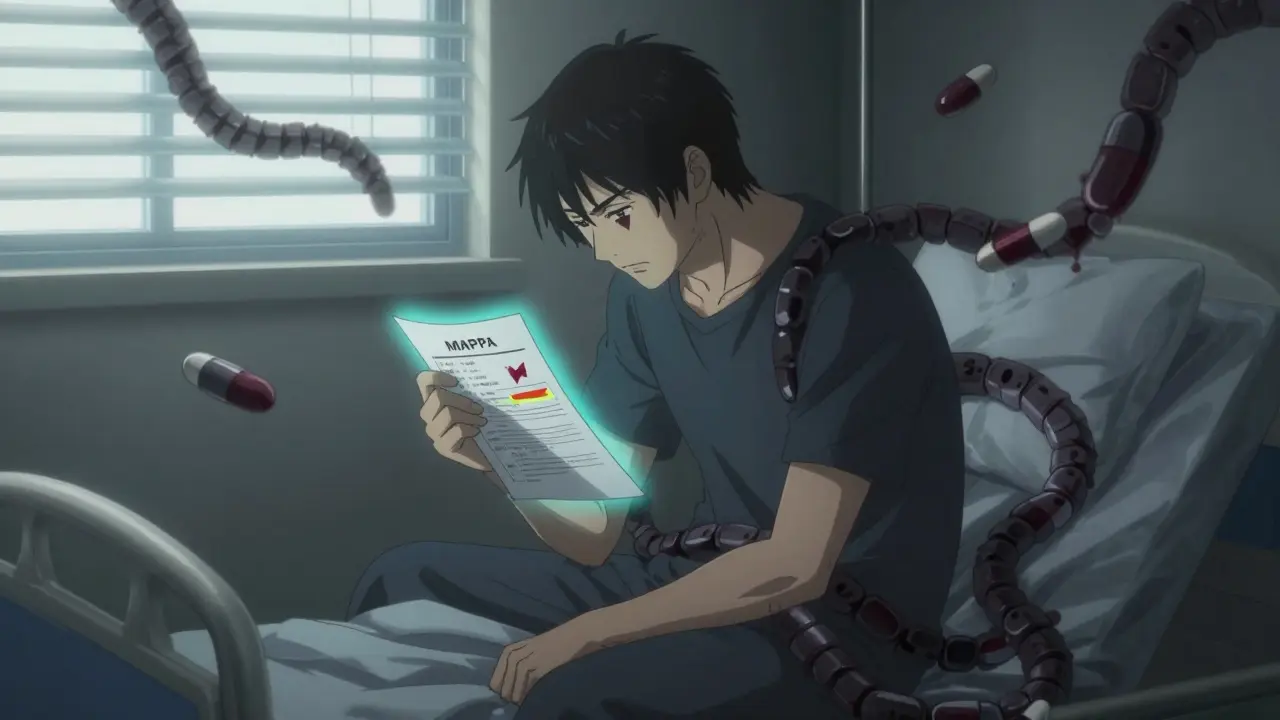
Opioid-Induced Low Testosterone Symptom Checker
This tool helps assess your risk of developing low testosterone due to long-term opioid use. Based on clinical data from the article, it estimates your risk level and provides guidance on next steps. Note: This is not a medical diagnosis. Consult your physician for proper testing and treatment.
Your Symptoms
Select all symptoms you're currently experiencing:
Your Opioid Use
When someone starts taking opioids for chronic pain, they often focus on relief - not the hidden side effects. One of the most overlooked consequences is low testosterone. It doesn’t show up on pain scales or imaging tests, but it can wreck your energy, sex life, and even your long-term health. This isn’t rare. Studies show that between 50% and 90% of people on long-term opioid therapy develop opioid-induced androgen deficiency, or OPIAD. If you’ve been on opioids for more than three months and feel off - tired, unmotivated, or like you’ve lost your spark - this might be why.
How Opioids Kill Testosterone Production
Opioids don’t just block pain signals. They also shut down your body’s natural hormone system. When you take opioids regularly, they bind to receptors in your brain’s hypothalamus, which controls the hypothalamic-pituitary-gonadal (HPG) axis. This axis is responsible for signaling your testes to make testosterone. Opioids disrupt the rhythm of gonadotropin-releasing hormone (GnRH), which tells your pituitary to release luteinizing hormone (LH). No LH? No testosterone.
This isn’t a quick fix. It builds up over time. People using opioids for over 90 days typically see testosterone levels drop 35-50%. After a year, it’s not unusual to be 50-75% below normal. Long-acting opioids like methadone and buprenorphine are especially damaging. One study found methadone users averaged 245 ng/dL of testosterone - well below the normal range of 300-1000 ng/dL. Buprenorphine users fared better, at 387 ng/dL, but still far from healthy.
What Low Testosterone Feels Like (Beyond Low Libido)
Most people assume low testosterone just means less sex drive. But it’s deeper than that. Here’s what it actually looks like in real life:
- Low libido: Affects 68-85% of men on long-term opioids. It’s not just lack of interest - it’s a complete absence of sexual thoughts or desire.
- Erectile dysfunction: Happens in 60-75% of cases. Even if you can get an erection, it’s weak or doesn’t last.
- Chronic fatigue: You’re not just tired - you’re drained. Studies show fatigue scores are 2.5 times higher than normal.
- Depressed mood: Feelings of sadness, irritability, or hopelessness increase by 40%. It’s not just “being down” - it’s clinical-level symptoms.
- Muscle loss and weight gain: You might not be eating more, but you’re losing lean muscle and gaining belly fat. Visceral fat increases, raising heart disease risk.
- Bone weakness: Bone mineral density drops 15-20% in the spine. That means higher fracture risk - especially in older adults.
- Anemia: Hemoglobin levels average 12.3 g/dL (normal is 14-18 g/dL). You feel winded climbing stairs or carrying groceries.
- Brain fog: Trouble focusing, remembering names, or making decisions. It’s not aging - it’s hormonal.
These symptoms creep in slowly. You might think you’re just getting older, or that pain is wearing you down. But if you’ve been on opioids for months and notice this combo, OPIAD is likely the culprit.
How to Know If You Have It
There’s no single symptom that confirms low testosterone. Diagnosis requires blood tests - and timing matters. Testosterone peaks in the morning, so testing should happen between 7 and 10 a.m. You need two low readings, not just one. Doctors should check both total and free testosterone. A single test can miss the diagnosis.
Screening tools help too. The Androgen Deficiency in Aging Males (ADAM) questionnaire asks 10 simple questions. If you answer “yes” to three or more - like “Do you have less energy?” or “Do you have less sexual desire?” - it’s time to get tested. Most primary care providers don’t screen for this. You have to ask.
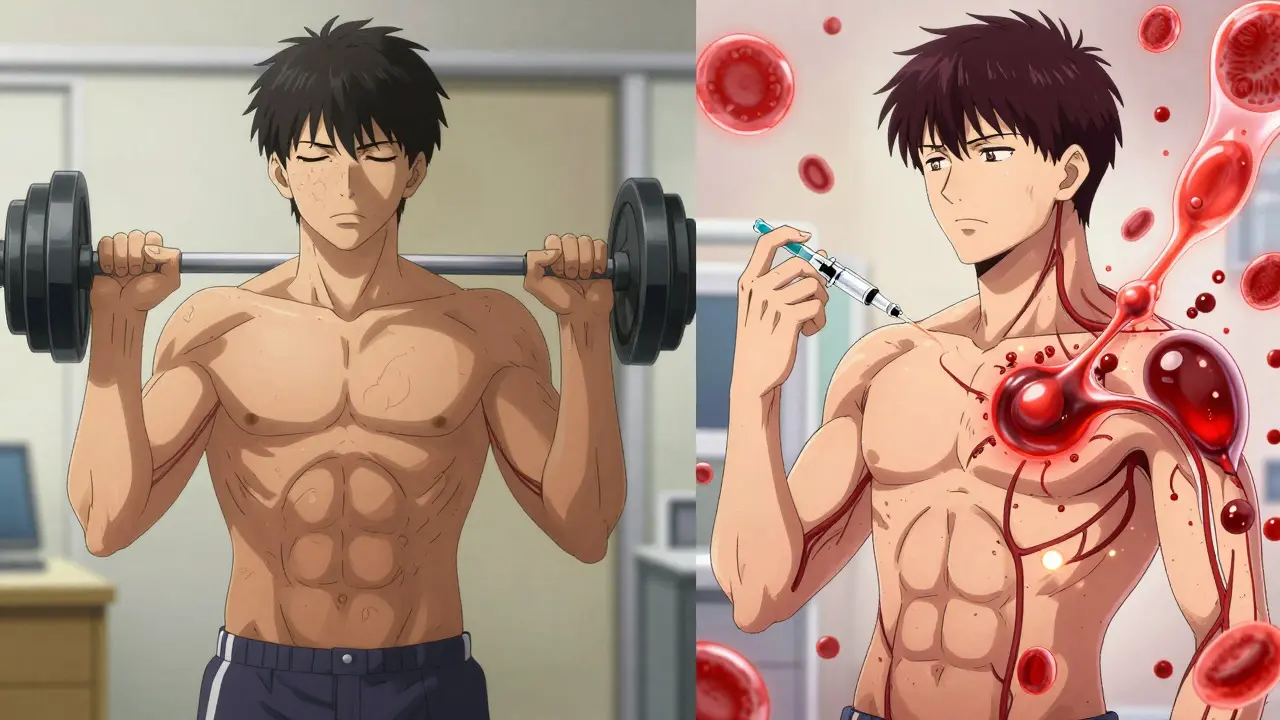
Treatment: Testosterone Replacement Therapy (TRT)
If your levels are low and symptoms match, testosterone replacement therapy (TRT) is the most proven solution. It’s not a magic bullet - but it works. Two major studies show real benefits:
- Sexual function: Men on TRT improved their International Index of Erectile Function scores from 12.5 to 19.8 - a big jump.
- Pain sensitivity: TRT reduced hyperalgesia (increased pain sensitivity) by 30%. Yes - testosterone can help you tolerate pain better.
- Body composition: Over six months, lean muscle increased by 3.2 kg, and fat mass dropped by 2.1 kg.
- Mortality: Men on TRT had a 49% lower risk of dying from any cause and 42% fewer heart attacks or strokes.
TRT comes in several forms:
- Injections: Testosterone cypionate or enanthate, 100-200 mg every 1-2 weeks. Fast, cheap, effective.
- Gels: 50-100 mg daily applied to skin. Easy to use, but you have to avoid skin-to-skin contact for hours after.
- Patches: 5-7.5 mg daily. Less popular now due to skin irritation.
- Buccal tablets: 30 mg twice daily, stuck between gum and cheek. Less messy than gels.
Target levels? Keep testosterone between 350-750 ng/dL. Too low, and symptoms return. Too high, and risks rise.
The Risks of TRT (What They Don’t Tell You)
Testosterone isn’t risk-free. The FDA added black box warnings in 2015 and updated them in 2019. Here’s what you need to know:
- Polycythemia: Blood thickens. Occurs in 15-20% of users. Can lead to clots or stroke.
- Lower HDL (“good” cholesterol): Drops 10-15 mg/dL. Raises heart disease risk.
- Acne: Affects 25% of transdermal users.
- Prostate issues: TRT can worsen existing prostate cancer. Never use it if you have or are at risk for prostate or breast cancer.
- Increased stroke risk: Relative risk goes up 1.3-1.8 times.
- Vein clots: Risk of deep vein thrombosis or pulmonary embolism increases 1.4-2 times.
Monitoring is non-negotiable. You need:
- Testosterone levels checked at 3-6 months after starting, then yearly.
- PSA blood test every 6 months if you’re over 50 or have a family history of prostate cancer.
- Hematocrit (blood thickness) checked regularly.
- Regular check-ins with an endocrinologist or pain specialist.
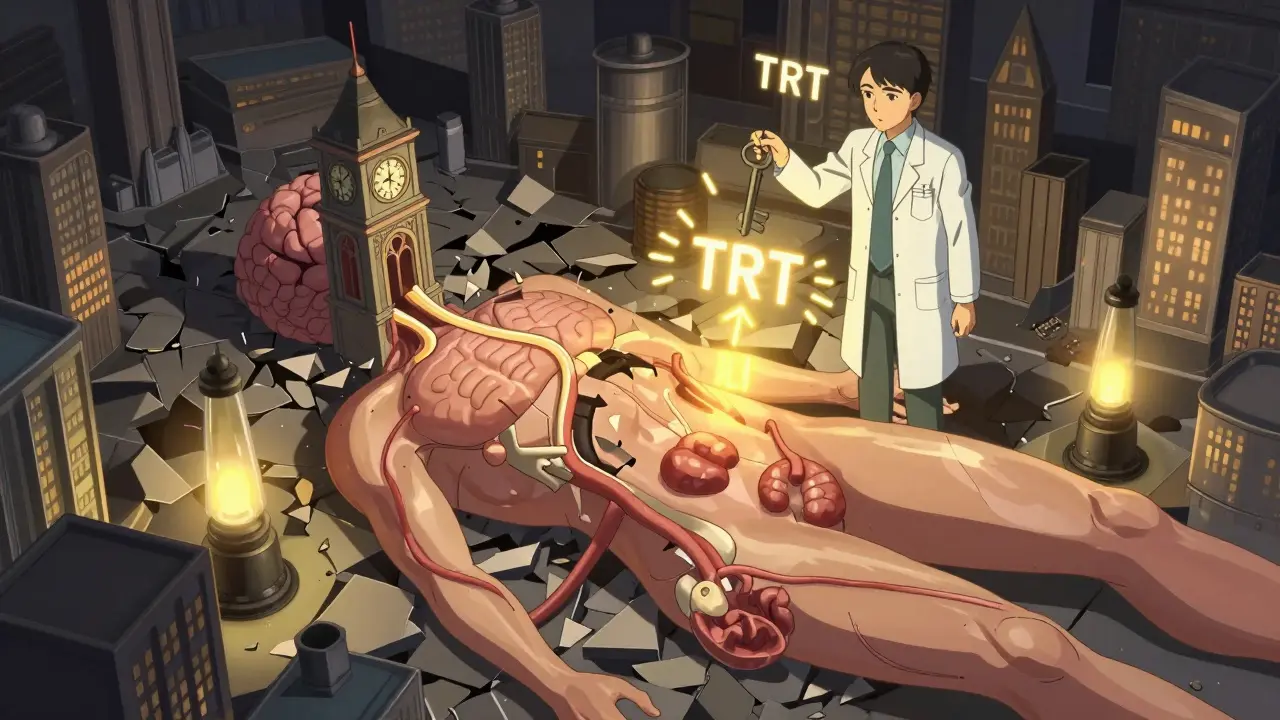
What About Natural Fixes?
TRT works - but can you improve testosterone without it? Yes, but only to a point. These strategies help, but they won’t reverse OPIAD on their own:
- Maintain a healthy weight: BMI under 25 is linked to 20-30% higher testosterone.
- Strength training: Three resistance workouts per week boost testosterone 15-25%.
- Sleep 7-9 hours: Poor sleep cuts testosterone by 20%.
- Avoid alcohol: More than 14 drinks a week drops levels 25%.
- Quit smoking: Smokers have 15-20% lower testosterone.
- Control blood sugar: Diabetes cuts testosterone 25-35%.
These aren’t replacements for TRT if you’re severely deficient. But if you’re considering reducing opioids or switching treatments, they’re essential support.
Who Shouldn’t Use TRT
Testosterone therapy is dangerous for some:
- Men with prostate or breast cancer - or a history of it.
- Men with untreated sleep apnea.
- Men with severe heart failure.
- Those with uncontrolled high blood pressure.
The VA Whole Health Library warns that testosterone is often pushed by drug companies, and that natural recovery should be tried first - but for many, OPIAD is too deep for that. If your levels are below 300 ng/dL and symptoms are severe, TRT is not just an option - it’s a necessity.
What’s Next?
OPIAD is still underdiagnosed. Most doctors don’t test for it. If you’re on opioids long-term, don’t wait for symptoms to get worse. Ask for a morning testosterone panel. If your levels are low, talk to an endocrinologist. TRT isn’t a cure for opioid dependence - but it can restore your body, your energy, and your quality of life.
And if you’re thinking about quitting opioids? Work with your provider. Stopping opioids slowly can help your body recover testosterone naturally - but only if you do it right. Withdrawal can make symptoms worse before they get better. Don’t go it alone.
Can opioids cause low testosterone in women?
Yes. While less studied, women on long-term opioids also experience suppressed sex hormones. Their testosterone and DHEA levels drop, leading to low libido, fatigue, and mood changes. Some doctors consider DHEA supplementation for women with OPIAD, but evidence is limited. Screening and treatment should be individualized.
How long does it take for testosterone to recover after stopping opioids?
It varies. Some men see improvement within 3-6 months of stopping opioids. Others take over a year. The longer and higher the opioid dose, the slower the recovery. TRT can help during this period, but once stopped, natural production may not fully return. Early intervention improves outcomes.
Is TRT safe for someone with heart disease?
It’s complicated. Studies show TRT reduces heart attacks and death in opioid users - but the FDA warns it may increase risk in people with existing heart disease. If you have heart disease, TRT may still be an option - but only under strict monitoring by a cardiologist and endocrinologist. Never start TRT without a full cardiac workup.
Do all opioids cause low testosterone?
No, but most do. Long-acting opioids like methadone, buprenorphine, oxycodone, and fentanyl cause the most suppression. Short-acting opioids like heroin also suppress testosterone, but because they’re used intermittently, the effect may be less consistent. Even occasional use over months can lower levels.
Can I get off opioids and avoid TRT?
Maybe. If your opioid use is recent (under 6 months) and you’re young and healthy, stopping opioids may allow testosterone to bounce back. But if you’ve been on them for over a year, your body may not recover on its own. TRT isn’t a sign of weakness - it’s a tool to restore function while you transition off opioids. Many men use TRT temporarily and then taper off.

Comments
This is such an important topic. I never realized opioids could mess with testosterone this badly. I’ve been on them for over a year for back pain, and yeah… I’ve been drained, no libido, gained weight. It’s not aging. It’s the meds. 🤯
OMG YES!!! I’ve been screaming this from the rooftops!! 😭 The fact that doctors don’t even SCREEN for this is criminal!! I had a cousin on methadone for 3 years-lost ALL muscle, turned into a zombie, and no one connected the dots until his PSA skyrocketed and his testosterone was 187 ng/dL!! This needs to be mandatory testing!! 💥
I got on opioids after surgery. Then I stopped having sex. Then I stopped caring. Then I stopped caring about anything. My husband said I was ‘different.’ I thought I was just tired. Turns out my body stopped making testosterone. I’m on TRT now. Life changed.
I’m so glad someone wrote this. I’ve been trying to tell my doctor for months that I feel off, and he just said ‘it’s the pain.’ 😔 I asked for a blood test last week. My T was 220. I’m scheduled for an endo next week. 🙏
The data here is compelling. The physiological mechanism is well-documented. What’s missing is systemic awareness. Primary care physicians are overburdened and undertrained in endocrine side effects of chronic pain management. This isn’t negligence-it’s a structural gap. We need protocols.
THIS IS A BIG PHARMA SCAM!! They don’t want you to know that testosterone replacement is just a way to keep you hooked! They’re selling you drugs to fix the drugs they sold you!! 😡 And now they’re pushing TRT like it’s a vitamin?? Wake up people!! This is all about profit!!
Hey, I’m a nurse in pain management, and I can confirm this is 100% real. I’ve seen it over and over. One guy came in crying because he couldn’t even hug his daughter without feeling weak. He had no idea why. We tested him-T was 190. Started TRT. Three months later, he was back to coaching his kid’s soccer team. 🙌
This is life-changing info. If you’re on opioids long-term, get tested. Don’t wait until you’re miserable. It’s not weak to ask for help. It’s smart. I wish I’d known this 2 years ago.
I’m on buprenorphine. My T was 370. I started TRT. Now I’m at 620. I can lift again. I want sex again. I sleep better. I’m not ‘cured’ of pain-but I’m not a ghost anymore. 💪
Oh please. TRT is just another way for Big Pharma to monetize male anxiety. You think testosterone fixes everything? Try fixing your diet, your sleep, your trauma. But nooo, let’s just inject chemicals and call it a day. 😒
I’ve been on opioids for 5 years. I’ve had 3 heart attacks. I’m on TRT. My doctor said I’m lucky to be alive. But now I’m also on blood thinners, statins, and I can’t even hug my grandkids without sweating. This isn’t a fix. It’s a bandaid on a bullet wound. 💔
The scientific foundation of this article is robust. The evidence for opioid-induced androgen deficiency is consistent across multiple peer-reviewed longitudinal studies. The clinical implications for quality of life, metabolic health, and mortality are significant. I commend the author for synthesizing this information with clarity and precision.
I’m a 48-year-old mom who got addicted to oxycodone after a car wreck. I didn’t even know I had low T until I started crying every night and couldn’t get out of bed. I went to a functional medicine doc and they tested me. My T was 180. I did TRT for 6 months. I’m not ‘fixed’ but I’m back to playing with my kids. I wish I’d known this sooner. You’re not weak for needing help. You’re brave for asking.
Good breakdown. TRT isn’t perfect, but for many, it’s the difference between existing and living. The key is monitoring. And yes-natural methods help, but if you’re below 300, your body isn’t fixing itself. Don’t wait.