EpiPen travel: What You Need to Know Before Taking Your Epinephrine Auto-Injector On the Go
When you rely on an EpiPen, a portable epinephrine auto-injector used to treat life-threatening allergic reactions. Also known as epinephrine auto-injector, it’s not just medicine—it’s your emergency lifeline. Taking it on a trip isn’t optional. It’s non-negotiable. Whether you’re flying to another country, camping in the woods, or just driving to a restaurant you’ve never tried, your EpiPen needs to be with you—always.
Traveling with an EpiPen means understanding more than just how to use it. You need to know how to keep it at the right temperature, how to carry it through airport security, and what to do if you lose it overseas. Many people assume that if they’re not near their usual allergens, they’re safe. But allergies don’t care about borders. A new food, a different air quality, or even a change in medication can trigger a reaction. That’s why anaphylaxis travel, the risk of severe allergic reactions during trips is real—and preventable with the right prep.
Not all countries carry EpiPens. Some use different brands, like Jext or Auvi-Q. Others may not have auto-injectors at all. That’s why you should never rely on buying one abroad. Always bring your own, in original packaging, with a copy of your prescription. TSA and most international airports allow EpiPens in carry-ons, but you might get questioned. Keep your doctor’s note handy. Some travelers even carry a small card in their wallet that says: "This is an epinephrine auto-injector. I have a severe allergy. Do not remove unless I’m unconscious." Simple. Clear. Life-saving.
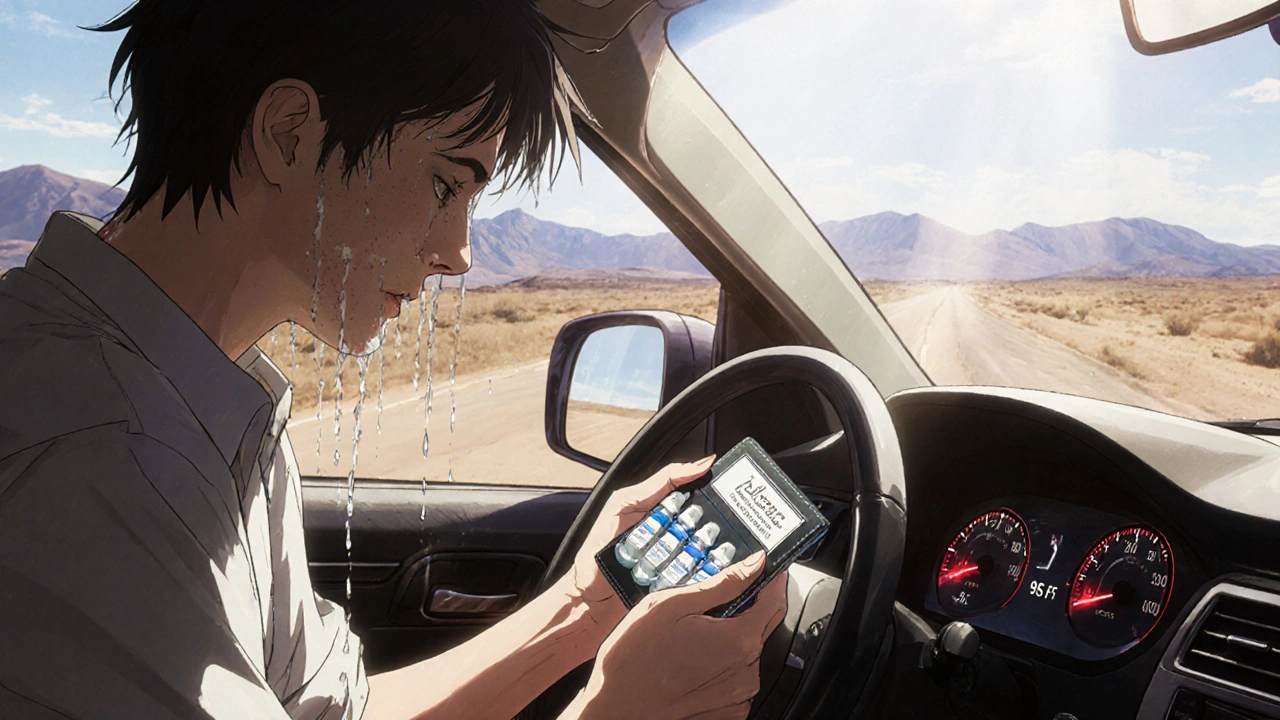
Heat kills epinephrine. Leaving your EpiPen in a hot car or a sunny beach bag can make it useless. Keep it in your purse, backpack, or a dedicated case that stays close to your body. Don’t store it in checked luggage. If you’re going somewhere cold, like a ski resort, don’t let it freeze either. Epinephrine doesn’t like extreme temps. A small insulated pouch with a cool pack works wonders.
And what about language? If you’re abroad and need help, you might not be able to explain what’s happening. Download a translation app that has phrases like "I need an EpiPen," "I am having an allergic reaction," and "Call emergency services." Some apps even let you show a picture of your EpiPen. You can find these tools in our guide on travel apps to locate pharmacies abroad.
People who travel with EpiPens often forget one thing: insurance. Your U.S. plan might not cover you overseas. Some travel insurance policies include emergency medication replacement—but only if you declare your condition upfront. Check before you book. Don’t wait until you’re stranded in a foreign ER.
Below, you’ll find real-world advice from people who’ve been there—how to pack your EpiPen for flights, what to say at customs, how to spot fake or expired devices, and which destinations are safest for severe allergy sufferers. These aren’t theory articles. These are lessons learned the hard way.
Learn how to protect your travel medications from heat, humidity, and freezing temps so they stay effective. Essential tips for insulin, EpiPens, and other sensitive drugs on long trips.
Read more