Grapefruit Juice and Medications: What You Need to Know
When you drink grapefruit juice, a common citrus beverage known for its tart flavor and high vitamin C content. Also known as grapefruit juice, it can interfere with how your body processes many medications—sometimes with serious, even life-threatening results. This isn’t just a myth or a warning on a rare label. It’s a well-documented, clinically proven interaction that affects thousands of people every year.
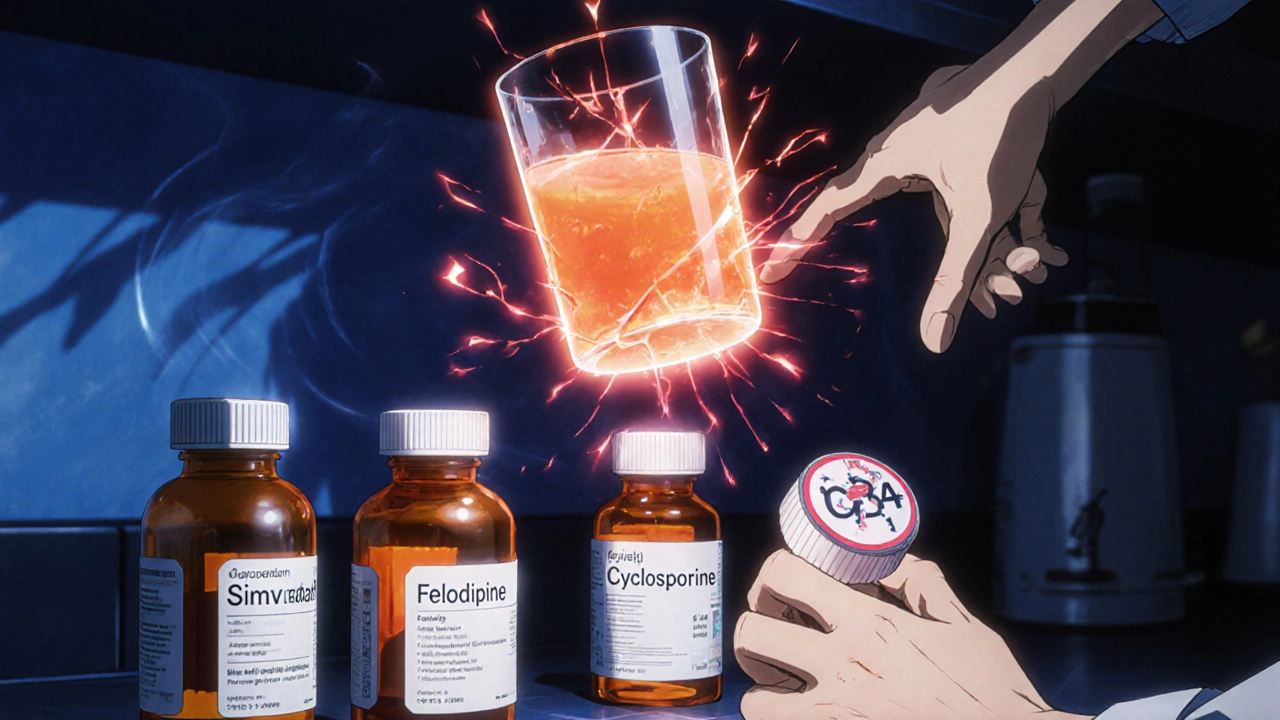
The problem lies in how grapefruit juice blocks an enzyme called CYP3A4, a key liver and gut enzyme responsible for breaking down many drugs before they enter your bloodstream. When this enzyme is inhibited, more of the drug gets absorbed, turning a normal dose into an overdose. This is especially dangerous with statins, cholesterol-lowering drugs like simvastatin and atorvastatin. Too much statin in your system can cause muscle breakdown, kidney failure, or worse. It’s not just statins either. Grapefruit juice can also spike levels of blood pressure meds, anti-anxiety drugs, immunosuppressants, and even some painkillers. The effect lasts for hours—even if you drink the juice hours before or after your pill.
You might think, "I only have a glass once in a while," but even small amounts matter. One whole grapefruit or 8 ounces of juice is enough to trigger the interaction. And it doesn’t matter if it’s fresh, frozen, or concentrate—the compounds responsible are in all forms. The same goes for Seville oranges and pomelos. Regular oranges? Safe. Tangerines? Usually fine. But if you’re on any prescription, check before you squeeze.
What you’ll find below are real, practical posts that show exactly which medications are at risk, what the signs of an interaction look like, and how to talk to your pharmacist about alternatives. You’ll see how people manage their blood pressure, cholesterol, and immune meds without giving up grapefruit juice entirely. No guesswork. No fluff. Just clear, evidence-based advice from people who’ve been there.
Grapefruit juice can dangerously increase levels of many medications, leading to serious side effects. Learn which drugs interact, why it happens, and how to stay safe.
Read more