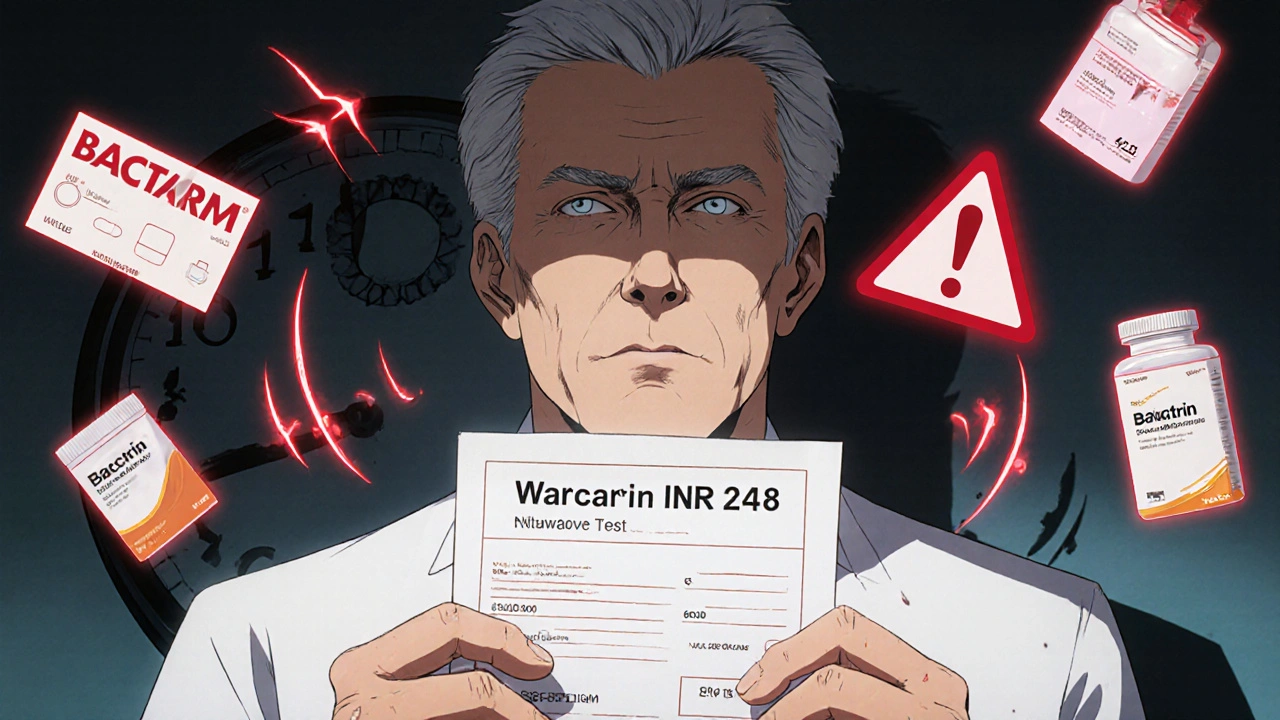
Warfarin and Antibiotics: What You Need to Know About Dangerous Interactions
When you take warfarin, a blood thinner used to prevent clots in people with atrial fibrillation, deep vein thrombosis, or artificial heart valves. Also known as Coumadin, it works by blocking vitamin K, which your body needs to make clotting factors. But when you add antibiotics, drugs used to kill or slow down bacteria causing infections like pneumonia, urinary tract infections, or sinusitis, things can go wrong fast. Some antibiotics don’t just fight bacteria—they mess with how your liver breaks down warfarin, causing your blood to thin too much. That’s when minor cuts turn into major bleeds, or worse, internal bleeding starts without warning.
This isn’t theoretical. A 2022 study in the Journal of the American Heart Association found that people on warfarin who took certain antibiotics had a 40% higher chance of being hospitalized for bleeding. Not all antibiotics do this—but the big offenders include trimethoprim-sulfamethoxazole (Bactrim), metronidazole (Flagyl), and fluoroquinolones like ciprofloxacin and levofloxacin. Even amoxicillin and doxycycline can shift your INR, the lab test that measures how long your blood takes to clot. Your INR might jump from a safe 2.5 to 5 or higher in just a few days. That’s like going from a car at 40 mph to one slamming the brakes without warning.
It’s not just about the antibiotic itself. Your gut bacteria help make vitamin K. When antibiotics wipe them out, your body makes less of it, which makes warfarin stronger. That’s why even antibiotics you’ve taken before can suddenly become risky. And here’s the catch: you won’t feel it coming. No dizziness, no pain—just a nosebleed that won’t stop, or dark, tarry stools, or bruising out of nowhere. That’s when you know it’s too late.
So what do you do? If you’re on warfarin and your doctor prescribes an antibiotic, ask: "Which one?" and "Will this affect my blood thinner?" Don’t assume it’s safe because it’s common. Some antibiotics, like penicillin or azithromycin, are safer bets—but even those need monitoring. Your pharmacist should flag this interaction. And if you’re given a new antibiotic, get your INR checked within 3 to 5 days. No waiting. No "I’ll call if something’s wrong." You need to call them.
There’s no one-size-fits-all answer. Your age, liver health, diet, and other meds all play a role. But the rule is simple: warfarin and antibiotics are a combo that demands attention. Not curiosity. Not caution. Attention. The posts below show you exactly which drugs to watch out for, what signs mean trouble, how to talk to your doctor without sounding paranoid, and what alternatives exist when you need an antibiotic but can’t risk the bleed. You’re not alone in this. Thousands manage it every day. You just need the right info—before it’s too late.
Warfarin and antibiotics can dangerously interact, raising bleeding risk. Learn which antibiotics are high-risk, when to check your INR, and how to safely manage both without stopping either medication.
Read more