
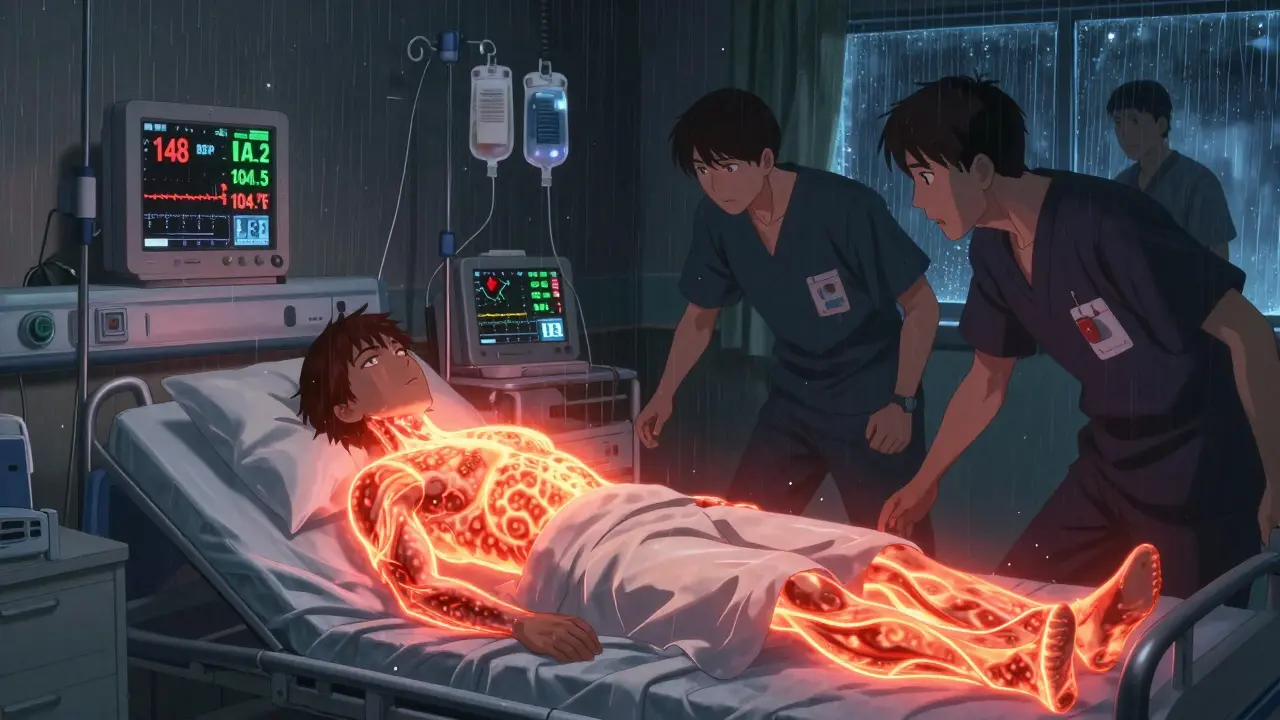
What Is Thyroid Storm?
Thyroid storm isn’t just a bad day with a fast heartbeat. It’s a full-body meltdown caused by your thyroid going completely out of control. Imagine your metabolism, which normally runs like a steady engine, suddenly hitting redline - and then exploding. This is thyroid storm, or thyrotoxic crisis: a rare but deadly surge of thyroid hormones that overwhelms your organs. It happens in people who already have untreated or poorly managed hyperthyroidism, most often from Graves’ disease. The body can’t handle the flood of T3 and T4. Cells burn too fast. Organs start failing. Without immediate treatment, death is nearly certain.
How Do You Know It’s Thyroid Storm - Not Just Hyperthyroidism?
Hyperthyroidism might make you jittery, sweaty, or lose weight. Thyroid storm turns those symptoms into a medical catastrophe. The difference is speed and severity. Symptoms don’t creep in over weeks - they crash down in hours. You’ll see a fever over 104°F (40°C), a heart rate above 140 beats per minute, and severe confusion or even coma. Diarrhea hits 60% of patients. Jaundice shows up because the liver is drowning in stress. Blood pressure spikes, then crashes. The Japan Thyroid Association’s diagnostic criteria are strict: you need confirmed high thyroid hormone levels plus at least three major signs - fever, fast heart rate, heart failure, GI symptoms, or brain changes like agitation or delirium. In 90% of cases, mental status is altered. That’s not anxiety. That’s your brain being poisoned by excess hormone.
What Triggers This Crisis?
Thyroid storm doesn’t come out of nowhere. It’s the result of a trigger pushing an already unstable system over the edge. The most common cause? Untreated or poorly controlled hyperthyroidism - happening in 60-70% of cases. Infections, especially pneumonia or flu, are the next biggest trigger, accounting for 20-30%. Surgery, even minor procedures, can set it off if thyroid levels aren’t controlled first. Trauma - including a punch to the neck - can physically shock the gland into dumping hormones. Emotional stress, stroke, diabetic ketoacidosis, and pulmonary embolism are all known triggers. Even pregnancy, especially in the postpartum period, can cause a sudden hormonal shift that sparks thyroid storm. And yes, radioactive iodine treatment for Graves’ disease, though meant to calm the thyroid, can sometimes cause a surge a week later. It’s rare, but it happens.
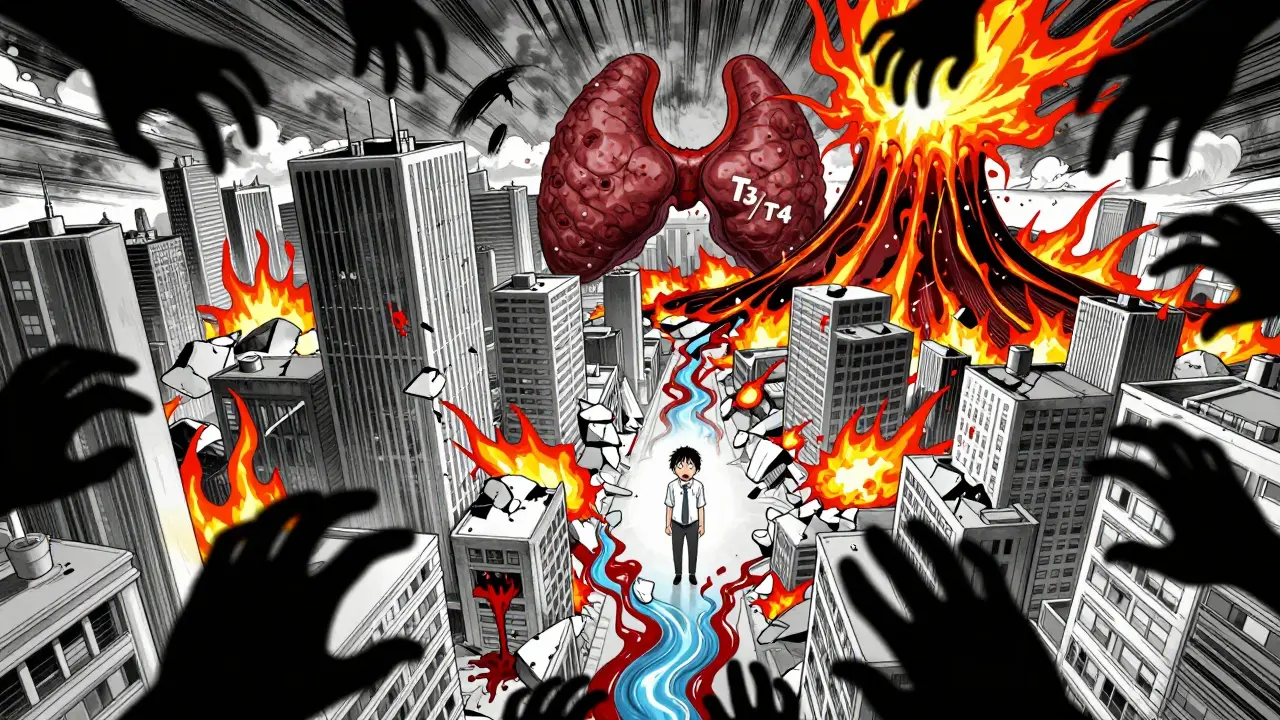
How Is It Diagnosed in the ICU?
There’s no single test for thyroid storm. Diagnosis is clinical - based on symptoms, history, and lab results. When a patient comes in with fever, rapid pulse, confusion, and vomiting, doctors don’t wait for perfect numbers. They act fast. Blood tests confirm the storm: free T4 levels often more than 2.5 times the upper limit, T3 more than 3 times normal. Liver enzymes spike. Blood sugar goes haywire. Electrolytes like sodium and potassium drop. An arterial blood gas shows acidosis - the body is too acidic from overwork. The Burch-Wartofsky scoring system helps quantify severity: a score above 45 confirms thyroid storm. Each point higher increases the risk of death by 5%. In the ICU, they monitor continuously - heart rhythm, oxygen levels, brain function with Glasgow Coma Scale, and urine output. Delaying diagnosis by even a few hours can be fatal.
What Happens in the ICU?
Time is everything. Treatment must start within one to two hours of suspicion. The goal? Stop hormone production, block hormone action, calm the body, and support failing organs. First, they hit the thyroid with high-dose antithyroid drugs: methimazole (60-80 mg) or propylthiouracil (600-1,000 mg) to shut down new hormone production. Then, within an hour, they give iodine - potassium iodide or sodium iodide - to block the gland from releasing more hormone. Beta-blockers like propranolol come next. They don’t lower hormone levels, but they stop the heart from racing, reduce tremors, and ease anxiety. For fever, they use acetaminophen - NSAIDs are avoided because they can harm the liver, already under stress. Corticosteroids like hydrocortisone are given to prevent adrenal failure and to block the conversion of T4 to the more powerful T3. Fluids are pushed hard - often 2-3 liters of saline - because patients are severely dehydrated. If the patient is unconscious or struggling to breathe, they’re put on a ventilator. If blood pressure crashes, vasopressors are started. In the worst cases, when drugs don’t work, plasmapheresis - filtering the blood to remove excess hormones - can save lives. One 2021 study showed it worked in 78% of patients who didn’t respond to standard treatment.
Survival Rates and What Affects Them
Even with modern care, 8-25% of people with thyroid storm still die. That’s a 1 in 5 chance. The biggest factor? How fast treatment starts. If you get help within 6 hours, survival jumps to 75-80%. Wait 24 hours? It drops to 20%. Age matters too. People over 60 have a much higher risk of death. Heart disease doubles the chance of dying. Temperature above 105.8°F (41°C) means a 40% mortality risk. Systolic blood pressure below 90 mmHg? That’s cardiovascular collapse - 50% chance of death. Coma? 35% mortality. The liver and kidneys are often damaged, and that damage can be permanent. Recovery isn’t quick. In one 2022 study of 37 patients, the average ICU stay was nearly 8 days. Two-thirds needed a breathing machine for over 5 days. More than 40% needed drugs to support blood pressure. Neurological symptoms usually clear up in 3 days, but full mental recovery takes up to two weeks.
What Happens After the ICU?
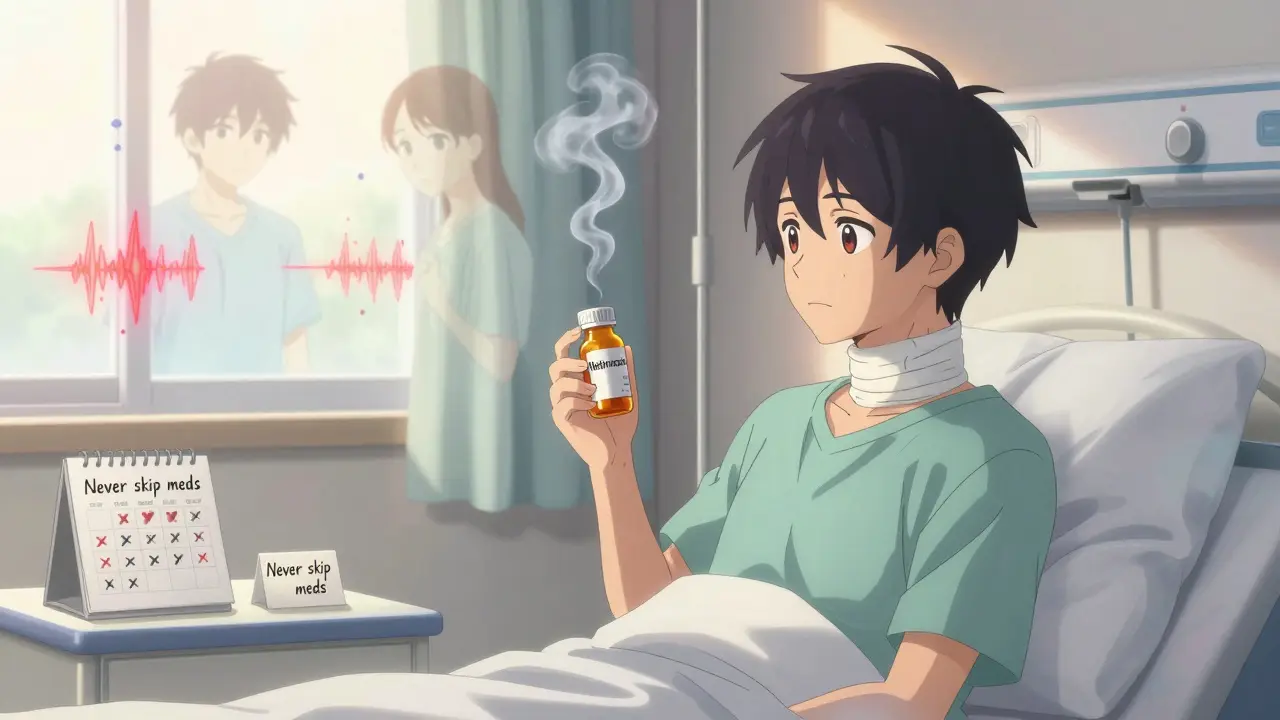
Surviving thyroid storm doesn’t mean you’re out of the woods. The underlying hyperthyroidism still needs permanent treatment. Most patients - about 85% - will need lifelong thyroid hormone replacement because their thyroid was destroyed by radioactive iodine or surgery. The rest, 15%, might go into remission with antithyroid drugs alone. But if they stop taking their meds? The chance of another storm jumps from 2-3% to 25-30%. That’s why follow-up is non-negotiable. Patients need regular blood tests, endocrinologist visits, and education on warning signs. Many hospitals now have thyroid storm awareness programs to train ER staff and patients. The goal? Catch it early, treat it fast, and never let it happen again.
Can It Be Prevented?
Yes - and that’s the most important takeaway. If you have Graves’ disease or another form of hyperthyroidism, don’t skip your meds. Don’t ignore symptoms like rapid heartbeat, weight loss, or anxiety. Get your thyroid levels checked regularly. If you’re sick with an infection or planning surgery, tell your doctor you have thyroid disease - they may need to adjust your treatment first. Avoid extreme stress if you can. If you’ve had radioactive iodine therapy, watch for symptoms a week later - that’s when a storm can still sneak up. Education saves lives. Patients who understand their condition and know the red flags are far less likely to end up in the ICU with a thyroid storm.




Comments
I had a friend go through this last year. One minute she was fine, next thing you know she’s in the ICU with a heart rate of 160. No joke, her mom said it felt like watching a car crash in slow motion. Don’t ignore the jittery phase - it’s not just caffeine.
Thyroid storm is one of those conditions where every minute counts. The Burch-Wartofsky score isn’t perfect but it’s the best tool we have. I’ve seen delays cost lives. Always err on the side of urgency.
Let us not forget the deeper truth. The pharmaceutical industry profits from chronic management. Why is radioactive iodine so aggressively pushed? Why not investigate environmental triggers like fluoride in water or endocrine disruptors in plastics? The system prefers treating symptoms over asking hard questions.
Bro. I had Graves’ and I skipped my meds for a week because I was ‘feeling good.’ Then I got the flu and boom - thyroid storm vibes. Ended up in the ER with a fever of 105 and my mom crying in the corner. Don’t be me. Take your pills. Even when you think you’re fine.
So basically your thyroid is like a rogue AI that just decided to max out all systems 🤖🔥. One day you’re sipping matcha, next you’re on a ventilator. Wild. 🙃
There’s a quiet tragedy in how many people live with hyperthyroidism for years without proper diagnosis. It’s often dismissed as anxiety or burnout. The body screams - but we’ve normalized exhaustion. This isn’t just medical. It’s cultural.
I’ve been thinking about this a lot - the metaphysical implications of a gland that can literally turn your body into a combustion engine... It’s terrifying, isn’t it? That something so small, so hidden, can override your entire sense of self - your thoughts, your heartbeat, your dreams... You’re not just sick - you’re being unmade by your own biology. And yet we call it ‘routine.’ How many other invisible wars are we living through every day?
I work in ER. Saw a 28-year-old girl come in laughing and saying she was just ‘super caffeinated.’ 45 minutes later she was intubated. Thyroid storm doesn’t knock. It kicks the door down.
The real issue here is systemic. The medical-industrial complex thrives on reactive care. Why not invest in population-level thyroid screening? We screen for everything else - cholesterol, glucose - but thyroid? Only when you’re already in cardiac arrest. Classic.
I’m so glad this was written with such clarity. Many patients feel dismissed when they say, ‘I’m not just tired.’ This piece validates what so many endure in silence. Thank you for not sugarcoating it. 🙏
I’ve been on methimazole for 7 years. Still get panic attacks thinking I’ll have another storm. They don’t tell you how much your brain changes after. You’re not the same person. Ever.
I just got my TSH back and it’s 0.03… I’m literally running to the doctor right now. Y’all. Don’t wait. I’m so scared. 😭