

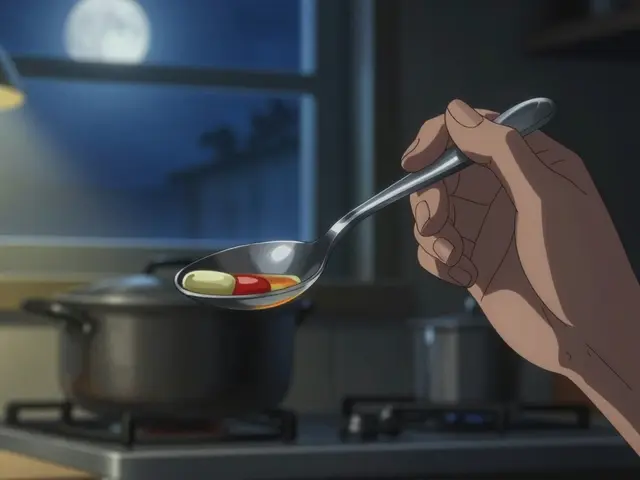
Imagine you're tired, it's 3 AM, and your toddler has a fever. You reach for the liquid medicine and a spoon from the kitchen drawer. It seems like a quick, harmless shortcut. But here is the scary part: that kitchen spoon could be delivering 40% more or less medication than your child actually needs. In the world of pediatric care, a "little bit off" can be the difference between a recovered child and a trip to the emergency room.
The problem is that children's medicine dosing is the process of administering a precise amount of liquid medication based on a child's weight and age . Because kids' bodies are so much smaller and more sensitive than ours, their margins for error are tiny. A dose that is slightly too high can lead to toxicity, while a dose that is too low means the medicine simply won't work. This is why health experts have spent decades trying to get us to throw away the habit of using cutlery for healthcare.
The Dangerous Gap Between Kitchen Spoons and Medical Standards
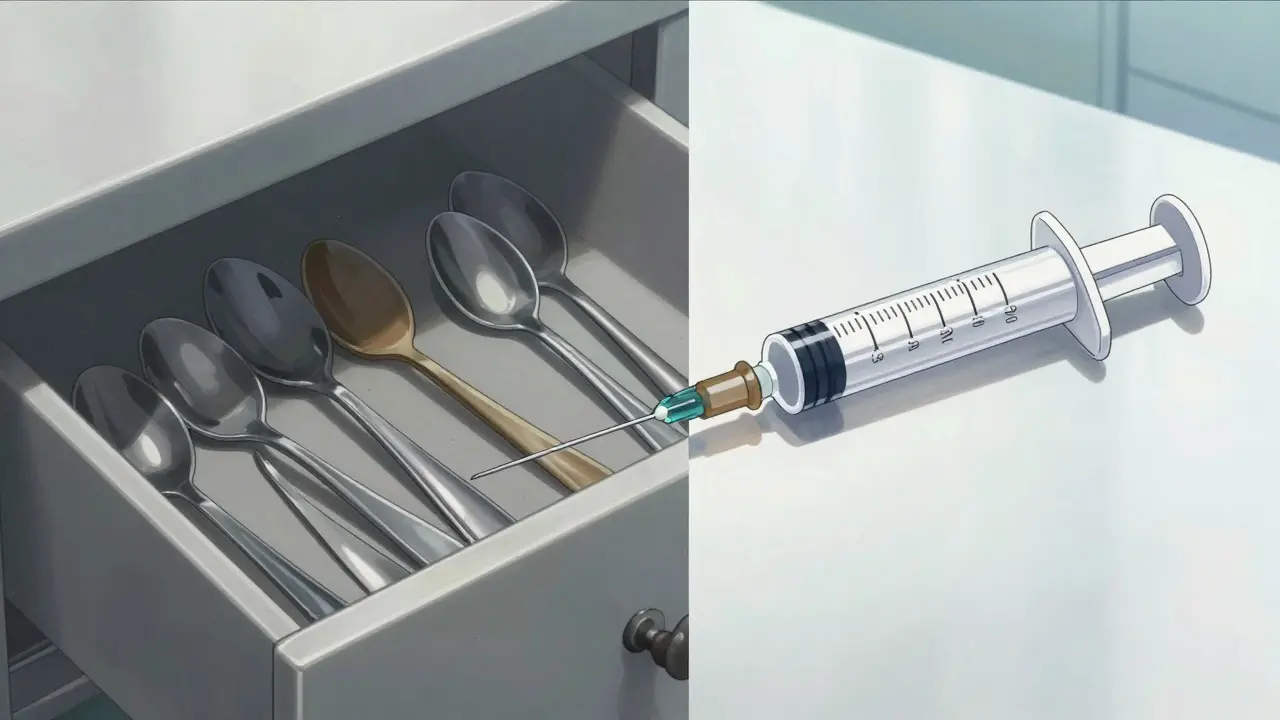
You might think a teaspoon is just a teaspoon, but in reality, there is no such thing as a "standard" kitchen spoon. While a medical teaspoon is exactly 5 milliliters (mL), household spoons vary wildly. Some hold as little as 3 mL, and others hold up to 7 mL. When you use a random spoon from your drawer, you are essentially guessing the dose.
The CDC is the Centers for Disease Control and Prevention, the national public health agency of the United States has highlighted this danger through its "Spoons are for Soup" campaign. They've pointed out a terrifying scenario: if you accidentally use a tablespoon instead of a teaspoon, you could be giving your child three times the intended dose. That's not just a mistake; it's a potential overdose.
| Tool Type | Standard Volume | Actual Variance | Accuracy Level |
|---|---|---|---|
| Household Teaspoon | 5 mL (approx) | 3 mL to 7 mL | Very Low |
| Household Tablespoon | 15 mL (approx) | High variability | Very Low |
| Dosing Cup | Graduated (5, 10, 15 mL) | Low (poor for non-multiples of 5) | Moderate |
| Oral Syringe | Graduated (0.1 mL increments) | Minimal | Highest |
Why Milliliters (mL) are the Only Language You Should Use
For a long time, medicine labels used terms like "tsp" or "teaspoon." Research shows this was a huge mistake. A study published in Academic Pediatrics found that when labels used the word "teaspoon," about 33% of parents considered using a kitchen spoon. However, when the label explicitly used milliliters is a metric unit of volume equal to one-thousandth of a liter, used globally for medical precision (mL), that number dropped to less than 10%.
The confusion stems from the fact that we use these words in our daily lives for cooking, but in medicine, precision is everything. If a doctor prescribes 3.5 mL of a medication, you cannot measure that in a kitchen spoon or even in many standard dosing cups that only have marks every 5 mL. This is where the risk of underdosing comes in-if the child doesn't get enough of the drug, the infection or condition isn't treated, which can lead to a relapse or worsening symptoms.
The Gold Standard: Oral Syringes and Droppers
If you want the safest possible outcome, the oral syringe is a plastic, non-needle device used to deliver a precise volume of liquid medication into the mouth is your best friend. Unlike cups or spoons, syringes allow you to measure down to 0.1 mL. This precision is vital for newborns and infants where even a fraction of a milliliter matters.
The American Academy of Pediatrics is a professional organization of pediatricians that sets standards for child health and safety (AAP) strongly recommends these devices because they minimize the "human error" associated with pouring liquids into a cup and losing some of the medicine along the way.
How to Give Medicine Safely: A Step-by-Step Guide
Giving medicine doesn't have to be a struggle. To ensure your child gets the exact dose and doesn't spit it out, follow these practical steps:
- Check the label: Always look for the dose in mL. If the label says "teaspoon," call your pharmacist to confirm the exact milliliter amount.
- Use the provided tool: Only use the syringe or cup that came with that specific medication. Do not swap tools between different medicines to avoid cross-contamination.
- Measure at eye level: Don't hold the syringe up in the air. Place it on a flat surface or hold it steady at eye level to ensure the liquid hits the line exactly.
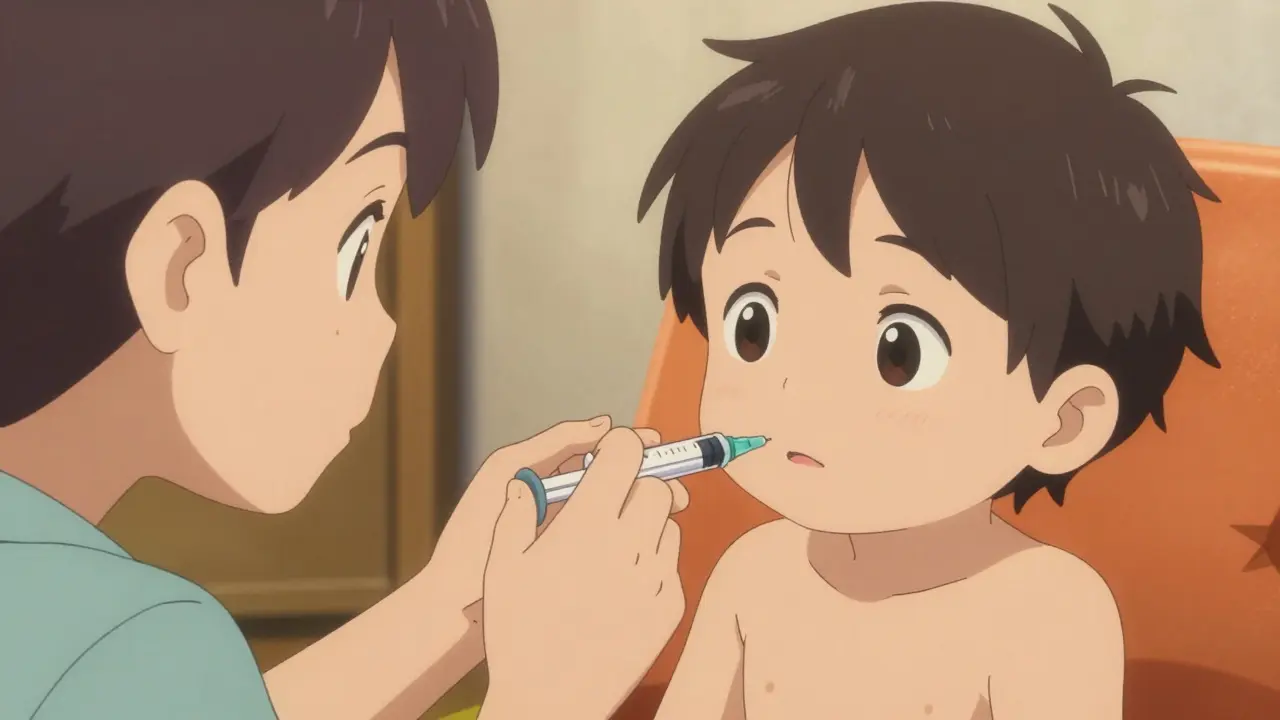
- Aim for the cheek: Instead of squirting medicine toward the back of the throat (which can cause choking or coughing), aim for the inside of the cheek.
- Go slow: Squirt the liquid gently so the child can swallow it naturally.
Common Pitfalls and How to Avoid Them
Even careful parents make mistakes. One common error is using a dosing cup for a dose that falls between the lines. If your child needs 2.5 mL but your cup only has a 5 mL mark, do not "eyeball" it. This is where you need an oral syringe.
Another issue is the "air bubble." When drawing liquid into a syringe, you might see a bubble of air. This takes up space and means your child is getting less medicine than you think. Gently tap the side of the syringe to push the bubble to the top and push it out before finalizing the measurement.
Finally, beware of the "leftover" medicine. If a child spits out half the dose, do not immediately give another full dose. Consult your pediatrician or a pharmacist to see if a partial redose is necessary, as doubling up can lead to accidental overdose.
The Bigger Picture: A Public Health Challenge
It's shocking that despite warnings since 1978, roughly 75% of Americans still use kitchen spoons for medicine. This habit contributes to over 10,000 calls to poison control centers every single year. This isn't about a lack of intelligence; it's about a cultural habit that is hard to break.
The FDA is the Food and Drug Administration, responsible for protecting public health by ensuring the safety of drugs and food and the AAP are pushing for a total shift toward milliliter-only labeling. When manufacturers remove the word "teaspoon" entirely, the risk of error drops by about 20 percentage points. We are moving toward a world where the kitchen spoon is for soup, and the syringe is for health.
Why can't I just use a measuring spoon from my baking set?
Baking spoons are designed for food, not medicine. Even "standardized" baking spoons can vary in volume and are not calibrated for medical precision. They lack the fine graduations needed for doses like 2.2 mL or 3.7 mL, making them unsafe for pediatric dosing.
What should I do if my medicine didn't come with a dosing tool?
Never guess the dose with a household spoon. Go back to your pharmacy and ask for a calibrated oral syringe or dosing cup. Most pharmacists will provide these for free or a very low cost to ensure patient safety.
Is a dosing cup as accurate as an oral syringe?
Generally, no. While better than a kitchen spoon, dosing cups are less accurate for small volumes or doses that aren't exact multiples of 5 mL. Oral syringes are the gold standard because they allow for measurement in increments as small as 0.1 mL.
Can I use the same syringe for different medications?
It is not recommended. Using one syringe for multiple medications can lead to cross-contamination. If you must reuse one, wash it thoroughly with warm, soapy water and dry it completely between uses, but the safest practice is to use the specific tool provided with each drug.
What happens if I accidentally give my child too much medicine?
Immediately contact your pediatrician or call your local poison control center. Do not wait for symptoms to appear. Have the medication bottle and the exact amount given ready for the operator so they can provide the correct emergency guidance.
Next Steps for Parents
To keep your home safe, start by auditing your medicine cabinet. If you have old dosing tools that are faded or cracked, toss them. The next time you pick up a prescription, double-check that you have a milliliter-calibrated syringe. If the label is confusing or uses outdated terms like "tsp," don't be afraid to ask your pharmacist to write the dose in mL clearly on the bottle.




Write a comment