
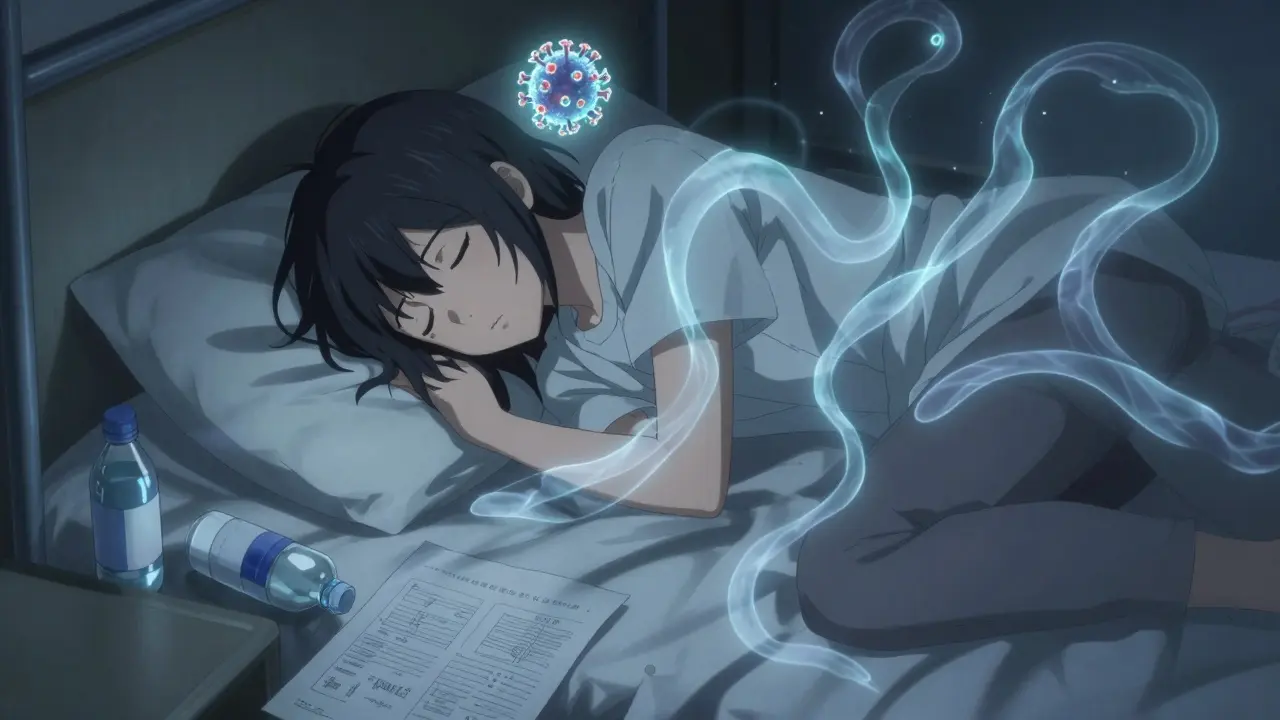
Most people think of mono as just a bad sore throat that won’t go away. But if you’ve had it, you know it’s more than that. It’s the kind of exhaustion that makes brushing your teeth feel like running a marathon. It’s the weeks of missing school or work, not because you’re lazy, but because your body just won’t let you move. And it’s the frustration of being told you’re fine after two weeks, when you still can’t get out of bed without feeling like you’ve been hit by a truck.
Mononucleosis, or "mono," is caused by the Epstein-Barr virus (a type of herpesvirus that infects B-lymphocytes and causes infectious mononucleosis, EBV). About 95% of Americans are infected with EBV by age 35, but most never know it-especially if they caught it as a child. When teens and young adults get it, though, the symptoms hit hard. That’s why it’s called "the kissing disease." It spreads through saliva-sharing drinks, utensils, or yes, kissing. But it’s not just about romance. A shared water bottle at the gym or a sneaky lick of an ice cream cone can do it too.
What mono actually feels like
It doesn’t start with a bang. You might feel off for a few days-tired, a little achy, maybe a low-grade fever. Then, around week two or three, it hits full force. The sore throat isn’t just uncomfortable; it’s severe. You swallow and it feels like glass. You go to the doctor thinking it’s strep, get a rapid test, and they give you antibiotics. But they don’t work. That’s because mono isn’t bacterial. It’s viral. And antibiotics? They do nothing. In fact, if you take amoxicillin or ampicillin with mono, you’re likely to break out in a full-body rash. About 90% of people who do end up with one.
The fatigue? That’s the real killer. Nearly every single person with mono reports extreme tiredness-98%, according to Mount Sinai. It’s not normal tiredness. It’s the kind that makes you fall asleep sitting up. You wake up feeling worse than when you went to bed. You can’t focus. You forget names. You cancel plans. And it doesn’t go away after a week or two. For most, it lasts 2 to 6 weeks. For some, it drags on for months.
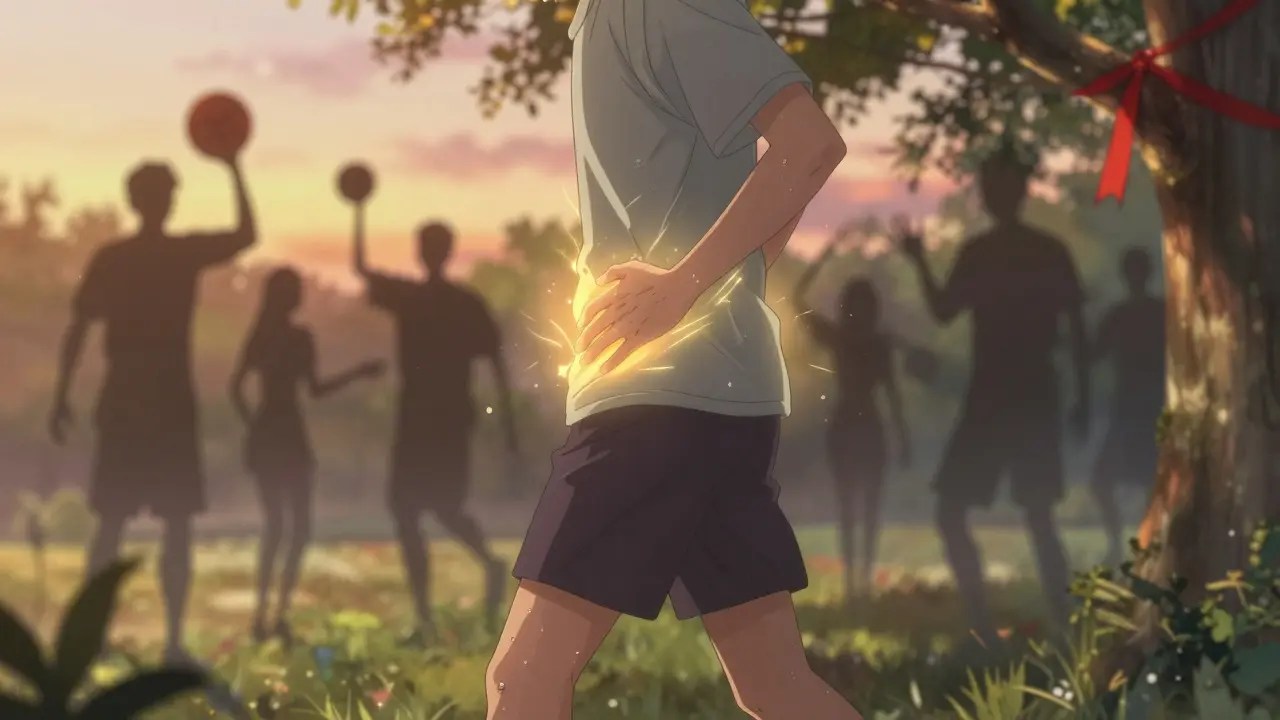
Swollen glands in your neck, fever between 101°F and 104°F, and swollen tonsils with white patches are common too. Half of people develop an enlarged spleen. That’s not just a medical term-it’s a red flag. A ruptured spleen is rare, but it’s dangerous. It can happen if you get hit in the abdomen, even lightly. That’s why doctors tell you to avoid sports, lifting heavy stuff, or even roughhousing for at least four weeks.
How doctors diagnose it
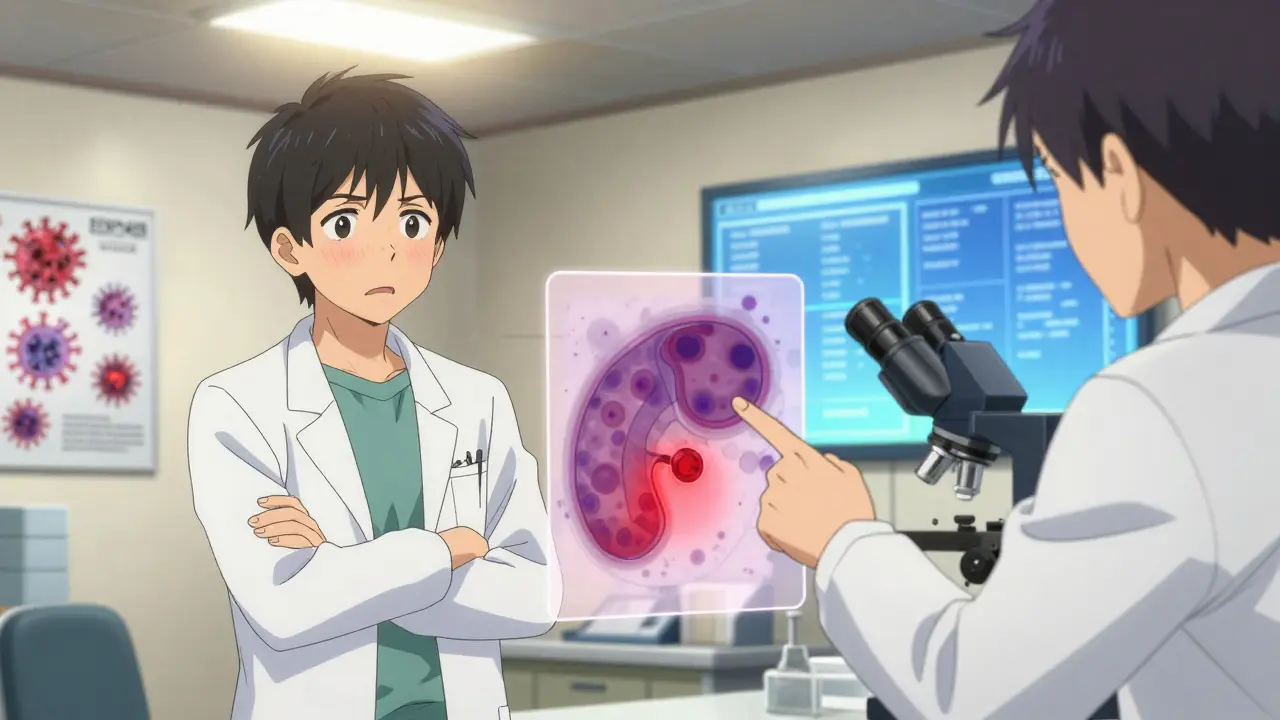
There’s no quick test on day one. The standard Monospot test looks for antibodies your body makes in response to EBV. But it often comes back negative in the first week. That’s why doctors might wait and retest. If it’s still unclear, they’ll order a full EBV antibody panel: VCA-IgM (shows recent infection), VCA-IgG (shows past infection), and EBNA (appears months later and means you’ve recovered).
Blood tests also show something unique: a high number of atypical lymphocytes. That’s a telltale sign. It’s why mono can be mistaken for other infections. If your white blood cell count looks odd and your throat looks like strep but doesn’t improve with antibiotics, mono is likely.
Why recovery takes so long
EBV doesn’t just disappear. Once it infects you, it hides in your B-cells for life. It goes quiet-latency. But your immune system is still working overtime to keep it in check. That’s why fatigue lasts so long. Your body isn’t fighting the virus anymore; it’s fighting the aftermath. Your energy levels are still recovering from the massive immune response.
People on Reddit’s r/mononucleosis community share stories that sound like nightmares: "I thought I was better at week 3. Week 5? I couldn’t even shower without needing a nap." One person took 11 weeks to return to part-time work. A 2023 survey found 78% of patients said fatigue was worse than the throat pain. And 67% said their doctors expected them to be back to normal in two to three weeks-despite clear evidence it takes longer.
That disconnect is dangerous. When doctors don’t believe how sick you are, you start doubting yourself. You push too hard. You go back to school. You lift weights. And then you crash harder.
What actually helps
There’s no cure. No antiviral drug makes mono go away faster. The Infectious Diseases Society of America reviewed 12 studies and found antivirals like acyclovir don’t change the course of illness. Corticosteroids? They might shrink swollen tonsils a little, but only by about 12 hours-and they come with side effects like mood swings and high blood sugar. So most doctors avoid them.
What works? Rest. But not just sleeping all day. It’s about pacing. The "Pacing, Prioritizing, Planning" method from Stanford’s Fatigue Clinic helps. Start at 50% of your pre-illness energy level. Do 20 minutes of walking, then rest for 20. Drink 20 ounces of water. That’s the 20-20-20 rule one college student swore by to finish finals.
Hydration matters. Fever and sore throat drain fluids. Water, broth, electrolyte drinks-keep them close. Pain relief? Acetaminophen is safe. Avoid NSAIDs like ibuprofen. Mono can lower your platelet count. NSAIDs increase bleeding risk, and with an enlarged spleen, that’s risky.
And yes, avoid contact sports. No basketball, football, soccer, wrestling. Not even light sparring. Ultrasound checks confirm when your spleen has returned to normal. For 90% of people, that’s within 30 days. But for some, it takes up to 12 weeks. Don’t guess. Get scanned.
When to worry
Most people recover fine. But watch for red flags:
- Sudden sharp pain in the left upper abdomen-that’s your spleen. Go to the ER.
- Difficulty breathing or swallowing-tonsils can swell so much they block your airway.
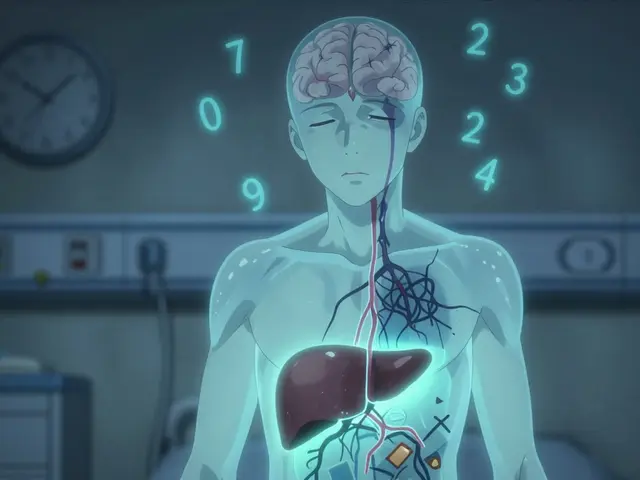
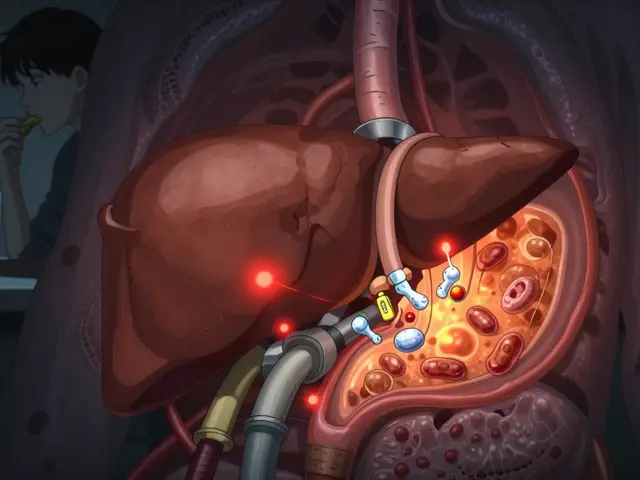
- Yellow skin or eyes-that’s jaundice, meaning your liver is involved.
- Numbness, tingling, or weakness in your limbs-that could be Guillain-Barré syndrome, a rare neurological complication.
These are rare, but they’re serious. Don’t wait.
The long-term shadow
EBV doesn’t just cause mono. It’s linked to other conditions. A 2022 Harvard study of 10 million military personnel found people who had mono had a 1.3 times higher risk of developing multiple sclerosis (MS) later in life. That sounds scary, but the absolute risk is still tiny-only 0.03%. Still, it’s a clue that EBV might play a role in autoimmune diseases.
And there’s new hope. In 2023, researchers at the University of Toronto found low-dose naltrexone (LDN) reduced fatigue by 40% in people with symptoms lasting over six months. Meanwhile, Moderna started a Phase I trial for an EBV vaccine in April 2023. Early results showed 92% of participants developed protective antibodies. That could change everything.
Even more exciting? A monoclonal antibody called atrasentan, tested in MS patients, reduced new brain lesions by 60% by targeting EBV-infected cells. If this works, it might treat both MS and prevent long-term complications from mono.
What you can do now
If you’ve got mono, give yourself grace. This isn’t a week-long bug. It’s a full-body reset. You’re not lazy. You’re healing. Don’t compare yourself to others. Don’t rush back. Listen to your body. If you feel worse after activity, you did too much. Rest again.
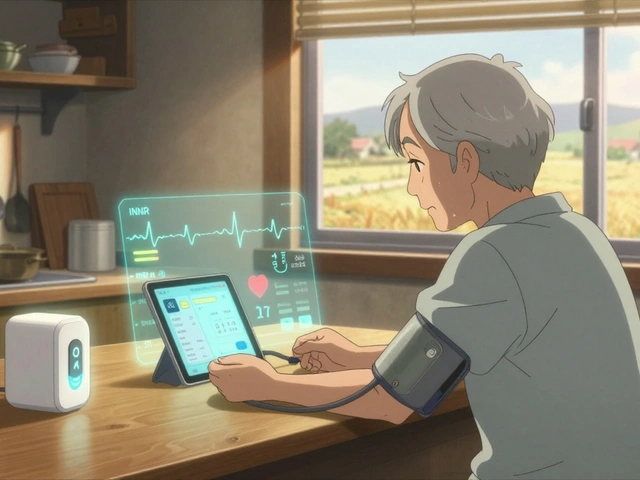
Track your energy. Write down what you do and how you feel. That helps you see patterns. Maybe you can handle 15 minutes of reading but not scrolling on your phone. Maybe you need two naps a day. That’s okay.
And if your doctor dismisses your fatigue? Get a second opinion. Or bring them this: the CDC updated its guidelines in June 2023 to recognize prolonged fatigue as normal. You’re not imagining it.
Mononucleosis doesn’t define you. But how you recover from it? That does. Take it slow. Protect your spleen. Hydrate. Rest. And know this: you will get better. Just not on someone else’s timeline.
Can you get mono more than once?
Once you’ve had mono caused by Epstein-Barr virus, you won’t get symptomatic mono again. The virus stays in your body for life, but your immune system keeps it under control. You might shed the virus occasionally-like during stress or illness-but you won’t develop the full-blown symptoms again.
How long is mono contagious?
You can spread EBV for several months after symptoms start-even up to 18 months in some cases. The virus hides in your saliva, so kissing, sharing drinks, or utensils can pass it along. Most people are contagious for at least 4 to 6 weeks after diagnosis. After that, the risk drops but doesn’t disappear completely.
Why does mono cause such extreme fatigue?
Your immune system goes into overdrive to fight the Epstein-Barr virus. That process uses up a huge amount of energy. Even after the virus is under control, your body keeps working to repair damage and restore balance. This ongoing effort drains your energy reserves, leading to fatigue that can last weeks or months. It’s not laziness-it’s biology.
Can children get mono?
Yes, but they rarely show the classic symptoms. Most kids infected with EBV before age 5 have mild or no symptoms-sometimes just a cold or stomach bug. That’s why so many people don’t realize they’ve had mono. The full-blown illness with extreme fatigue and swollen glands mostly happens in teens and young adults.
Is there a vaccine for mono?
Not yet, but one is in development. Moderna began Phase I trials for an mRNA-based EBV vaccine in April 2023. Early results showed 92% of participants developed protective antibodies. If successful, this vaccine could prevent mono and potentially lower long-term risks like multiple sclerosis.
What’s the difference between mono and chronic fatigue syndrome?
Mono is a short-term viral infection with a clear cause: Epstein-Barr virus. Chronic fatigue syndrome (CFS), or myalgic encephalomyelitis (ME), is a long-term condition with no single known cause. Some people who had mono develop prolonged fatigue that lasts beyond six months, but not everyone with CFS had mono. Experts believe EBV might trigger CFS in a small number of people, but the link isn’t fully understood.
Recovery from mono isn’t about speed-it’s about listening. Your body didn’t break. It just needed time to heal. Give it that. You’ll get back to normal. Just not tomorrow.

Comments
I remember having mono in college. Thought I was just sick, then spent three weeks in bed just staring at the ceiling. My mom brought me soup and told me to rest. I didn’t believe her until I tried to walk to the bathroom and collapsed.
It’s not laziness. It’s your body screaming.
They say EBV is everywhere but no one talks about how Big Pharma doesn’t want you to know the real cause. It’s not just a virus-it’s glyphosate poisoning, 5G, and vaccines messing with your mitochondria. They gave me antibiotics? That’s why I got the rash. They don’t care. They just want you on pills forever.
They’ll never admit the truth.
The fatigue hits like a freight train wrapped in wet blankets. You’re not tired-you’re hollowed out. Like your bones forgot how to hold up your soul.
And the worst part? People smile and say, ‘You look fine.’
Fine? I can’t remember my own phone number.
They don’t get it until they’ve been there.
Then they shut up and just bring you tea.
Been there. Took me four months to feel normal again.
Went back to work at six weeks. Crashed harder.
Now I nap like it’s a job.
And I don’t feel guilty.
My spleen was swollen. I got the scan.
Worth it.
Hey, I’m in Australia and we call it the ‘kissing disease’ too, but honestly, I got it from sharing a protein shake after the gym. No romance involved.
My doctor said rest, but didn’t mention the spleen thing until I asked. Don’t skip the ultrasound.
Also, LDN? I tried it after 8 months and it was a game changer. Not magic, but my brain fog lifted a bit.
And yes, the vaccine trials? I’m signing up.
Hope you’re taking it slow. You’ve got this 💪
The CDC’s 2023 update acknowledging prolonged fatigue as legitimate is a small but meaningful victory. It validates what patients have been saying for decades. Medical dismissal is a form of institutional gaslighting, and it delays recovery. Documentation matters. Bring the guidelines. Print them. Hand them to your doctor. You’re not overreacting. You’re under-supported.
My cousin had mono in high school and didn’t go back to school for six weeks. Teachers thought she was faking. She cried every night because she felt guilty. Then she got her spleen checked and they told her to stay off the soccer field. She finally felt seen.
So if you’re reading this and someone says ‘just push through’-tell them to read this post. You’re not broken. You’re healing.
Let’s be real-this post reads like a medical textbook with a self-help veneer. You’re romanticizing exhaustion. EBV is everywhere. Most people don’t even know they had it. The fact that you’re treating this like a rare tragedy is performative. You’re not special. You’re just statistically average. And yes, you’re probably still scrolling on your phone while pretending to rest.