Health Literacy: Understand Your Medications and Make Smarter Health Choices
When you take a pill, you’re trusting your life to something you might not fully understand. Health literacy, the ability to find, understand, and use health information to make good decisions. Also known as medical literacy, it’s not about being a doctor—it’s about knowing how to read a label, ask your pharmacist a real question, and spot when something doesn’t add up. Most people don’t realize that over 1.5 million preventable medication errors happen every year in the U.S. alone. A lot of them aren’t caused by doctors or pharmacists—they’re caused by patients who didn’t know what they were taking, why, or how it might react with something else.
Health literacy connects directly to things like medication safety, the practice of ensuring drugs are used correctly to avoid harm, and pharmacy counseling, when a pharmacist explains how to take a drug, what side effects to watch for, and what to avoid mixing with it. You can’t rely on a doctor’s 5-minute visit to cover everything. That’s why knowing how to check if a pill is the right strength, whether grapefruit juice will mess with your blood thinner, or if your generic is truly the same as the brand name matters. These aren’t niche concerns—they’re daily realities for anyone on medication. And if you’re managing chronic conditions, juggling multiple drugs, or caring for a child or elderly parent, this knowledge isn’t optional. It’s your first line of defense.
It’s also about power. When you understand how drug interactions, when two or more medications affect each other’s strength or safety work, you stop being passive. You can ask: ‘Is this antibiotic safe with my blood thinner?’ or ‘Why does my insulin need to stay cool?’ You won’t just follow instructions—you’ll understand them. That’s the difference between hoping for the best and knowing what to watch for. The posts below give you real, practical tools: how to read children’s dosing labels by weight, how to spot fake online pharmacies, how to switch to a cheaper generic without risk, and how to talk to your pharmacist when you’re confused. No jargon. No fluff. Just what you need to stay safe and in control.
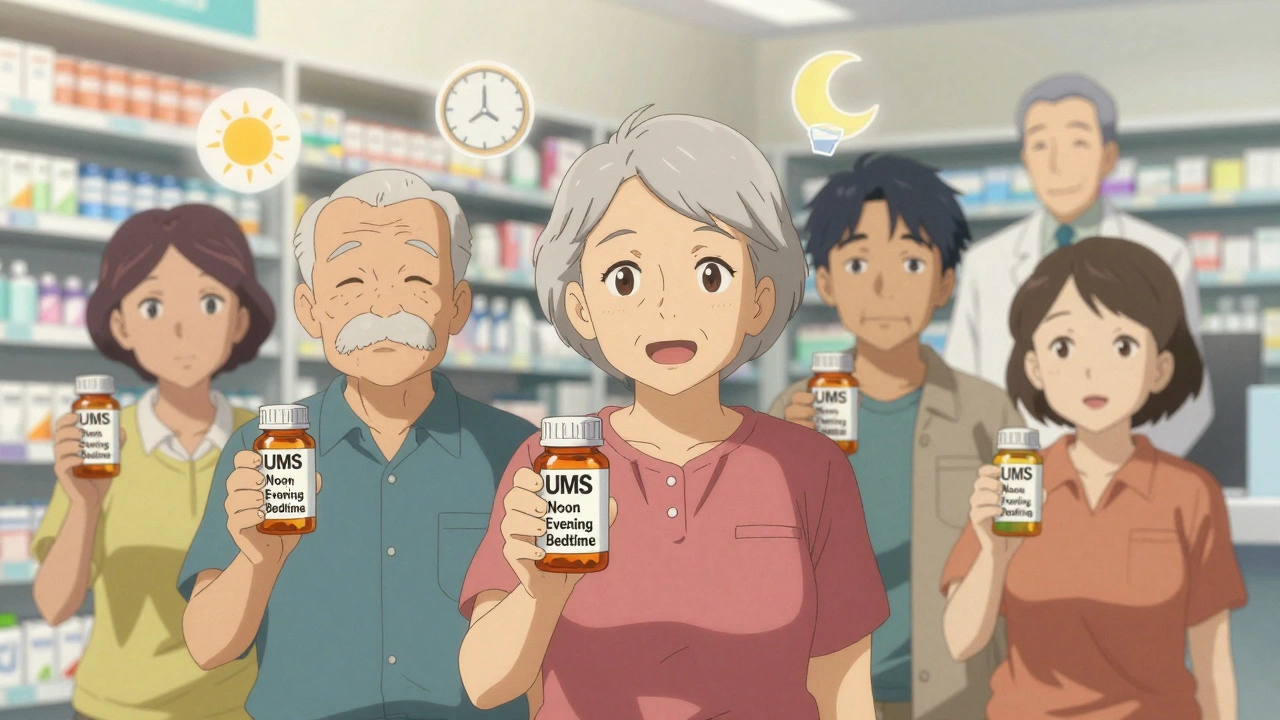
Learn how to read medication labels correctly, avoid dangerous dosing errors, and use simple strategies like UMS and pictograms to take your medicine safely - no matter your literacy level.
Read more