
Opioid Dose Calculator for Older Adults
Safe Opioid Dosing Calculator
This calculator helps determine safe starting doses for older adults based on clinical guidelines. Always consult with a healthcare provider before adjusting medications.
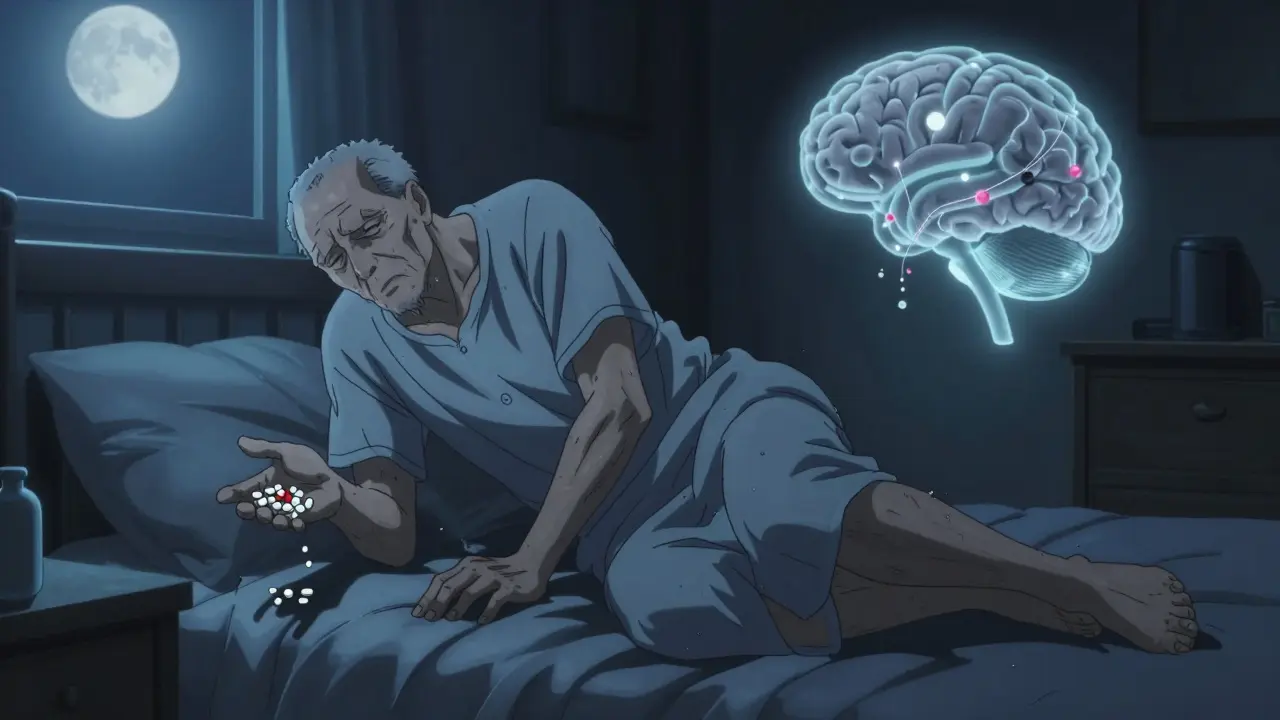
When a 72-year-old man falls after taking his nightly opioid for arthritis pain, it’s not just bad luck-it’s a warning sign. Older adults aren’t just more sensitive to opioids; their bodies process them differently, and the side effects can be deadly. Opioids are still prescribed often for chronic pain in seniors, but the risks-falls, confusion, even sudden death-are far higher than most people realize. And the dose that works fine for a 40-year-old could be dangerous for someone over 65.
Why Opioids Hit Older Adults Harder
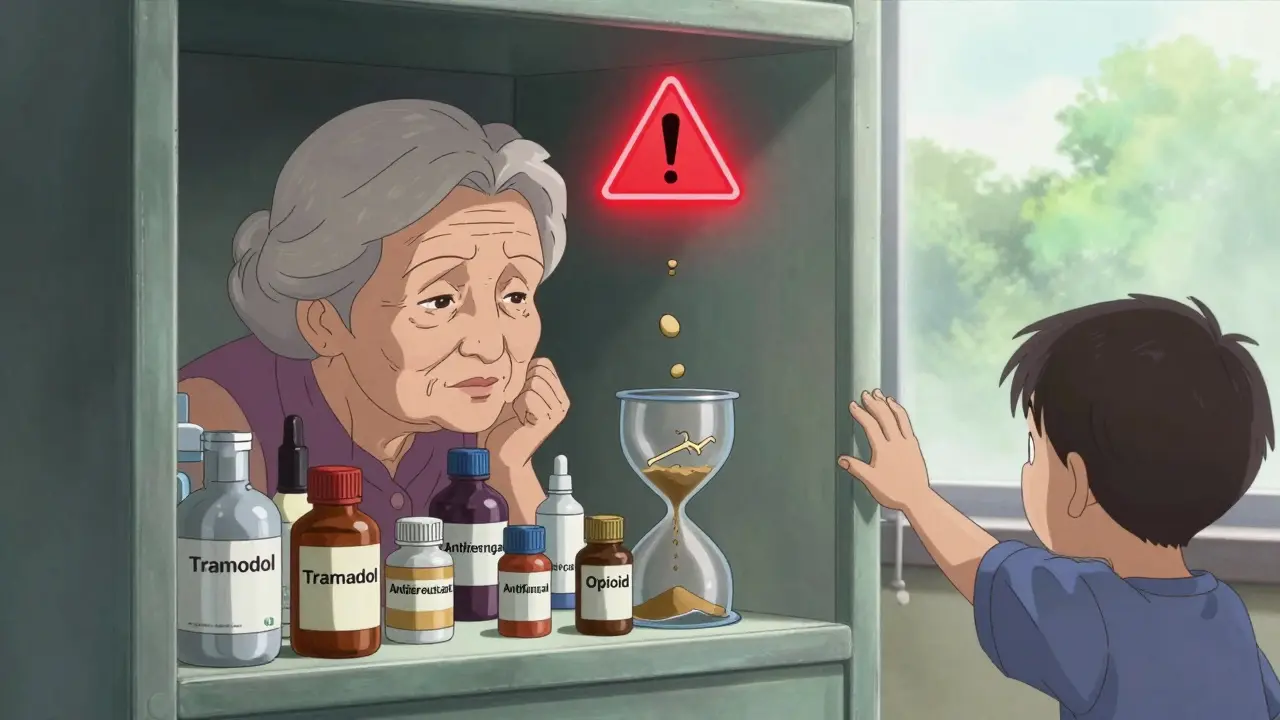
Your body changes as you age. Kidneys slow down. The liver doesn’t break down drugs as fast. Fat increases, muscle decreases. Blood flow to the brain drops. All of this means opioids stick around longer and build up in the system. Even a "normal" dose can leave an older person drowsy, dizzy, or disoriented.Take tramadol, a weak opioid often thought to be "safe." It can cause hyponatremia-a drop in sodium levels-that leads to dizziness, confusion, and falls. Combine it with other meds like antidepressants or antifungals, and the risk spikes. These drug interactions are common in seniors who take five, six, or more pills a day. But many doctors don’t check for them.
And then there’s the brain. The blood-brain barrier weakens with age, letting more drug molecules slip into brain tissue. That’s why even small doses can cause delirium: sudden confusion, trouble thinking, hallucinations. It’s often mistaken for dementia or depression. In fact, a 2023 study of over 75,000 older Danes with dementia found that starting opioids increased the risk of death in the first two weeks by elevenfold. That’s not a typo. Eleven times more likely to die.
Falls: The Silent Killer
Falls are the leading cause of injury and death in seniors. And opioids are a major contributor. They don’t just make you sleepy-they mess with your balance, lower your blood pressure when you stand up (orthostatic hypotension), and blur your vision. One study of 2,341 adults over 60 found that those on opioids had a 28% higher chance of fracture over 33 months. The difference wasn’t statistically significant? That’s because many of these falls don’t get reported. People don’t go to the hospital for a bruise. But they do for a broken hip.And here’s the cruel irony: pain makes you move less. Less movement means weaker muscles, worse balance, and higher fall risk. So you take opioids to stop the pain, but they make you more likely to fall. It’s a trap.
Delirium: Mistaken for Dementia
Delirium isn’t just "getting forgetful." It’s a sudden, severe change in mental state-confusion, agitation, hallucinations, trouble speaking. It comes on over hours or days. And opioids are one of the top triggers in older adults. Many doctors don’t even think to check for it. They assume it’s just "part of aging." But delirium can be reversed-if caught early.One study found that nearly half of older adults admitted to the hospital with delirium had opioids in their system. In dementia patients, opioids can make symptoms worse and speed up decline. The Danish study showed that even short-term opioid use after a dementia diagnosis led to a sharp spike in deaths. That’s not coincidence. It’s cause and effect.
Dose Adjustments: Start Low, Go Slow
There’s no one-size-fits-all dose for seniors. But there is a rule every doctor should follow: start low, go slow.- Begin with 25% to 50% of the dose you’d give a younger adult.
- Wait at least 5 to 7 days before increasing it-sometimes longer.
- Use short-acting opioids (like oxycodone or hydrocodone) instead of long-acting ones (like fentanyl patches or methadone). They’re easier to adjust and clear faster.
- Avoid tramadol and codeine. They’re metabolized unpredictably in older bodies and carry high risks of side effects.
Tools like STOPPFall help doctors decide when to reduce or stop opioids. It asks: Has the patient fallen in the past year? Do they have dementia or balance problems? Are they on other sedating drugs? If the answer is yes to any, it’s time to reconsider.
Deprescribing: It’s Not Giving Up-It’s Safe Care
Many seniors have been on opioids for years. They don’t want to stop. They think it’s the only thing keeping them moving. But here’s the truth: long-term opioid use doesn’t improve function. It just increases risk.Deprescribing doesn’t mean leaving pain untreated. It means switching to safer options: physical therapy, heat, acupuncture, non-opioid painkillers like acetaminophen (used carefully), or nerve-targeted treatments. Sometimes, reducing the opioid dose-even by 25%-can reduce dizziness without increasing pain.
But it’s hard. Patients fear withdrawal. Doctors fear backlash. A study in JAMA Network Open found nearly half of primary care doctors felt unprepared to taper opioids. And seniors? They rarely bring it up. They don’t know the risks. They think addiction is the only danger. They don’t realize they could be at risk of falling, getting delirious, or dying.
The Bigger Picture: A System That Misses the Mark
Emergency visits for opioid problems in seniors rose by over 110% between 2005 and 2014. That’s not because people are using more. It’s because we’re prescribing carelessly. Older adults are often treated like younger patients with a few extra wrinkles. But their bodies are different. Their risks are higher. Their lives are more fragile.And it’s not just about pain. It’s about dignity. A person who can’t walk without falling can’t go to the store, visit a grandchild, or sit on their porch. Opioids might numb the pain, but they steal independence.
Guidelines from the CDC and FDA now urge doctors to avoid opioids for chronic pain in older adults unless absolutely necessary. Non-drug options should come first. If opioids are used, they should be the lowest effective dose for the shortest time.
What Seniors and Families Can Do
If you or a loved one is on opioids:- Ask: "Is this still necessary?" Don’t assume it’s permanent.
- Ask: "Could this be causing my dizziness or confusion?"
- Ask: "What are the alternatives?"
- Keep a list of all medications-prescription, over-the-counter, supplements-and share it at every visit.
- Watch for signs: stumbling, slurred speech, trouble remembering, new confusion.
- Never stop suddenly. Tapering must be done slowly with medical supervision.
It’s not about fear. It’s about awareness. Opioids aren’t evil. But they’re not harmless, either. Especially for older adults.
Can opioids cause delirium in seniors without dementia?
Yes. Opioids can trigger delirium even in seniors without pre-existing dementia. The drug’s effect on the brain-especially when combined with other medications or dehydration-can cause sudden confusion, disorientation, and hallucinations. This is often mistaken for early dementia, but it can reverse if the opioid is reduced or stopped.
Is tramadol safe for older adults?
No, tramadol is not recommended for older adults. It carries a high risk of hyponatremia (low sodium), which causes dizziness, confusion, and falls. It’s also metabolized unpredictably due to age-related changes in liver enzymes, making side effects harder to predict. Safer alternatives exist.
How do I know if my parent’s opioid dose is too high?
Watch for signs: frequent falls, drowsiness during the day, trouble remembering names, slurred speech, or confusion after taking the medication. If they seem "off" after a dose increase, the dose may be too high. Talk to their doctor about reducing it slowly.
What are safer alternatives to opioids for senior pain?
Physical therapy, heat/cold therapy, acupuncture, transcutaneous electrical nerve stimulation (TENS), and non-opioid pain relievers like acetaminophen (in safe doses) are often more effective and safer. For nerve pain, gabapentin or pregabalin may be used. Always discuss options with a doctor who understands geriatric care.
Why don’t doctors talk more about opioid risks with older patients?
Many doctors assume older patients won’t misuse opioids, so they focus less on risks. Patients, in turn, often don’t speak up because they fear being seen as "complaining" or losing their pain relief. There’s also a lack of training in geriatric pharmacology. Trust and open communication are key-but they’re often missing.



Comments
Man, I’ve seen this play out with my dad. He was on tramadol for years after his knee surgery-doc said it was "mild," "safe." Then he started stumbling in the hallway, forgetting his own grandson’s name. Took three ER trips and a geriatric pharmacist to finally say, "Let’s try cutting this."
He’s way more alert now. Walks without a cane. Talks to his plants again. Turns out, the "pain" wasn’t that bad-just his body screaming for help.
Don’t wait for a fall. Ask questions before it’s too late.
Oh great. Another "opioids are evil" lecture. My grandma takes one little pill and she’s fine. You people act like every senior is a walking accident waiting to happen. Maybe they should just stop being old? That’d solve everything.
The data here is compelling and aligns with geriatric pharmacology principles I’ve studied across multiple healthcare systems
What’s often missing in public discourse is the cultural dimension-how patient autonomy, family pressure, and physician inertia intersect in ways that make deprescribing feel like failure rather than care
Perhaps the next step is systemic education, not just clinical guidelines
There’s a quiet tragedy in how we treat aging-as if it’s a problem to be managed with pills rather than a phase of life to be honored with wisdom.
We rush to numb the pain, but we forget that pain can be a teacher. It tells us when to rest, when to move, when to ask for help.
Maybe the real issue isn’t opioids-it’s our fear of vulnerability in old age. We’d rather medicate the symptom than sit with the story behind it.
I’m a nurse in a long-term care facility and I’ve seen this too many times. One woman, 84, on three different sedating meds including a fentanyl patch. She’d sit in her wheelchair staring into space, drooling, not responding to her daughter’s voice.
We tapered her off over six weeks. Within days, she started humming old Bollywood songs again. She remembered her husband’s name. She asked for tea.
It wasn’t magic. It was just… removing the fog.
Doctors don’t always know. Families don’t ask. And the patient? They’re too scared to say anything.
So we have to speak for them.
So let me get this straight-we’re supposed to just stop giving pain meds to old people because they might get dizzy? What about their quality of life? I mean, if you’re 75 and you can’t even get out of bed without screaming, what’s the point of being alive if you’re not allowed to feel better?
And don’t even get me started on "physical therapy"-who’s gonna drive them? Who’s gonna pay for it? And why are we acting like this is a new problem? My grandma was on morphine in the 80s and she lived to 92.
It’s not the drugs. It’s the system. We don’t care about old people until they’re dead.
Also, I’ve seen people on opioids who are perfectly fine. My neighbor takes oxycodone and he hikes every weekend. So maybe stop making blanket statements? Not everyone is a statistic.
Oh great, another liberal scare piece. Next they’ll ban coffee because old people fall over after their third cup. You know what causes falls? Weak knees, bad floors, no handrails. Not opioids. And don’t get me started on the Danish study-those guys probably had 17 other meds in their system and no sunlight.
Also, why are we assuming seniors can’t make their own choices? My aunt took her pain meds for 12 years and never fell once. She’s 81 and still plays tennis.
Stop infantilizing old people. They’re not lab rats.
Start low go slow works. Been using it for years in my clinic. Saw a 78-year-old cut her dose by half and go from barely walking to gardening again. No drama. No withdrawal. Just better balance.
Also-tramadol is a trap. Avoid it. Always.
I’m a daughter of a woman who was on opioids for 11 years. We didn’t know the risks. No one told us. The doctor said "it’s fine." She started confusing me for her sister. She stopped recognizing her own house.
We tapered slowly. Took six months. She’s not 100% back, but she remembers my name now. She laughs again.
It’s not about fear. It’s about love. And sometimes, love means saying, "Let’s try something else."
And yes, it’s harder than just writing a prescription. But it’s worth it.
Let’s be clear: The CDC guidelines are not suggestions. They are evidence-based mandates. Yet, in 78% of primary care visits in rural India and the U.S. Midwest, clinicians still initiate opioids without assessing fall risk, polypharmacy, or cognitive status. This is not negligence. It is systemic failure. And it is compounded by insurance reimbursement models that incentivize prescribing over counseling.
Furthermore, the notion that "deprescribing is giving up" reflects a profound misunderstanding of palliative care principles. Pain management is not synonymous with opioid administration. It is about functional restoration, dignity, and autonomy.
Let us stop confusing compliance with care.
My mom was on opioids for 8 years. We didn’t know the risks. She fell. Broke her hip. Went into delirium. Spent 3 weeks in ICU.
They didn’t even check for drug interactions.
She’s fine now. Off everything. Walking again. But we lost a year of her life.
Don’t wait for the hospital to teach you.