
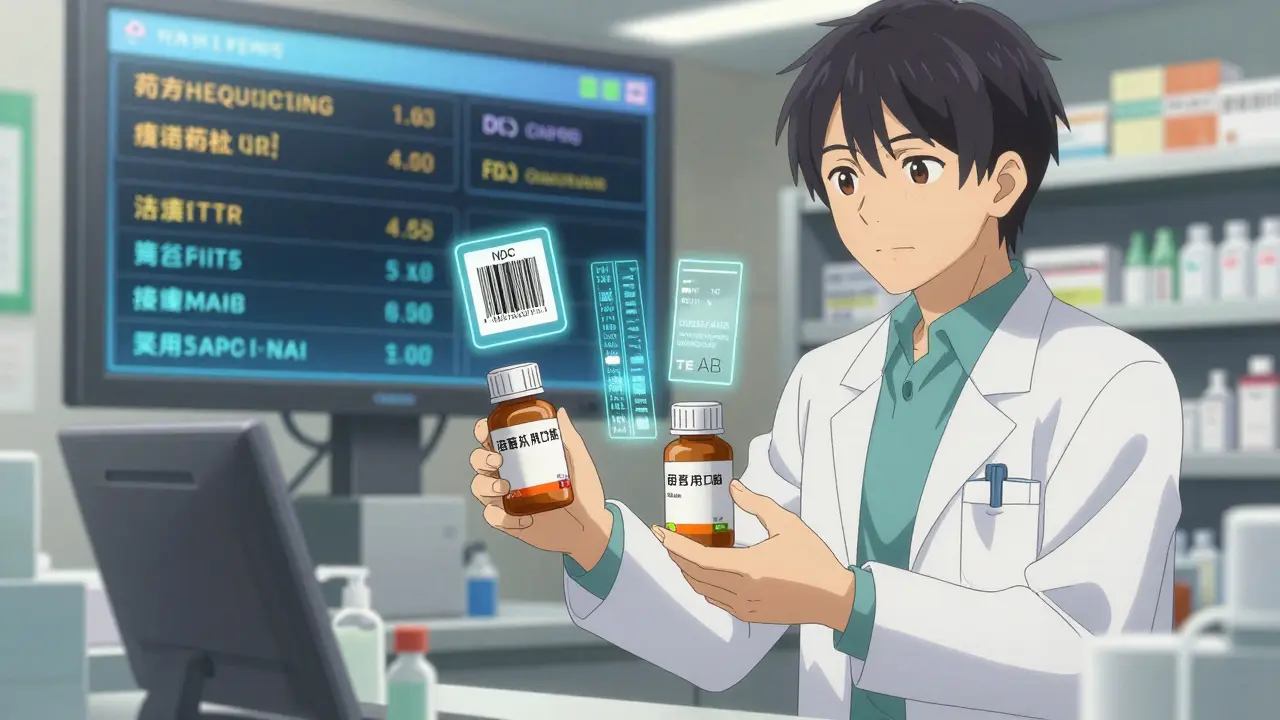
When a pharmacist fills a prescription, they’re not just handing out pills-they’re making a decision that affects safety, cost, and trust. The difference between a brand-name drug and its generic version might seem simple: one costs more, the other less. But behind that choice lies a complex system of codes, regulations, and clinical judgment. In pharmacy systems today, getting this right isn’t optional. It’s a matter of patient safety and regulatory compliance.
What Makes a Generic Drug Official?
A generic drug isn’t just a copy. It’s a legally approved equivalent. The U.S. Food and Drug Administration (FDA) requires generic drugs to match brand-name drugs in dosage, strength, safety, quality, performance, and intended use. This isn’t guesswork. Every generic must pass strict bioequivalence testing, proving it delivers the same amount of active ingredient into the bloodstream at the same rate as the brand.
The foundation of this system is the Hatch-Waxman Act of 1984, which created the Abbreviated New Drug Application (ANDA) pathway. This allowed generic manufacturers to skip expensive clinical trials by proving their product works the same way. Today, over 90% of prescriptions in the U.S. are filled with generics-but only if the system can correctly identify them.
The Role of the National Drug Code (NDC)
Every drug package, whether brand or generic, carries a unique National Drug Code (NDC) -a 10- or 11-digit number that breaks down the manufacturer, product, and package size. Think of it like a fingerprint for each version of a drug. A brand-name lisinopril and its generic version have different NDCs, even though they contain the same active ingredient.
Pharmacy systems use NDCs to pull up product details, check inventory, and ensure the right drug is dispensed. But here’s the catch: NDCs don’t tell you whether a drug is generic or brand. That’s where the FDA Orange Book comes in. This official list, updated monthly, assigns each drug a Therapeutic Equivalence (TE) code. Drugs marked with an "A"-like AB, AO, or AN-are considered interchangeable with the brand. If a system doesn’t pull this data correctly, a pharmacist might miss that a generic is approved for substitution.
Authorized Generics and Branded Generics: The Hidden Confusion
Not all generics are created equal in appearance. An authorized generic is made by the original brand manufacturer but sold under a generic label. For example, the brand-name drug Prilosec is made by AstraZeneca. But AstraZeneca also sells an authorized generic version under a different name. To the patient, it looks like a generic. To the system, it’s still the exact same formulation as the brand.
Then there are branded generics -drugs that went through the ANDA process but carry a proprietary name. Take birth control pills like Sprintec, Tri-Sprintec, or Errin. These are generics, but they’re marketed like brands. Pharmacy systems often struggle to link these back to their chemical equivalents. One pharmacist in Brisbane told me, "I had a patient ask why her new pill looked different. She was on Tri-Sprintec, but the system showed it as a generic. She panicked. We had to pull up the manufacturer’s website to prove it was the same."
How Systems Handle High-Risk Drugs
Some drugs can’t afford even tiny differences in how they’re absorbed. These are called narrow therapeutic index (NTI) drugs -medications like warfarin, levothyroxine, and phenytoin. A 5% change in blood levels can mean the difference between effective treatment and serious harm.
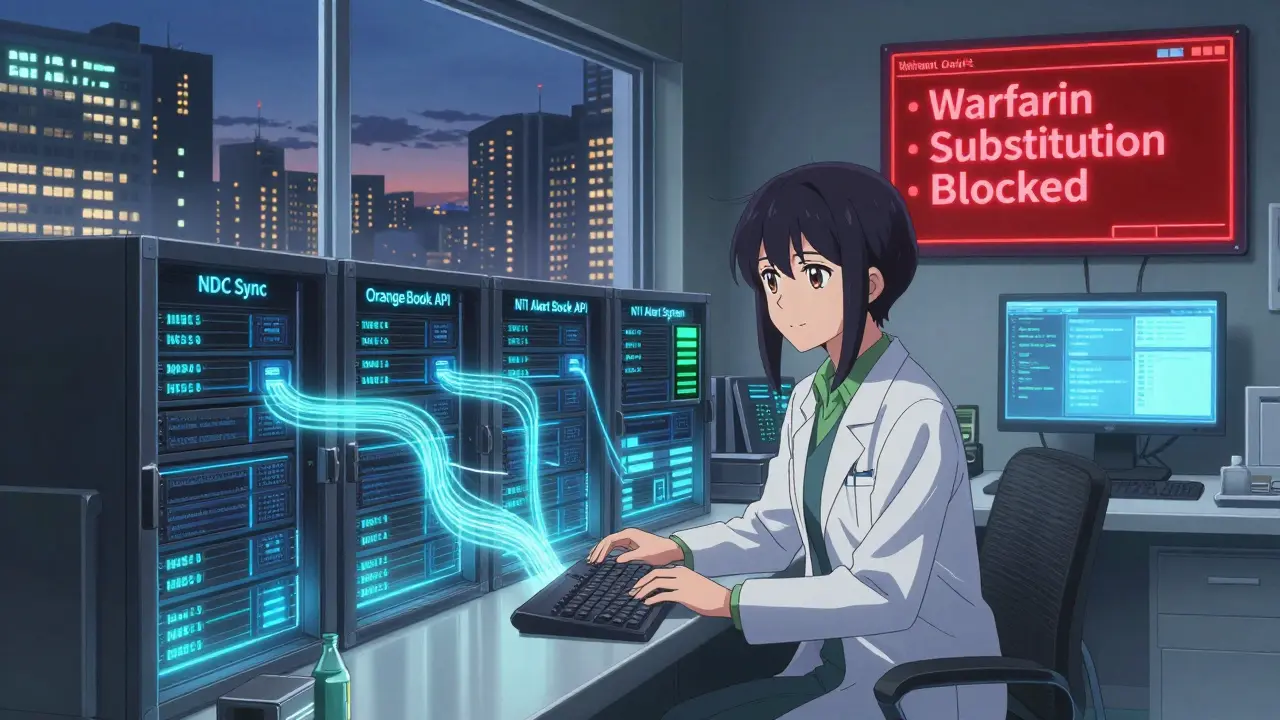
Top pharmacy systems like Epic and Cerner now include automated alerts for NTI drugs. They block automatic substitution and require pharmacist review. But not all systems do this. Independent pharmacies, especially those using older software, often lack these safeguards. A 2021 report from the Institute for Safe Medication Practices documented 147 adverse events over 18 months tied to improper substitution of warfarin. That’s not a glitch-it’s a failure in system design.
State Laws and the Patchwork of Rules
The U.S. has 50 states. Each has its own rules about when a pharmacist can substitute a generic. In Texas, substitution is automatic unless the prescriber says "do not substitute." In California, the pharmacist must document why they didn’t substitute-even if the patient asked for the brand. Systems must be configured to follow local laws, or the pharmacy risks fines or legal action.
And it’s not just about substitution. Some states require pharmacists to notify patients when switching from brand to generic. Others mandate written consent. If your pharmacy system doesn’t auto-populate these notices based on the patient’s state of residence, you’re putting yourself at risk. One chain in Queensland had to retrain 40 staff members after a patient sued because their system didn’t flag a required disclosure under Australian law.
What Happens When the System Gets It Wrong?
Errors aren’t rare. In 2023, a Reddit thread from a Walgreens pharmacist in Sydney described how their system listed 17 different generics for lisinopril-but didn’t say which ones were authorized. Patients were getting different versions every refill. Some reported headaches. Others noticed changes in blood pressure control. The issue? The system didn’t integrate with the FDA’s daily updates on authorized generics.
Another common problem: inactive ingredients. The FDA doesn’t require generics to match brand drugs in fillers or dyes. For most people, this doesn’t matter. But for patients with allergies or sensitivities, it can. A 2019 study in U.S. Pharmacist found 0.8% of patients switching from brand to generic antiepileptic drugs had seizures linked to a new excipient. Pharmacy systems rarely flag these differences.
Best Practices for Accurate Identification
So how do you fix this? It’s not about buying expensive software. It’s about how you use what you have.
- Always enable FDA Orange Book integration. Your system should pull TE codes automatically. If it doesn’t, demand an update. Monthly updates aren’t optional-they’re the baseline.
- Train staff on authorized vs. branded generics. A 2022 ASHP study found that 68% of pharmacists couldn’t correctly identify an authorized generic from a branded one. That’s not ignorance-it’s poor training.
- Set defaults to generic, but make overrides easy. Kaiser Permanente’s system defaults to generics but lets providers override with one click. Their generic dispensing rate hit 92.7% in 2022 without losing patient trust.
- Use visual aids for patients. A 2022 Consumer Reports survey found 89% of patients were satisfied with generics when they received a simple handout showing the active ingredient was identical. Don’t assume they know.
- Monitor NDC changes. The FDA updates NDCs about 3,500 times a month. If your system doesn’t auto-sync, you’re working with outdated data.
What’s Next for Pharmacy Systems?
The future is already here. The FDA’s 2023 initiative is moving the Orange Book to a real-time API. That means pharmacy systems will get updates within hours, not weeks. The 21st Century Cures Act now requires all certified EHRs to clearly label reference drugs, authorized generics, and branded generics in structured data fields.
Some systems are even using AI. A 2023 study in the Journal of the American Medical Informatics Association showed an AI tool that analyzed prescription patterns and flagged potential NTI issues with 87.3% accuracy. Imagine a system that learns: "This patient switched to a generic levothyroxine last month and their TSH levels jumped. Let’s alert the pharmacist."
Long-term, we may see integration with pharmacogenomics. If a patient’s DNA shows they metabolize drugs differently, the system could auto-suggest a brand-name version-even if a generic is available.
Final Thought: It’s Not About Cost. It’s About Control.
Generic drugs save the U.S. healthcare system nearly $2 trillion a decade. But the real value isn’t in the price tag. It’s in the precision. When a pharmacy system correctly identifies a generic, it gives patients access to affordable care without compromise. When it fails, it erodes trust-sometimes with life-threatening consequences.
Accurate identification isn’t a feature. It’s the foundation. And in pharmacy practice, the foundation can’t be weak.
Can a generic drug be less effective than the brand-name version?
No, not if it’s FDA-approved. Generic drugs must prove they deliver the same amount of active ingredient into the bloodstream at the same rate as the brand. The FDA requires bioequivalence within an 80-125% confidence interval. That’s not a guess-it’s a strict scientific standard. If a generic fails, it’s pulled from the market.
Why do some patients say they feel different on a generic?
It’s often psychological, but not always. Some patients have sensitivities to inactive ingredients like dyes or fillers. Others experience a nocebo effect-expecting a problem makes them feel one. For drugs with a narrow therapeutic index (like levothyroxine), even small manufacturing differences can affect absorption. That’s why pharmacists should ask: "Have you noticed any changes?"-not assume.
Do all pharmacy systems automatically substitute generics?
No. Systems can be configured to default to generics, but many still default to brand names, especially in older or underfunded pharmacies. Some systems require manual selection. The key is whether the system has the data to make the right choice. If it doesn’t integrate with the FDA Orange Book or state laws, it’s working blind.
What’s the difference between an authorized generic and a regular generic?
An authorized generic is made by the same company that makes the brand-name drug, just under a different label. A regular generic is made by a different manufacturer. The authorized version is chemically identical to the brand-same factory, same equipment, same formula. Regular generics may have different fillers or manufacturing processes. Both are FDA-approved, but authorized generics eliminate the "different look" concern.
How can I check if a generic is approved for substitution?
Look for the Therapeutic Equivalence (TE) code in your pharmacy system. If it starts with "A" (like AB, AO), it’s approved for substitution. You can also check the FDA’s Orange Book online. But don’t rely on memory-your system should show this automatically. If it doesn’t, push for an update.
Are generic drugs less regulated than brand-name drugs?
No. Generic drugs are held to the same FDA manufacturing standards as brand-name drugs. In fact, many brand-name manufacturers also produce generics. The FDA inspects both types of facilities using the same checklist. The difference is in the approval process-not the quality control.
Why do some pharmacies charge more for generics?
Sometimes it’s a pricing error. Other times, it’s because the pharmacy is selling an authorized generic or branded generic that costs more to source. Or they’re not using the lowest-cost generic available. Always ask: "Is this the lowest-cost option?" If the answer is no, it’s worth questioning.
Next Steps for Pharmacists
Start with your system. Does it auto-update TE codes? Does it flag NTI drugs? Can it tell the difference between an authorized generic and a branded one? If not, schedule a meeting with your vendor. Ask for the audit log from the last 90 days. How many times did it miss a substitution? How many times did it block a correct one?
Then train your team. Use real examples from your pharmacy. Show them the difference between a generic and an authorized generic. Walk through a patient case. Don’t just say "it’s the same"-show them the data.
Finally, talk to patients. A simple handout, a quick verbal explanation, or a QR code linking to the FDA’s generic drug page can turn confusion into confidence. Because in the end, it’s not about the code. It’s about the person holding the bottle.







Comments
Generic drugs aren't just cheaper-they're identical. If your system can't tell the difference between AB and BX codes, it's broken, not outdated.
While I appreciate the thoroughness of this analysis, I must emphasize the critical importance of regulatory alignment across jurisdictions. The variance in state-level substitution laws, particularly when juxtaposed with international frameworks like Australia’s TGA guidelines, demands a more standardized approach to ensure continuity of care.
OMG this is 🔥🔥🔥 I just had a patient come in asking why her levothyroxine looked like a different candy now 😭 The TE code didn't auto-populate and we had to manually cross-check the NDC with the Orange Book API. This isn't a glitch-it's a systemic failure. Pharmacies need real-time FDA hooks, not monthly CSV dumps. #PharmTechRevolution
It's rather disappointing that the piece doesn't address the elephant in the room: the FDA’s own internal audits have revealed that nearly 18% of generic manufacturers fail to maintain consistent bioequivalence across batches. This isn't about software-it's about corporate negligence masquerading as regulatory compliance. We're gambling with lives under the guise of cost-efficiency.
ALERT ALERT ALERT!! The FDA is secretly controlled by Big Pharma!! They're using NDCs as a backdoor to track EVERY SINGLE PILLS YOU TAKE!! And the "authorized generics"? They're the SAME PRODUCT-just repackaged to make you think you're saving money while THEY STILL OWN THE PATENT!! I saw a whistleblower video on Gab-there's a hidden code in the barcode that triggers surveillance software in Epic systems!! They're using your blood pressure data to sell ads to insurers!! #StopTheCoverUp
Good breakdown. I’ve been in this game for 18 years. The real win isn’t just the tech-it’s the conversations we start with patients. A simple "This is the same medicine, just cheaper" goes a long way. I’ve had patients cry because they thought generics were "inferior." We can fix systems, but trust? That takes time.
Typical American overcomplication. In India, we use a single NDC per API, no TE codes, no Orange Book dependency. We rely on pharmacovigilance and clinical outcomes. If it works, it’s fine. Your obsession with digital taxonomy is a luxury that delays care. Stop over-engineering.
Man, I just had a mom come in crying because her kid’s seizure med switched generics. She said, "I don’t care about the price-I just want my baby to be safe." We pulled up the TE code, showed her the FDA data, printed the handout. She hugged me. That’s why this stuff matters. Not the system. The person.
I’m curious-how often do pharmacy systems actually sync with the FDA’s API updates? I’ve seen systems that haven’t updated since 2021. Is this just a vendor issue, or are pharmacists not pushing for it?
THIS IS WHY WE CAN’T HAVE NICE THINGS. My cousin got a generic version of her anxiety med and started having panic attacks. She thought it was "the pill"-but it was the filler! DYES! I looked it up-there’s a whole Reddit thread about this! They don’t tell you! They don’t warn you! It’s a conspiracy!!
Generic substitution is fine. Just don’t make me read 10 pages to change one setting.
Interesting how the U.S. system is so code-heavy. In Indonesia, we use color-coded packaging and pharmacist intuition. Sometimes, the human touch still beats the algorithm. Not saying tech is bad-but don’t forget the person behind the counter.
The entire premise of this article is fundamentally flawed. The Hatch-Waxman Act was a capitulation to corporate interests, not a triumph of public health. Bioequivalence thresholds of 80-125% are statistically indefensible. A 25% variance in plasma concentration is not equivalence-it is arbitrariness cloaked in regulatory language.
Thank you for writing this ❤️ I work in a rural clinic and we had a patient who switched from brand to generic lisinopril and her BP dropped too low. We didn’t know why until we checked the TE code-it was AO, not AB. We called the prescriber, switched back, and gave her a printed sheet. She said, "I didn’t know I could ask." We need more of this.
so like… i work at a pharmacy and we just got this new system and it keeps saying "substitution blocked" for like 30% of our scripts and we dont even know why?? i think its the ndc? or maybe the te code? or maybe the patient is in vermont?? idk. the vendor said "it's a feature not a bug" but i think it's just broken. also i spelled levothyroxine wrong like 5 times today and my boss yelled at me. also i hate my job. 🤷♀️