
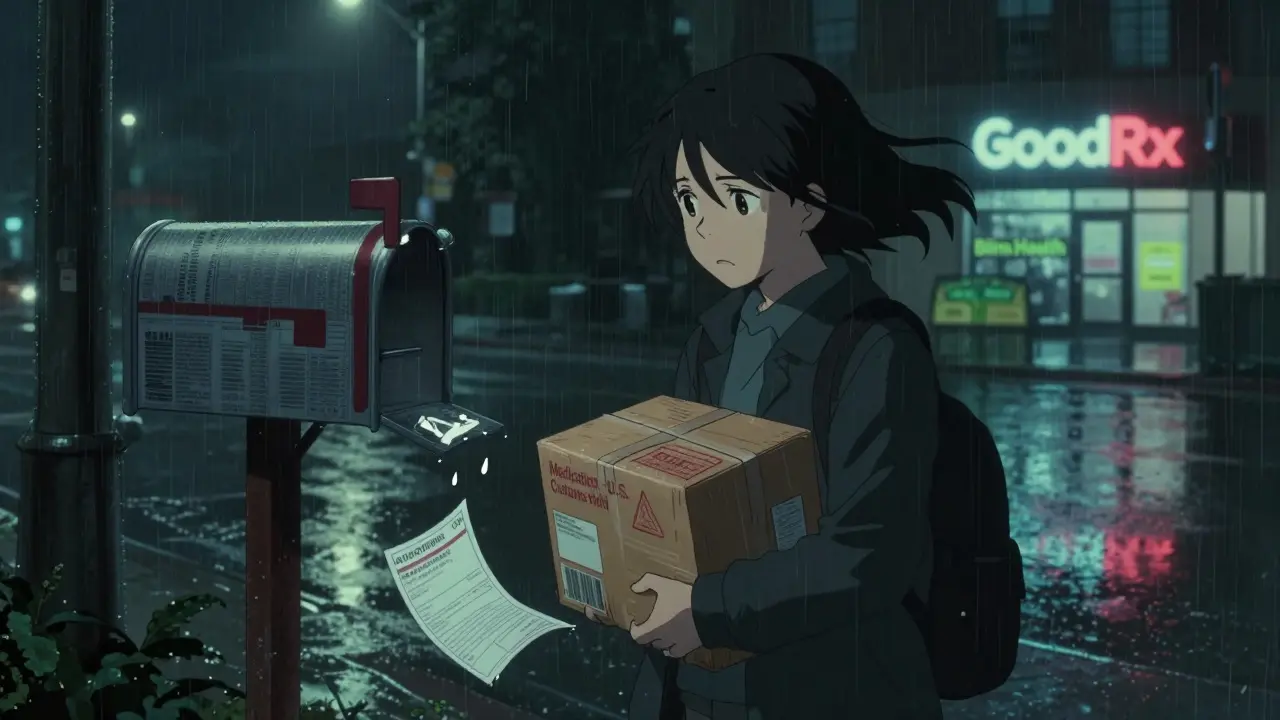
Buying medications from overseas used to be simple. You found a pharmacy abroad, paid a fraction of what you’d pay at home, and waited a couple of weeks for your pills to arrive. But as of August 29, 2025, that’s no longer true - not in the U.S., and not for most countries following similar changes. The old $800 duty-free threshold is gone. If you’re trying to order prescription drugs, supplements, or over-the-counter meds from Canada, India, Mexico, or anywhere else by mail, you’re now dealing with a completely new system. And if you don’t understand it, your package could be seized, you could owe hundreds in unexpected fees, or worse - you could break the law.
What Changed in 2025: The End of the $800 Rule
Before August 2025, if you ordered a $150 bottle of insulin from Canada, it slipped through U.S. Customs duty-free. Same with $200 of blood pressure meds from India or $75 of antidepressants from the UK. That was thanks to the $800 de minimis threshold, a rule that let small packages enter without taxes or duties. It was designed for gifts and small online purchases - not prescription drugs. Now, that rule is dead. Executive Order 14324, signed in July 2025, eliminated the $800 exemption for all international mail, including medications. The only thing still allowed duty-free is a personal gift under $100 - and even then, it can’t be medicine. The U.S. Customs and Border Protection (CBP) made this clear in their September 2025 guidance: medications are never exempt, no matter the value. This isn’t just a tax change. It’s a policy shift. The government now treats every package with medicine as a commercial import, even if you’re just one person buying for yourself. That means you’re subject to the same rules as a pharmacy importing bulk shipments.Why Medications Are Treated Differently
The FDA and CBP don’t treat medications like other goods. Even if a drug is legal in the country you’re buying from, it might not be approved in the U.S. That’s not just red tape - it’s a safety rule. Unregulated meds can be fake, expired, contaminated, or contain the wrong dosage. The FDA estimates that 50% of online pharmacies selling prescription drugs are illegal. Many sell counterfeit versions of popular drugs like Viagra, metformin, or lisinopril - some with toxic fillers or no active ingredient at all. In 2024, CBP intercepted over 1.2 million packages containing unapproved medications. Most were from India, China, and Bangladesh. Some contained fentanyl, arsenic, or industrial dyes. That’s why the rules tightened. The government isn’t trying to stop you from saving money - it’s trying to stop you from getting poisoned.How to Legally Import Medications Now
There’s only one legal path left: personal importation under FDA’s limited discretion policy. This isn’t a right - it’s a loophole that’s rarely granted. To qualify, you must meet all these conditions:- The medication is for a serious condition with no FDA-approved treatment available in the U.S.
- The drug is not for resale.
- You have a letter from your U.S. doctor stating you’re under their care and the drug is necessary.
- You’re importing no more than a three-month supply.
- The medication is not a controlled substance (like opioids or stimulants).
- The package is clearly labeled with your name, address, and the drug’s generic name.
The New Duty and Tax Rules (2025-2026 Transition)
Since August 29, 2025, every international shipment with medication must pay duties. There are two methods - and timing matters. Until February 28, 2026, carriers can choose between:- Method 1 (Ad Valorem): Pay a percentage of the declared value. Rates vary by country. For example, meds from India might be taxed at 5%, while those from Germany could be 12%.
- Method 2 (Flat Rate): Pay a fixed fee based on the country’s tariff level: $80 for low-tariff countries, $160 for medium, $200 for high. This is often worse for small orders. A $50 insulin order from Canada could face a $80 duty - more than the drug itself.
Documents You Must Get Right
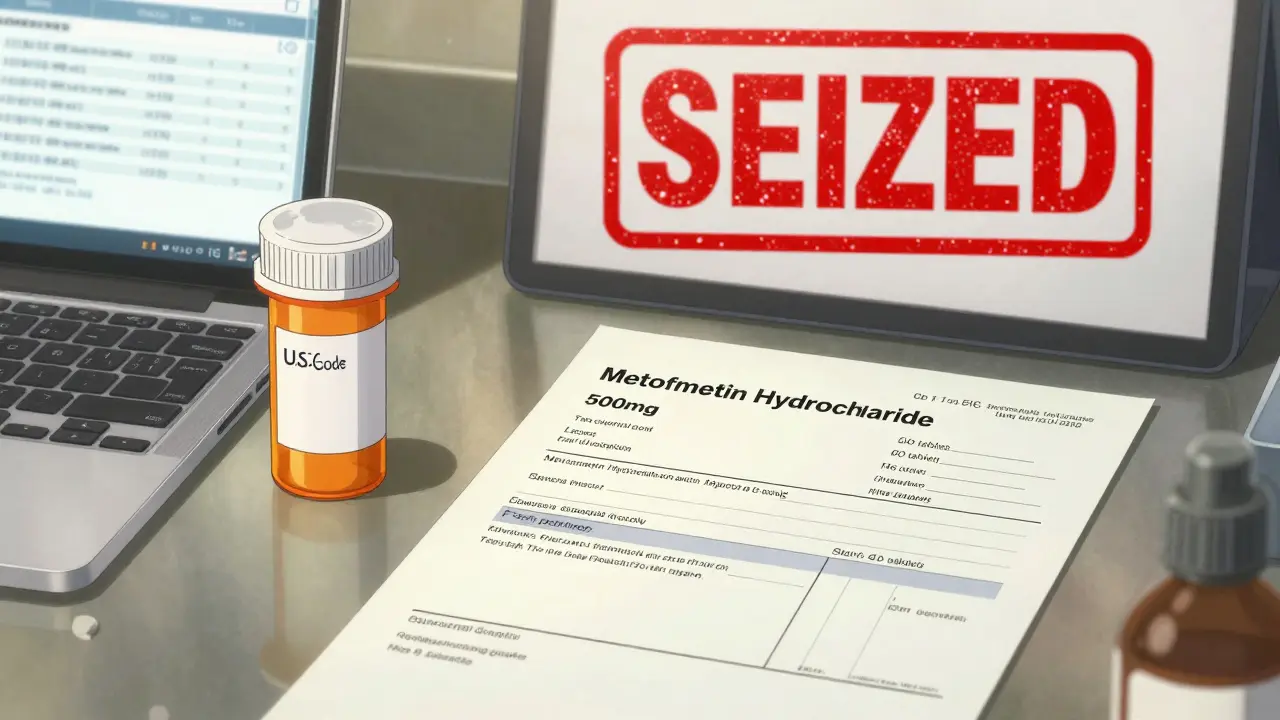
No matter which method you use, you need paperwork. The CBP now requires:- Commercial invoice: Not a receipt. Must list each drug’s generic name, strength, quantity, manufacturer, and value. Saying “vitamins” or “meds” is not enough. You need: “Metformin Hydrochloride 500mg, 60 tablets, manufactured by Sun Pharma, India, value $45.”
- Proof of prescription: A copy of your doctor’s prescription or a signed letter from your U.S. physician.
- HS code: Six-digit code required for all commercial shipments since September 1, 2025. Use the USITC online tariff database to look it up.
- Proof of personal use: A signed statement saying you’re importing for your own use, not resale.
Who Pays the Duty? (And Who Gets Blamed)
This is the biggest confusion. If your package is stopped, who pays? The carrier? The sender? You? The answer: you do. CBP holds the recipient responsible. If the duty isn’t paid within 30 days, your package is auctioned off or destroyed. And if the carrier didn’t collect the duty at the border, you’ll get a bill from CBP - sometimes months later. People have received $300 bills for a $40 order of blood pressure pills. That’s why many international pharmacies now refuse to ship to the U.S. Deutsche Post, Canada Post, and others stopped accepting business parcels to the U.S. after August 22, 2025. If you’re still getting deliveries, they’re likely coming through DHL, FedEx, or UPS - and those carriers charge $25-$50 extra just for customs clearance.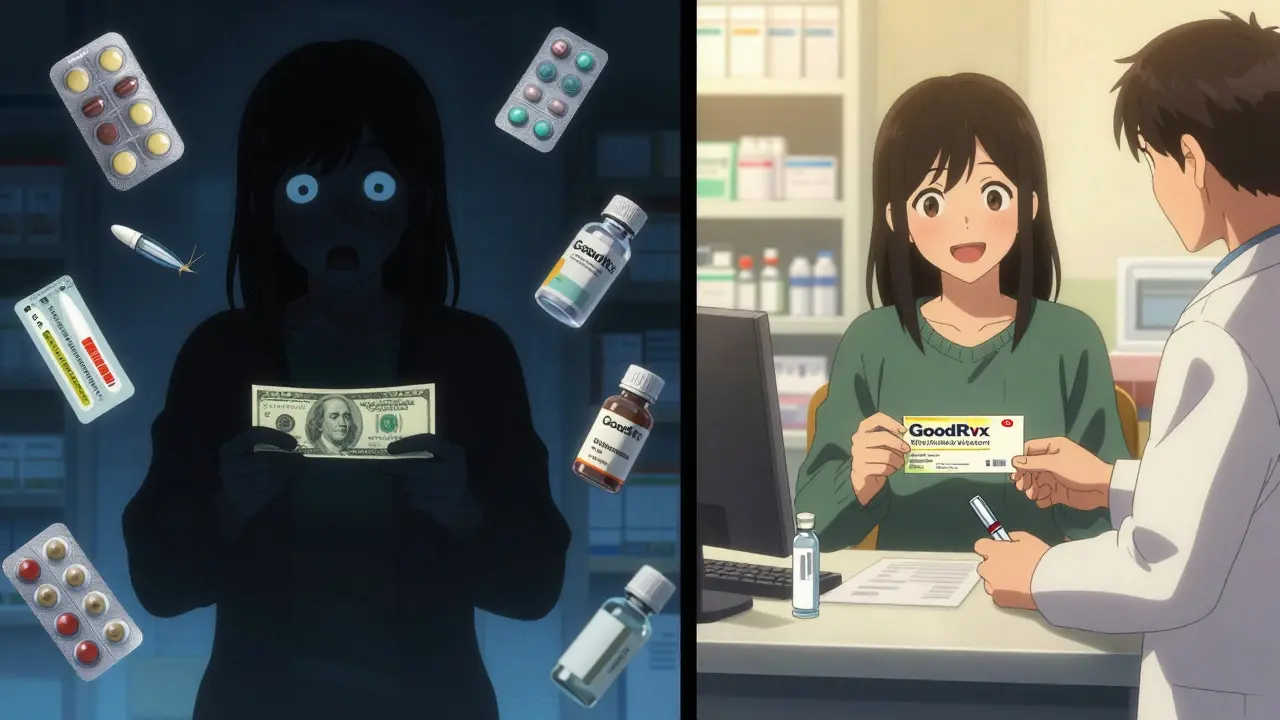
What You Should Do Instead
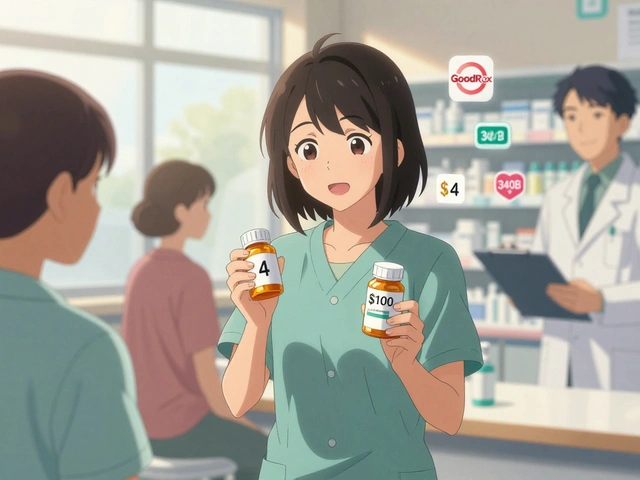
If you’re trying to save money on meds, here’s what actually works in 2025:- Use U.S. pharmacy discount programs: GoodRx, SingleCare, and Blink Health offer discounts up to 80% on brand-name drugs. A $400 insulin pen can drop to $45.
- Ask your doctor about generic alternatives: Most brand-name drugs have FDA-approved generics that cost 90% less.
- Check patient assistance programs: Pharmaceutical companies like Pfizer, Merck, and Novo Nordisk offer free or low-cost meds to low-income patients.
- Use mail-order pharmacies: Many U.S. insurers let you order 90-day supplies by mail for lower copays.
The Real Risk: Fakes, Delays, and Legal Trouble
Buying meds overseas isn’t just risky - it’s often pointless. A 2025 study by the National Association of Boards of Pharmacy found that 94% of websites selling prescription drugs without a license are illegal. Many sell fake insulin that contains no glucose-lowering agents. Others sell expired antibiotics or pills with dangerous additives. And even if your package arrives, you’re not safe. CBP can still seize it later. You could be fined up to $100,000 for importing unapproved drugs, even if you didn’t know it was illegal. In 2024, over 1,200 Americans were investigated for importing unapproved medications - some faced criminal charges.Bottom Line: It’s Not Worth It
The dream of cheap overseas meds is over. The rules are too complex, the penalties too high, and the risks too dangerous. What looked like a way to save money is now a legal minefield. The real savings aren’t overseas - they’re right here. Use GoodRx. Talk to your doctor. Ask about generics. Apply for patient aid. These options are faster, safer, and 100% legal. You don’t need to risk your health - or your freedom - to save a few dollars.Can I still order insulin from Canada?
Technically, yes - but only under strict conditions. You must have a U.S. doctor’s letter, import no more than a 3-month supply, and ensure the insulin is labeled with its generic name and manufacturer. Even then, CBP can still stop it. Most shipments are seized unless you follow all FDA and CBP rules exactly. The duty cost alone can make it more expensive than buying locally with a GoodRx coupon.
What happens if my medication package gets seized?
If your package is seized, CBP will send you a notice. You have 30 days to appeal or pay any owed duties. If you don’t respond, the medication is destroyed. You won’t get a refund. In rare cases, if the drug is illegal (like unapproved opioids), you could face an investigation. Most people just lose their money and their meds.
Is it legal to order vitamins or supplements from overseas?
It’s risky. The FDA doesn’t regulate supplements from other countries the same way it does in the U.S. Many contain hidden drugs, banned ingredients, or unsafe doses. While small personal orders of vitamins are sometimes allowed, they’re not guaranteed. If the product contains a substance banned in the U.S. (like DMAA or SARMs), your package will be seized - and you could be flagged by customs.
Do I need an HS code for my medication?
Yes - since September 1, 2025, all commercial shipments entering the U.S. must include a six-digit Harmonized System (HS) code. For insulin, it’s 3001.10. For metformin, it’s 3004.90. Getting it wrong can trigger much higher duties. Use the USITC online tariff database to find the right code before shipping.
Why did my package from India get stopped?
India is a major source of unapproved medications. If your package didn’t have a commercial invoice with exact drug names, a doctor’s letter, or the correct HS code, it was flagged. Even if the drug is real, CBP treats all unapproved medications as potential violations. Most packages from India are held or destroyed unless they meet all FDA personal importation criteria.




Comments
So now I can't get my insulin from Canada without paying $200 in fees? LOL. We're literally punishing people for trying to survive. This is what happens when bureaucrats think they're doctors.
My mom's insulin costs $450 here. In Quebec, it's $35. You're telling me she should just die so we can protect the 'pharma industry'?
I understand the safety concerns, but this policy feels like a betrayal. As a Canadian, I've always trusted our pharmaceutical standards. Many U.S. citizens rely on Canadian pharmacies because they are regulated, licensed, and safe.
It's not about 'cheap drugs'-it's about access. And now, with the new fees, the very people who need these medications most are being priced out. This isn't protection-it's exclusion.
Let’s be honest: the FDA doesn’t care if you live or die. They care about liability. If you die from a fake pill they didn’t stop, they get sued. If you die from not getting the pill because it was seized? Eh. No lawsuit.
This isn’t about safety. It’s about control. The system wants you dependent on Big Pharma’s pricing. They don’t want you to know insulin costs $12 in India. They want you begging for coupons.
I don't care what the rules say. I'm still ordering my meds from India. I'm not paying $500 for a pill that costs $15 overseas. If they want to seize it, fine. I'll just order again. This is ridiculous. I'm not a criminal for trying to stay alive.
Ohhh, so now we're treating people like importers? What's next? Do I need a customs broker to buy Advil from Mexico?
HS codes? Commercial invoices? You're joking. This isn't policy-it's performance art for the pharmaceutical lobby. I'm not importing a shipment-I'm importing my life.
And don't even get me started on 'duty'. I didn't buy a luxury car. I bought a life-saving drug. This is extortion dressed as regulation.
I just want to say thank you for writing this. I've been terrified to even ask my doctor about this, but now I feel less alone.
I've been buying my metformin from India for 3 years. I was so scared to speak up because I thought I was breaking the law. Now I know the rules-but I still don't know if I should keep going.
Does anyone else feel like we're being forced to choose between health and legality?
My cousin got her blood pressure meds from Mexico for $20 a month. Now she's paying $180. She's diabetic. She's on a fixed income. This isn't about safety. It's about money. Plain and simple.
I'm sorry, but this is the kind of thing that makes me lose faith in humanity. We're letting people die because of corporate greed and bureaucratic arrogance.
It's not about 'protecting the public'-it's about protecting profits. The FDA doesn't care if you're suffering. They care about their liability reports.
And you know what? If you're one of the 60% who get your meds through, you're lucky. The rest of us? We're collateral damage.
Wait so if I order vitamins from Amazon India and they have a little bit of ashwagandha, is that illegal now? 😭 I just wanted to feel less stressed. Why is everything so complicated now?
Is there a way to legally get a prescription for something not approved in the U.S. without going through a 6-month bureaucratic nightmare? I have a friend with a rare autoimmune disease and the only thing that works is from Germany. She's crying every day. This is cruel.
You people act like we're shipping poison. We're shipping medicine. Your drugs are overpriced because you let pharma monopolies control everything. We're not criminals. We're patients.
And yes, our factories are clean. Our inspectors are strict. Your system is broken-not ours.
So let me get this straight: you can't buy a $50 bottle of pills from India, but you can buy a $500 iPhone from China? 🤡
Wow. The real 'national security threat' is people trying not to go bankrupt. Iconic.
I ordered my thyroid meds from Canada last month. Got a letter from CBP saying it was 'unapproved'. I sent them my doctor's note. They said 'still not enough'. I'm just a single mom. What am I supposed to do? Stop taking my meds?
They don't get it. This isn't a 'policy issue'. It's a life-or-death issue.
The structural inequities embedded in this regulatory framework are deeply concerning. While the stated objective of safeguarding public health is laudable, the implementation disproportionately burdens economically vulnerable populations who have no alternative access to essential therapeutics.
One must question whether the preservation of pharmaceutical market integrity justifies the denial of life-sustaining medical care to individuals who have exhausted all domestic options. The moral calculus here is not aligned with the principles of medical ethics.
I'm not even mad. I'm just... disappointed. This isn't policy. This is a slow-motion murder of the poor. You think you're protecting us from 'dangerous drugs'? No. You're protecting the bottom line of CEOs who make $100 million a year while people ration insulin.
And you know what? I hope someone dies from this. I hope it's someone rich. Because then maybe-just maybe-you'll finally care.