
Blood Thinner Dose Calculator
Missed Your Blood Thinner Dose?
Get personalized guidance on what to do next. This tool will tell you whether to take the missed dose, skip it, or seek medical help.
What to Do
Select your medication and time elapsed to see personalized guidance.
Important Warning Signs
Watch for these symptoms. If you experience any, contact your doctor immediately or go to the emergency room:
- Unexplained bruising, especially large dark patches
- Red or brown urine
- Black or tarry stools
- Sudden dizziness, weakness, or shortness of breath
- Severe headache, confusion, or vision changes
- After a fall or head injury
Missing a dose of your blood thinner might seem like a small mistake-maybe you were busy, forgot because of a change in routine, or just didn’t think it mattered. But for people taking these medications, even one missed dose can be dangerous. Blood thinners don’t make your blood literally thinner. Instead, they stop your body from forming clots too easily. That’s lifesaving if you have atrial fibrillation, a history of stroke, or a deep vein clot. But if you skip a dose, that protection drops-and your risk of a clot rising. And if you double up to make up for it, you could start bleeding internally. There’s no middle ground here.
Why Missing a Dose Is So Risky
These medications are designed to keep your blood flowing smoothly. If you have atrial fibrillation, your heart doesn’t pump evenly, and blood can pool in the chambers. That pooling can form clots. If one breaks loose, it can travel to your brain and cause a stroke. The risk isn’t small. People with atrial fibrillation who aren’t on blood thinners have between a 1.5% and 6.6% chance of having a stroke each year. That’s why doctors prescribe these drugs. But they’re not like painkillers you can skip if you feel fine. You’re not supposed to feel anything while taking them. That’s the point.
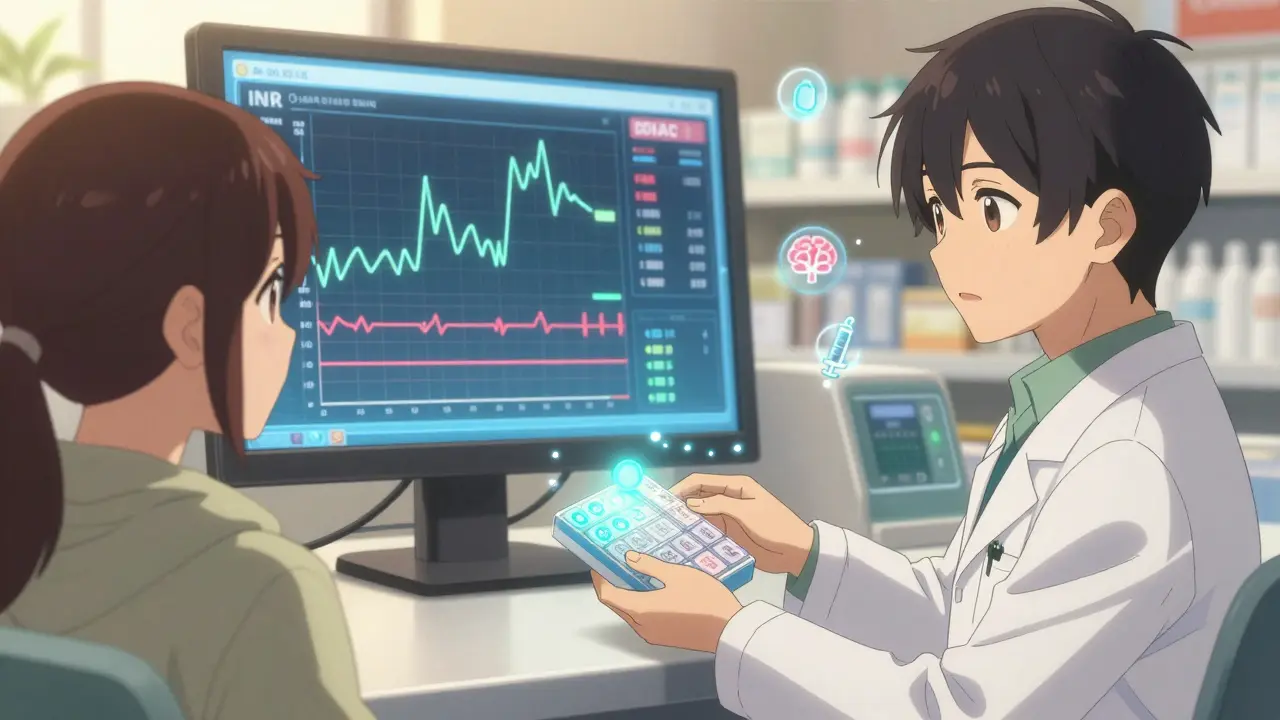
There are two main types: warfarin and the newer direct oral anticoagulants, or DOACs, like apixaban (Eliquis), rivaroxaban (Xarelto), and dabigatran (Pradaxa). Warfarin has been around for decades. It works by blocking vitamin K, which your body needs to make clotting factors. But it’s finicky. Your INR-a blood test that measures how long it takes your blood to clot-needs to stay between 2.0 and 3.0 for most people. Too low, and clots form. Too high, and you bleed. That’s why people on warfarin get blood tests every few weeks, sometimes even weekly when they first start.
DOACs are simpler. They don’t need regular blood tests. But they have shorter half-lives. Apixaban, for example, lasts about 8 to 15 hours in your body. If you miss a dose, the drug level drops fast. A 2021 study in Circulation: Cardiovascular Quality and Outcomes found that if people took less than 80% of their DOAC doses, their stroke risk jumped by 57%. That’s not a small increase. It’s the difference between a low risk and a very high one.
What to Do If You Miss a Dose
There’s no one-size-fits-all answer. What you do depends entirely on which medication you’re taking.
For warfarin: If you remember you missed a dose within 12 hours of when you were supposed to take it, take it right away. If it’s been more than 12 hours, skip it. Don’t take two doses the next day. The NHS and the Anticoagulation Forum both say the same thing: if you forget until the next day, leave it out. Your body still has some of the drug from the day before. Taking an extra dose could push your INR too high and cause bleeding. Write down the missed dose in your yellow book-the official anticoagulant record-and mention it at your next blood test.
For apixaban (Eliquis): If you realize you missed a dose and it’s been less than 6 hours since your scheduled time, take it. If it’s been more than 6 hours, skip it. Don’t double up. The manufacturer’s guidelines are clear: never take two doses at once. Even if you’re worried, taking an extra pill won’t help. It just raises your bleeding risk. You’ll be back on schedule the next day.
For rivaroxaban or dabigatran: Same rule. If you remember within 12 hours, take the missed dose. After that, skip it. Don’t try to catch up. These drugs are designed to be taken once or twice a day, and their timing matters. A 2023 update to the CHEST guidelines says patient education on missed doses should be part of every anticoagulation plan. That means your doctor or pharmacist should have explained this to you. If they didn’t, ask.
The golden rule across all blood thinners? Never take a double dose. The SPS NHS and Family Diagnostic Clinic both warn that doubling up increases your risk of bleeding-sometimes severely. You could end up in the hospital with internal bleeding, not because you skipped a dose, but because you tried to fix it the wrong way.

Signs You Need Medical Help Right Away
Not every missed dose leads to disaster. But some symptoms mean you’re already in trouble. If you notice any of these, don’t wait. Call your doctor or go to the emergency room.
- Unexplained bruising-especially large, dark patches that appear without injury. A 2022 study in the Journal of Thrombosis and Haemostasis found that 23% of patients who had adverse events from anticoagulants reported unusual bruising.
- Red or brown urine-this could mean bleeding in your kidneys or bladder.
- Black, tarry stools-a sign of bleeding in your stomach or intestines.
- Sudden dizziness, weakness, or shortness of breath-could signal a pulmonary embolism (a clot in your lung) or a heart problem.
- Severe headache, confusion, or vision changes-could mean bleeding in your brain. This is rare but life-threatening.
- After a fall or head injury-even if you feel fine. DOACs like Eliquis don’t have an easy antidote. If you hit your head, you need to be checked immediately.
And if you’ve missed more than one dose in a row? Call your anticoagulation clinic or your doctor. Don’t wait until your next appointment. Your risk of clotting increases with every missed dose. A 2023 study from the ORBIT-AF registry showed that 12.3% of patients missed at least one dose per month. For those on warfarin, it was even higher-15.7%. But the problem isn’t just the number of missed doses. It’s the pattern. Missing doses on weekends or holidays is common, and that’s when complications spike.
How to Avoid Missing Doses in the First Place
The best way to handle a missed dose is to never miss one. Here’s what actually works:
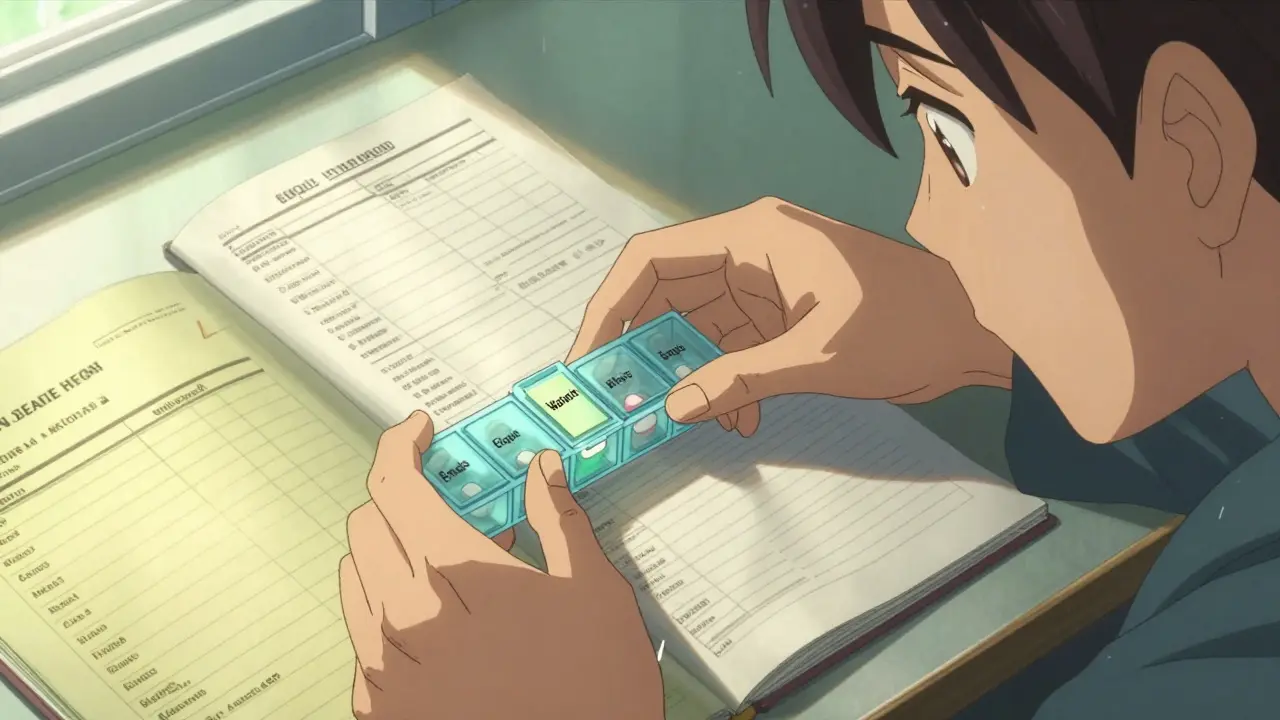
- Use a pill organizer. Get one with compartments for morning and night. Fill it once a week. If you see an empty slot, you know you missed it.
- Set phone alarms. Two alarms: one for when you should take it, and another 30 minutes later as a backup. Label them clearly: “Eliquis AM,” “Warfarin PM.”
- Link it to a daily habit. Take your pill right after brushing your teeth, or with your morning coffee. Routine sticks better than willpower.
- Keep your prescription filled. Don’t wait until you’re out. Refill it a few days before you run out. Pharmacies can set up automatic refills.
- Carry your medication card. If you’re ever rushed to the hospital, they need to know what you’re taking. Keep your yellow book (for warfarin) or the prescription leaflet with you.
And if you’re still struggling? Talk to your pharmacist. Many offer free medication reviews. They can spot patterns-like if you’re skipping doses because the pills are too big, or if you’re confused about timing. They’ve seen this before. They can help.
What Happens If You Stop Taking It
Some people think, “I feel fine. Maybe I don’t need this anymore.” That’s dangerous. Stopping your blood thinner without your doctor’s approval can cause a stroke within days. Eliquis’s official guide says it plainly: “Stopping ELIQUIS increases your risk of having a stroke.” That’s not a warning. That’s a fact. Even if you’ve been on it for years and feel great, your body still needs the protection. Your doctor will decide when it’s safe to stop-not you.
And if you’re thinking about switching to a different blood thinner? Don’t. Not without talking to your doctor. Each drug has different rules, different risks, and different ways your body processes it. What works for your neighbor might not work for you.
Final Thoughts
Missing a blood thinner dose isn’t a failure. It’s a human mistake. But it’s one that carries real, measurable risk. The good news? You can control it. Set reminders. Know what to do if you miss one. Know the warning signs. And never, ever double up.
If you’re unsure what to do after missing a dose, call your clinic. Don’t guess. Don’t search online. Your healthcare team has your records, your INR history, your exact medication. They can give you the right answer in minutes. And if you’re worried about bleeding or have any of the symptoms listed above-go to the hospital. It’s better to be safe than sorry.
Your blood thinner isn’t just a pill. It’s your shield. Treat it like one.
What should I do if I miss a dose of Eliquis?
If you miss a dose of Eliquis and remember within 6 hours of your usual time, take it right away. If it’s been more than 6 hours, skip the missed dose. Do not take two doses at once. Take your next dose at the regular time the following day.
Can I take two doses of warfarin to make up for a missed dose?
No. Never take a double dose of warfarin. Doing so can push your INR too high and cause dangerous bleeding. If you miss a dose and remember within 12 hours, take it. If it’s been longer, skip it and continue with your next scheduled dose. Record the missed dose in your yellow book and mention it at your next INR test.
How long does it take for blood thinners to wear off after missing a dose?
It depends on the drug. Warfarin lasts 20 to 60 hours, so missing one dose doesn’t immediately remove protection. But DOACs like Eliquis have shorter half-lives-about 8 to 15 hours. After 12 to 18 hours without a dose, protection drops significantly. That’s why timing matters more with newer medications.
What are the warning signs of bleeding from blood thinners?
Watch for unexplained bruising, red or brown urine, black or tarry stools, dizziness, shortness of breath, or a sudden severe headache. These could signal internal bleeding. If you notice any of these, contact your doctor or go to the emergency room immediately.
Should I stop taking my blood thinner if I’m worried about bleeding?
No. Stopping your blood thinner without medical advice increases your risk of stroke. Even if you’re scared of bleeding, the risk of a clot is often higher. Talk to your doctor about your concerns. They can adjust your dose, check your INR, or suggest ways to reduce bleeding risk without stopping the medication.
Do I need to get blood tests if I’m on apixaban or other DOACs?
No, routine blood tests like INR aren’t needed for DOACs like apixaban, rivaroxaban, or dabigatran. Unlike warfarin, they don’t require regular monitoring. But your doctor may still order occasional blood tests to check kidney or liver function, especially if you’re older or have other health conditions.
What should I do if I take too much of my blood thinner?
Call your doctor or go to the nearest emergency room right away. If you’re on warfarin, bring your yellow book and any remaining pills. If you’re on a DOAC like Eliquis, bring the prescription leaflet. Emergency teams need to know exactly what you took and when. In some cases, they can give an antidote-especially for warfarin or dabigatran.
If you’re taking a blood thinner, your daily routine matters more than you think. It’s not about being perfect. It’s about being consistent. Set reminders. Know the signs. Ask questions. And if you’re ever in doubt-call your doctor. That’s the safest move you can make.




Write a comment