
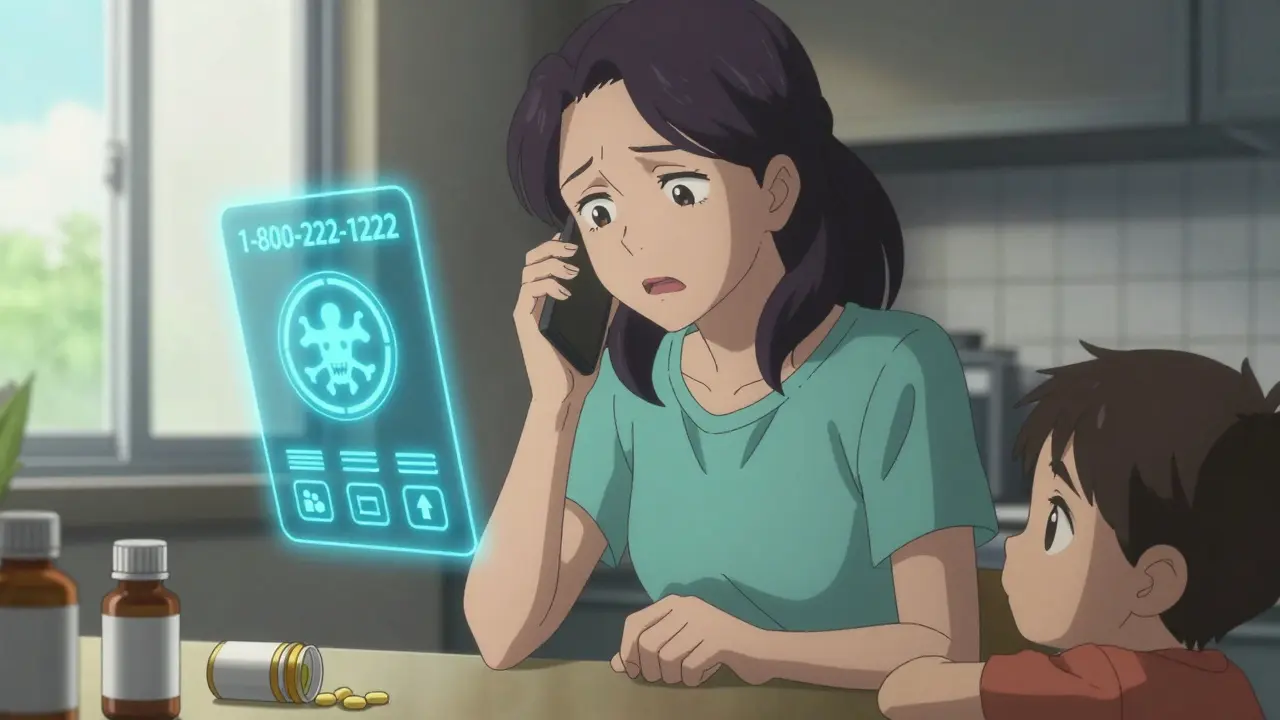
Every year, over 2 million people in the U.S. call the Poison Control Hotline because of accidental or unexpected medication exposures. Most of these cases don’t end up in the ER. Why? Because the hotline gives you clear, expert advice right away - and often prevents a hospital visit entirely. If you’ve ever panicked after a child swallowed a pill, or you took the wrong dose of your own medication, you need to know how this service works - and what details to give them so they can help you.
How the Poison Control Hotline Actually Works
The Poison Control Hotline isn’t a call center with scripted answers. It’s a network of 53 specialized centers staffed by real medical experts: pharmacists, nurses, and doctors who’ve trained specifically in toxicology. They handle everything from a toddler swallowing a single aspirin to an adult mixing five prescription drugs by mistake. And they do it 24/7, 365 days a year.
When you dial 1-800-222-1222, your call is routed automatically to the center closest to your area code. If you’re texting, just send the word poison to 797979. Or if you prefer typing, use webPOISONCONTROL.org - it walks you through a step-by-step assessment in under three minutes. All three options are free, confidential, and available in over 150 languages.
Behind the scenes, these centers use a real-time database called the National Poison Data System (NPDS). It collects every case reported across the country, which helps experts spot new drug dangers before they become widespread. In 2022 alone, this system helped prevent an estimated $1.8 billion in unnecessary hospital costs.
What Exactly Should You Report About Medications?
When you call about a medication, the specialist needs precise details. Vague answers like “I took too much Tylenol” won’t cut it. Here’s what they need:
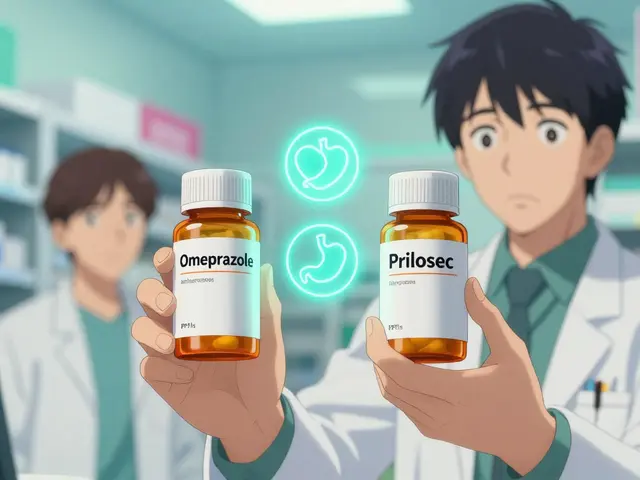
- Exact name of the medication - brand and generic. Say “Advil 200mg tablets” not just “ibuprofen.”
- Strength and dosage form - Was it 500mg acetaminophen? A liquid? A patch? A time-release capsule?
- Amount ingested - Not “a bunch.” Say “12 tablets” or “2 full teaspoons.”
- Time of exposure - When did it happen? “About 30 minutes ago” is okay. “I think it was after lunch” is not precise enough.
- Patient’s age and weight - Weight in kilograms is ideal. If you don’t know it, guess within 5 lbs. They’ll adjust.
- Any symptoms - Nausea? Drowsiness? Rash? Even if symptoms seem minor, report them.
For example: “My 4-year-old swallowed 3 tablets of Children’s Zyrtec, 5mg each, at 2:45 PM. She’s drooling and a little sleepy.” That’s the kind of info that saves lives.
Don’t worry if you’re unsure. Specialists have heard every mistake imaginable. They’ll guide you through gathering the details - even if you’re shaking or crying.
Why Accuracy Matters: The Science Behind the Advice
Poison control doesn’t guess. They use over 1,500 evidence-based algorithms, each built from decades of research. For medications, they look at:
- Therapeutic index - How close is the toxic dose to the effective dose? Some drugs, like digoxin or lithium, have a razor-thin margin.
- Drug interactions - 32% of serious cases involve two or more medications. Mixing an antidepressant with a painkiller? That’s a red flag.
- Pharmacokinetics - How fast is the drug absorbed? How long does it stay in the body? That determines when to watch for symptoms.
For instance, acetaminophen (Tylenol) might seem harmless - until it hits the liver. If you ingest more than 10 grams in one go, you risk liver failure. But if you call within 4 hours, the specialist can tell you to take N-acetylcysteine (NAC), a simple antidote that prevents damage. After 8 hours? It’s too late. That’s why timing matters more than you think.
And yes - they know the difference between brand and generic. A generic version of sertraline is chemically identical to Zoloft. But if you’re not sure, just say both names. They’ll figure it out.
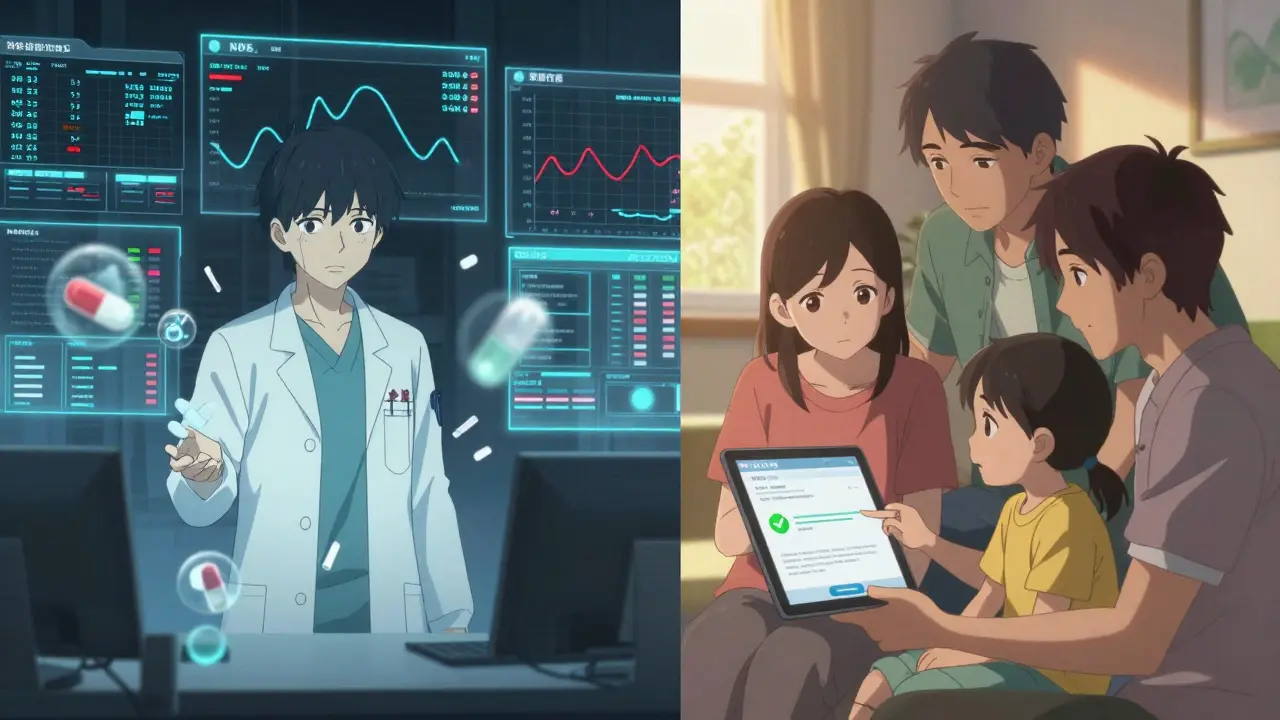
What Happens After the Call?
Most calls - about 60% - are resolved without going to the ER. The specialist will give you clear instructions:
- Watch for symptoms and call back if they change
- Give activated charcoal (if advised)
- Do not induce vomiting - unless they specifically say so
- Bring the medication bottle to the hospital if you go
For higher-risk cases, they’ll schedule follow-up calls. With acetaminophen, you’ll get a check-in at 4, 8, and 24 hours. With opioids or sedatives, they’ll call every 2 hours for the first 6 hours. These aren’t random - they’re based on how long the drug stays active in the body.
You’ll also get an email summary with all the details: what was taken, what the risk is, what to do next. Over 75% of callers keep this email as a reference. It’s your personal poison exposure report.
When Not to Call - And When to Go to the ER
There are a few situations where you should call 911 instead of Poison Control:
- The person is unconscious or not breathing
- They’re having seizures
- They’ve swallowed a battery, cleaning product, or heavy metal
- They’ve taken more than two different drugs at once (especially if one is an opioid or benzodiazepine)
For medication-only cases, Poison Control handles 83% of pediatric ingestions without hospital visits. But if you’re ever unsure - call them first. They’ll tell you if you need to go.
And don’t wait for symptoms. Some drugs, like certain blood pressure pills or antidepressants, can cause silent damage. If you suspect an overdose, don’t wait for vomiting or dizziness. Call now.
What’s Changing in Poison Control - And Why It Matters
The threat landscape is shifting. From 2018 to 2022, medication-related calls rose by nearly 19%. Opioids, sedatives, and weight-loss drugs are now the top offenders. New synthetic versions of drugs are popping up all the time - some even sold as “diet pills” or “sleep aids.”
Poison Control is adapting. They’re updating their algorithms quarterly, adding new compounds like semaglutide (Ozempic) and illicitly made fentanyl analogs. In 2023, they launched video consultations for complex cases - like someone on multiple psychiatric meds with liver disease.
They’re also connecting directly to hospital systems. When you’re brought in after a call, the ER team can pull up your Poison Control report automatically. That means faster, smarter care.
Real Stories - What Happens When You Call
A mother in Ohio called after her 3-year-old found her grandmother’s heart medication. She gave the exact name, dose, and time. The specialist told her to give the child water and watch for dizziness. No ER. No cost. Just peace of mind.
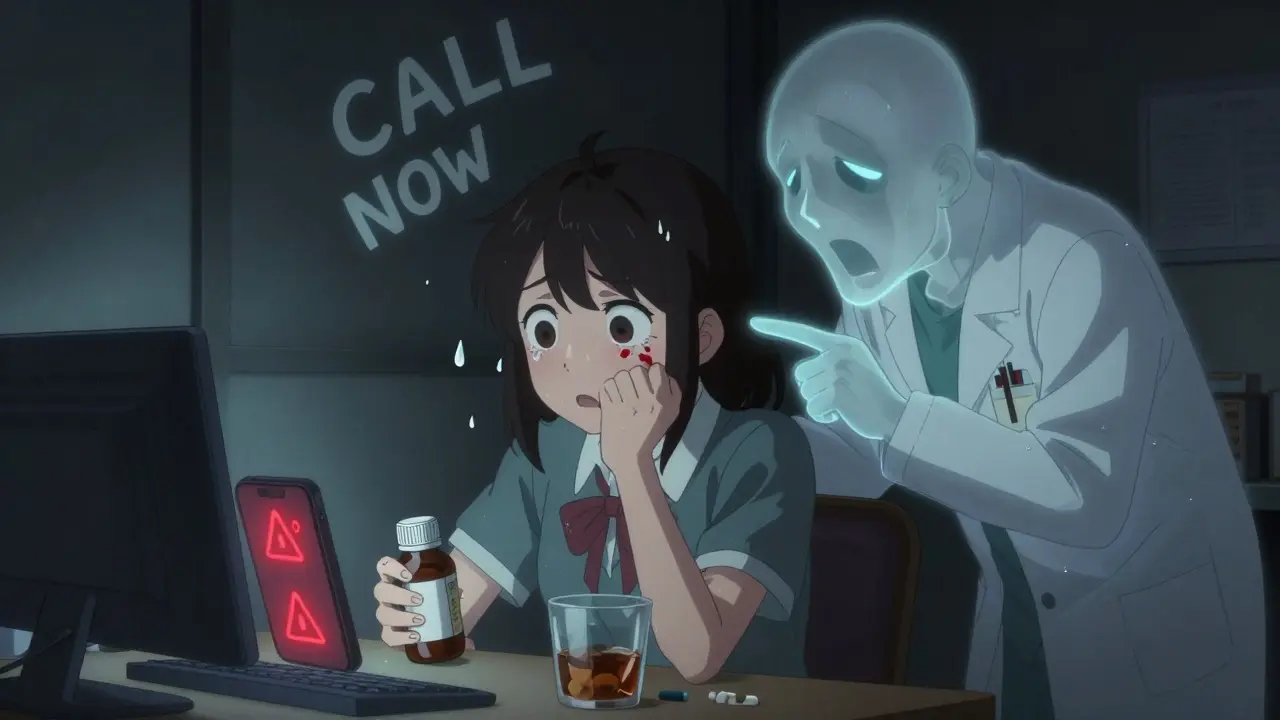
A college student in Texas mixed her anxiety medication with alcohol. She didn’t think it was serious. She called - and was told to stay awake and drink water. Two hours later, she started vomiting. She called back. They told her to go to the ER. She did. Doctors later said she’d have gone into respiratory arrest within an hour.
These aren’t rare. They happen every day. And every time, the hotline prevents a tragedy.
Final Advice: Don’t Wait. Don’t Guess. Call.
Think you’re overreacting? You’re not. Poison Control was built for exactly this - for moments when panic sets in and you don’t know what to do. They don’t judge. They don’t report you. They don’t charge you.
Keep the number saved in your phone. Put it on your fridge. Tell your family. If you’re caring for an elderly parent, a child, or someone on multiple medications - this is your safety net.
And if you ever doubt whether it’s serious - call anyway. Better to be safe than sorry. In medicine, seconds matter. Poison Control gives you the right advice in under 10 minutes - sometimes, that’s all it takes.
Do I have to give my name when I call Poison Control?
No, you don’t need to give your name or any personal information. The service is completely confidential. They only need details about the medication, the person who was exposed, and the time of exposure. Your privacy is protected under HIPAA, and they don’t share your info with law enforcement or insurance companies.
Can I use Poison Control for pets?
No. The Poison Control Hotline (1-800-222-1222) is for human exposures only. For pets, call the ASPCA Animal Poison Control Center at 1-888-426-4435 or the Pet Poison Helpline at 1-855-764-7661. These services are separate and charge a small fee, but they’re staffed by veterinary toxicologists who specialize in animal cases.
What if I’m not sure what was taken?
Even if you’re unsure, call anyway. Bring the container with you or take a photo. Specialists can often identify medications by their shape, color, or imprint code. If you’re using webPOISONCONTROL, you can scan the barcode on the bottle - the system recognizes over 10,000 drug products.
Is the Poison Control Hotline only for emergencies?
No. It’s for any suspected poisoning - even if symptoms haven’t started yet. Many calls are preventive. For example, if you’re worried your child might have swallowed a pill, calling before symptoms appear can stop a hospital trip. The hotline is designed to act early, not wait for disaster.
Can I call Poison Control for a medication interaction I’m worried about?
Yes. If you’re taking multiple medications and you’re unsure whether they’re safe together, call them. They’ve handled thousands of cases involving drug interactions - from common painkillers and supplements to antidepressants and blood pressure pills. They’ll tell you if it’s risky and what to watch for.
What to Do Next
Right now, open your phone’s contacts and add 1-800-222-1222 as “Poison Control.” Save it under “Emergency” or “Family.” Tell your partner, your kids’ caregivers, your aging parents. Print the number and stick it on the fridge. Keep a bottle of your medications in one spot so you can grab it fast if needed.
And if you’re ever in doubt - call. It’s free. It’s fast. And it might just save a life.

Comments
Just saved this number in my phone under 'Emergency Contacts' - right next to my kid's pediatrician. I never thought I'd need it until my 2-year-old got into my husband's blood pressure pills last month. Called, stayed calm because they walked me through it, and we didn't even go to the ER. Honestly? This service is the quiet hero of American healthcare.
Everyone should have this saved. Grandparents, babysitters, college kids living off ramen and random supplements - everyone.
OMG YES 😭 I called them after my dog ate my Adderall… wait no, that’s not right - pets aren’t covered?! 😅 I thought they helped with animals too. Gotta call the ASPCA next time lol 💔
It’s fascinating how society treats poisoning like a moral failing - ‘How could you be so careless?’ - when in reality, we’re all one distracted moment away from disaster.
Pharmacology is terrifyingly precise. A few milligrams off, and your body turns on itself. The fact that this hotline exists - not as a last resort, but as a first line of defense - speaks volumes about how little we understand about the chemicals we ingest daily.
We don’t need more fear. We need more clarity. And this system delivers it without judgment. That’s radical in a world that punishes mistakes.
This is one of those things that sounds too good to be true - free, fast, expert advice 24/7, no judgment, no charge - and yet it exists.
I used to think poison control was for ‘bad parents’ or ‘druggies.’ Now I know it’s for anyone who’s ever been human.
I just told my entire family to save the number. My mom’s on 7 meds. My nephew takes ADHD pills. My sister’s on antidepressants. We’re all one wrong pill away from trouble.
Don’t wait until it’s too late. Save it. Print it. Stick it on the fridge. And if you’re reading this and you haven’t yet? Do it now. Please.
It’s not paranoia. It’s preparedness. And it’s beautiful.
Of course it's free. Everything's free until you need it and then the bill comes. I bet they sell your data to Big Pharma. They're not saints. They're a marketing funnel.
An exceptionally well-structured and vital public service. The integration of real-time data via NPDS is particularly commendable - it transforms reactive care into predictive public health strategy.
I would urge healthcare professionals in the UK to study this model. While we have NHS 111, there is no equivalent for pharmacological exposure. This deserves international replication.
As a guy who grew up in a household where ‘just drink milk’ was the go-to advice for everything - from battery ingestion to overdose - this article made me feel like I finally grew up.
My mom used to say, ‘If it’s not bleeding, it’s fine.’
Turns out, if it’s a lithium pill and your 16-year-old took 8 of them? It’s *very* not fine.
I’m saving this. And I’m printing it. And I’m handing it to my sister who’s raising two kids with a husband on antidepressants. This isn’t just info - it’s a lifeline.
The epistemological framework underpinning the Poison Control Hotline represents a paradigm shift in medical triage: from symptom-based intervention to data-informed, algorithmically calibrated risk assessment.
One must consider the ontological weight of pharmacological exposure - not as an accident, but as an event within a larger system of pharmaceutical consumption, regulatory oversight, and pharmacokinetic uncertainty.
The fact that this service operates independently of insurance, legal, or bureaucratic structures suggests a rare instance of healthcare decoupled from commodification - a fleeting utopia in late-stage capitalism.
I’ve been thinking about this for days. The fact that we have a national system that handles over two million cases a year - and prevents hospital visits in 60% of them - means we’re not just dealing with accidents. We’re dealing with a culture of medication misuse that’s been ignored for decades.
Think about it: we have more people calling poison control than calling 911 for heart attacks. Why? Because we’re drowning in pills. Every household has a medicine cabinet full of leftovers from surgeries, anxiety, insomnia, pain - and nobody teaches you what to do when things go sideways.
And it’s not just about kids. It’s about elderly folks on five meds, college kids mixing Adderall with energy drinks, people self-medicating with OTC stuff because they can’t afford a doctor.
There’s a reason this hotline is underfunded. Because if people knew how easy it is to die from a simple mistake - and how little it takes to prevent it - they’d start asking why we don’t have mandatory medication safety education in schools.
We don’t need more ads for pills. We need more awareness of what they can do when used wrong.
This isn’t just a hotline. It’s a mirror. And we’re not looking at it hard enough.
So… I called them once. My cat knocked over my mom’s diabetes meds. I didn’t know if she took one or five. I panicked. Called. They asked for the bottle. I took a pic. They ID’d it in 30 seconds. Told me to watch for dizziness and call back in 2 hours. I did. Nothing happened.
They didn’t yell. Didn’t judge. Didn’t make me feel stupid.
That’s the thing nobody talks about: it’s not just medical. It’s emotional. They give you calm when you’re falling apart.
My grandma used to say, ‘If you’re not sure, don’t guess.’
She never knew about Poison Control.
She died because she waited too long to call the ER after mixing her blood thinner with aspirin.
I wish she’d known this existed.
I’m telling everyone now.
I’ve been a nurse for 18 years. I’ve seen too many kids brought in because someone thought ‘a little bit won’t hurt.’
And I’ve seen too many families who never called because they were too ashamed.
This hotline doesn’t just save lives.
It saves dignity.
Just sent this to my whole family group chat. My mom’s on 8 meds. My brother’s on 3. My niece takes ADHD pills. We’re all one mistake away.
Save the number. Print it. Stick it on the fridge. Tell your babysitter. Tell your college kid. Tell your grandma.
It’s free. It’s fast. And it doesn’t care if you’re embarrassed.
Just call.
Wow. Another feel-good story about a government service that ‘just works.’ Next you’ll tell me the mail still arrives on time.
How many of these calls are from people who can’t afford a doctor? How many are just ‘I took my wife’s pill by accident’? This isn’t prevention - it’s damage control for a broken system.
And yes, I know I’m being cynical. But I’ve seen too many ‘free’ services vanish after a budget cut.
My sister called them after her toddler swallowed a whole bottle of melatonin. They told her to give water, keep her awake, and call back if she got sleepy. She did. No ER. No cost. Just peace.
That’s the kind of moment you don’t forget.
Save the number. Seriously. Do it now.