
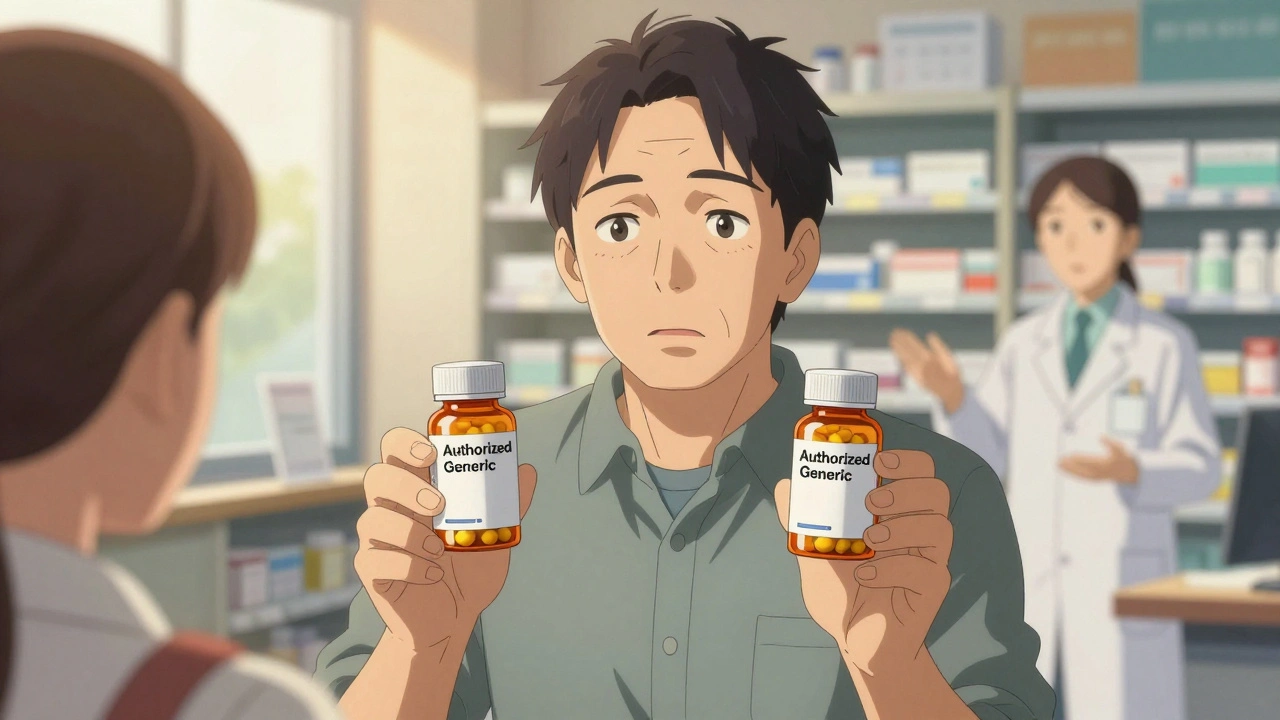
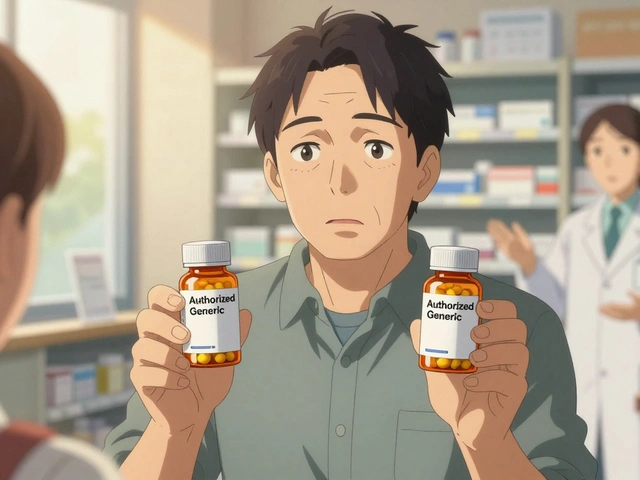
When your doctor suggests switching from your brand-name medication to a generic, it’s natural to feel unsure. What’s the difference? Will it work the same? Will you have side effects you didn’t have before? These worries aren’t just in your head-they’re real, and they happen every day. But there’s a type of generic that’s not like the others: the authorized generic. It’s the exact same drug, made by the same company, in the same factory, with the same ingredients. And for many patients, it’s the best way to save money without risking your health.
What Exactly Is an Authorized Generic?
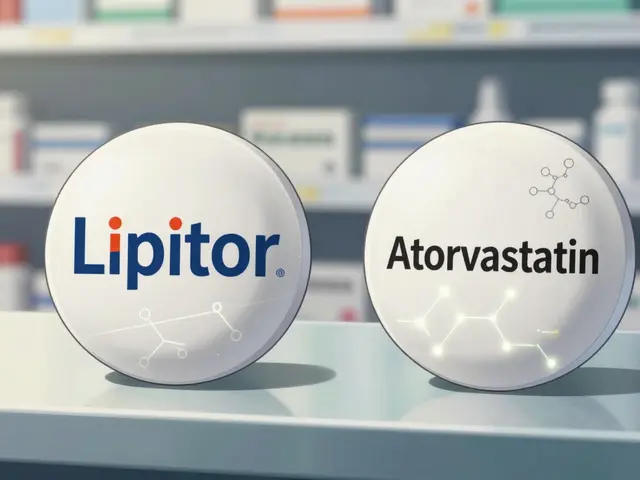
An authorized generic isn’t just another generic. It’s the brand-name drug sold under a different label. The same pills, same capsules, same liquid-same everything. The only difference? No brand name on the box. You get the same active ingredient, the same inactive ingredients (like fillers and dyes), and the same manufacturing process. It’s made by the original drug company, either directly or through a licensed partner. That’s why it’s called "authorized"-the brand company itself approved it.This isn’t the same as a regular generic. Regular generics must prove they’re "bioequivalent"-meaning they work about the same in your body. But they can use different fillers, coatings, or colors. For most people, that’s fine. But for some, those tiny changes cause real problems. Lactose, dyes, preservatives-things you might not even think about-can trigger reactions in sensitive patients. That’s where authorized generics step in. They remove that uncertainty.
Why Switch at All?
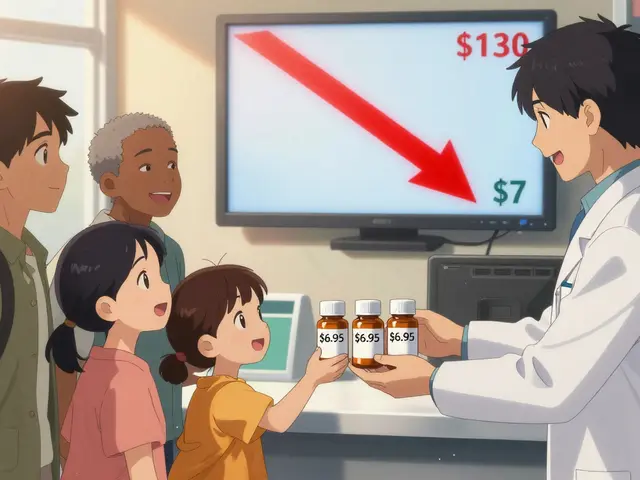
Cost is the biggest reason. Brand-name drugs can cost $300 a month. A regular generic might drop that to $30. An authorized generic? Often $20. The Federal Trade Commission found authorized generics cut retail prices by 4-8% and wholesale prices by 7-14% compared to when no authorized version exists. That’s not just a few dollars-it’s hundreds a year.But it’s not just about price. For patients on medications with a narrow therapeutic index-like blood thinners, thyroid drugs, seizure meds, or certain heart medications-the margin between the right dose and a dangerous one is tiny. Even small differences in how a drug is absorbed can lead to treatment failure or side effects. A 2023 FDA analysis showed a 28% lower rate of therapeutic failure when patients switched to authorized generics instead of regular generics for these high-risk drugs.
Real Patient Experiences
Sarah, 62, takes warfarin, a blood thinner. After switching from the brand to a regular generic, she started bruising easily. Her doctor couldn’t figure out why-her INR levels were fine. Then she switched to the authorized generic. The bruising stopped. "It’s the same pill," she said. "Just cheaper. Why didn’t anyone tell me this existed?"On Reddit, users in r/pharmacy report that 22% of patients who switch to regular generics come back because they say, "It just doesn’t feel right." Often, they can’t explain why. But when they switch to an authorized generic, those complaints drop by more than half.
But it’s not all smooth. One patient on Drugs.com wrote: "My insurance covered the brand but not the authorized generic. I paid $45 more a month for the exact same medicine." That’s the catch. Sometimes, insurance plans treat authorized generics as if they’re brand-name drugs-putting them on a higher cost tier. You have to check before you switch.
Why Authorized Generics Have Lower Switchback Rates
A 2021 study in the Journal of Clinical Pharmacy and Therapeutics found that 18.4% of patients switched back to their brand-name drug after trying a regular generic. Only 7.2% did the same after switching to an authorized generic. That’s a 60% drop in switchbacks.Why? Because patients don’t feel like they’re getting a different drug. The pill looks the same. The taste is the same. The way it works is the same. There’s no "I feel different" moment. That’s huge for chronic conditions. Asthma patients, for example, were 42% less likely to stop taking their medication when switched to an authorized generic versus a regular one, according to the Asthma and Allergy Foundation of America.
And it’s not just perception. The same study showed authorized generics led to a 34% reduction in adverse events for patients on narrow therapeutic index drugs compared to regular generics. That’s not a small number. That’s fewer hospital visits, fewer ER trips, fewer complications.
What’s Holding People Back?
Here’s the problem: most people don’t know authorized generics exist. A 2022 survey by the National Consumers League found 41% of patients had never heard of them. Even worse, 78% of pharmacists say their electronic health records don’t distinguish between authorized and regular generics. So if your doctor looks at your list, they might not even know which one you’re on.Availability is another issue. Only 37.5% of brand-name drugs with generics also have an authorized version. That means if your drug isn’t one of them, you’re out of luck. And even when they’re available, insurance coverage can be a mess. About 28% of commercial plans put authorized generics on the same tier as brand-name drugs, making them more expensive than regular generics.
The FDA is trying to fix this. Their 2023 draft guidance pushes for clearer labeling so patients and providers can tell the difference. By 2025, all authorized generics must have a label that makes it obvious they’re not just another generic. That’s a step forward.
How to Make the Switch-Step by Step
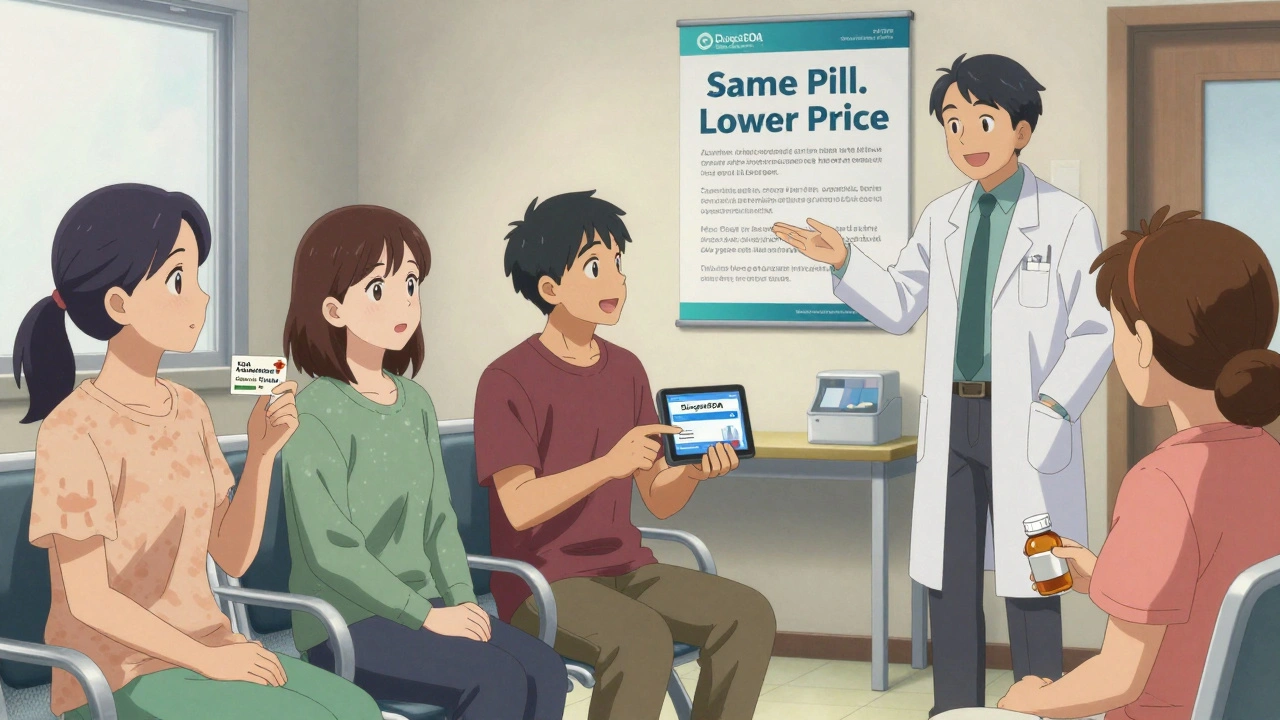
If you’re considering switching, here’s how to do it right:- Check availability. Go to the FDA’s Drugs@FDA database and search for your brand-name drug. Look for "Authorized Generic" under the listing. Or ask your pharmacist-they can check the Orange Book.
- Verify your insurance. Call your insurer. Ask: "Is the authorized generic covered at the same cost as the regular generic?" Don’t assume. Some plans charge more for it.
- Ask your doctor. Don’t just switch on your own. Get a new prescription marked "authorized generic" or "no substitution" if needed. Some pharmacists won’t switch unless the doctor specifies it.
- Get educated. Your pharmacist should show you the pill. Compare it to your old one. If it looks identical, that’s a good sign. Use the FDA’s patient materials-they’re free and clear.
- Monitor for 30 days. Even with identical ingredients, your body might react differently to a new manufacturer. Watch for changes in symptoms, side effects, or how you feel. Report anything unusual.
Most transitions take less than five minutes of counseling time because there’s less explaining to do. You’re not fighting myths about generics-you’re just moving from one version of the same pill to another.
The Bigger Picture
Authorized generics aren’t perfect. They’re not a magic fix. They don’t solve all the problems in drug pricing. And some experts warn that if brand companies control both the brand and the authorized generic, they might slow down competition from other generics. But for patients right now, they’re one of the few tools that give you the safety of the brand with the price of a generic.And the trend is growing. The U.S. authorized generic market hit $18.7 billion in 2022. Medicare Part D now requires plans to cover them at the same cost as brand-name drugs. More insurers are starting to follow. And the NIH is running a $2.8 million study tracking 5,000 patients switching to authorized vs. regular generics-results expected in late 2024.
For now, if you’re on a high-risk medication, or you’ve had bad experiences with regular generics, ask about the authorized version. It might be the quietest, most effective way to save money without sacrificing your health.
Are authorized generics the same as brand-name drugs?
Yes. Authorized generics contain the exact same active and inactive ingredients as the brand-name drug. They’re made in the same facility, using the same process. The only difference is the label. They’re not "similar"-they’re identical.
Why are authorized generics cheaper if they’re the same drug?
They’re cheaper because they don’t carry the marketing, advertising, and brand-building costs of the original drug. The manufacturer saves money by selling it without the brand name, and passes some of that savings to the consumer. Insurance companies also negotiate lower prices because there’s more competition.
Can I ask my pharmacist to give me the authorized generic instead of the regular generic?
Yes, but you need to ask specifically. Pharmacists often substitute the cheapest generic unless the prescription says "dispense as written" or "no substitution." Tell them you want the authorized version and confirm it’s available. Bring up the FDA’s Orange Book if they’re unsure.
Do insurance plans always cover authorized generics?
No. Some plans treat them like brand-name drugs and charge higher copays. Others put them on the same tier as regular generics. Always check with your insurer before switching. Medicare Part D now requires equal coverage, but private plans vary.
Are authorized generics available for all brand-name drugs?
No. Only about 37.5% of brand-name drugs with generic versions also have an authorized generic. It’s up to the original manufacturer to decide whether to launch one. Common ones include drugs for high blood pressure, cholesterol, depression, and asthma-but you have to check.
What if I feel different after switching to an authorized generic?
Even though they’re identical, your body might react to the new packaging, pill shape, or even the way it’s absorbed slightly differently. If you notice new side effects, worsening symptoms, or changes in how you feel, contact your doctor. Don’t assume it’s all in your head. It’s rare, but it can happen.
Is there a tool to find authorized generics?
Yes. The FDA launched the "Authorized Generic Finder" tool in 2023 within its Drugs@FDA database. You can search by brand name and see if an authorized version is listed. Your pharmacist can also access this through the FDA’s Orange Book.
What to Do Next
If you’re on a long-term medication and have ever thought, "I wish this was cheaper," or "I felt weird after switching," check if your drug has an authorized generic. Ask your pharmacist. Ask your doctor. Look it up. It might be the easiest way to save money without risking your health.And if you’re a provider? Start talking about it. Use the FDA’s patient materials. Update your EHR notes. Make sure your team knows the difference. Because for thousands of patients, the right generic isn’t just about cost-it’s about safety, consistency, and trust.


Comments
Look, I get it-authorized generics are the holy grail of pharmaceutical arbitrage, but let’s not pretend this isn’t just Big Pharma’s clever loophole to maintain monopoly pricing under the guise of "patient safety"-they make the drug, they control the supply, they dictate the narrative. The FDA’s "clarification" in 2025? A PR move. The 37.5% availability rate? A feature, not a bug. And don’t get me started on how insurers still treat them like brand-name drugs-because they’re *supposed* to. It’s not about cost savings-it’s about market control. I’ve seen this script before. And no, I’m not buying the "it’s identical" hype. The pill may look the same-but the system? It’s rigged.
Thank you for this incredibly clear, well-researched breakdown! I’ve been a pharmacist for 14 years, and I can’t tell you how many patients I’ve had come in saying, "I just don’t feel right on the generic"-only to have their entire life improve after switching to the authorized version. The inactive ingredients? They matter more than people think. Lactose intolerance? Dye sensitivity? Those aren’t "in their head"-they’re biological. And honestly, the fact that EHRs don’t even distinguish them? That’s a system failure. I now print out FDA Orange Book pages for every patient who asks. It’s worth the five minutes. You’ve just made my job easier-and more human.
So like, if I’m on warfarin, I should just ask for the authorized one? That’s it? No paperwork? No drama? Cool.
Hey, if you’ve ever felt weird after switching generics-like your body’s just… off-you’re not crazy. I used to think it was stress, or sleep, or my mood-but then I switched to the authorized version of my thyroid med, and suddenly I could breathe again. No more brain fog. No more heart palpitations. Just… normal. I wish someone had told me this before I wasted six months thinking I was broken. You’re not broken. The system just doesn’t care enough to explain the difference. But now you know. And that’s power. Go ask your pharmacist. Bring this post. They’ll thank you.
Oh, another American hyping "authorized generics" like it's some revolutionary breakthrough. LOL. In India, we’ve had generic equivalents for decades-no branding, no marketing, just chemistry. And guess what? We don’t need FDA-approved labels to know what’s in our pills. The real issue? You’re all addicted to brand-name psychology. A pill is a pill. If your body reacts differently, it’s not the filler-it’s your placebo dependency. Also, why are you paying $20 for something that should cost $2? The system is broken, not the generic. 🤦♂️
Just wanted to say-this is one of the most thoughtful, balanced pieces I’ve read on this topic in a long time. The stats are solid, the patient stories are real, and the step-by-step guide? Chef’s kiss. I’m a primary care doc, and I’ve been recommending authorized generics to high-risk patients for years-but I’ve never had a clear way to explain it to them. Now I can just send them this. Thank you.
hey i was just readin this and i think u forgot to mention that some authorized generics are made in the same factory as the brand but diff batch numbers so if u r allergic to a specific dye lot u might still have issues. also my cousin switched and got the wrong pill shape and thought it was the same but it wasnt. so maybe double check the imprint code on the pill? just sayin
There’s something deeply humane about this entire conversation. We’re talking about pills, sure-but what we’re really talking about is trust. Trust in your doctor, in your pharmacist, in the system that’s supposed to keep you alive. When a patient says, "It just doesn’t feel right," we dismiss it too often. But this? This is the rare case where the science backs up the feeling. And that’s powerful. We need more transparency-not more jargon. More labeling-not more assumptions. Thank you for giving us the language to talk about this.
Just had this exact conversation with my mom last week. She’s been on lisinopril for 12 years, switched to a regular generic, started getting dizzy, thought it was aging. We switched to the authorized version-poof, energy back. She cried. Not because it’s cheaper, but because she felt heard. That’s the real win here. It’s not about drug companies or insurance tiers. It’s about dignity. You deserve to feel like yourself on your meds. This isn’t just pharmacology-it’s compassion in pill form.
So let me get this straight: the pharmaceutical industry invented a "better" generic… that they themselves produce… so they can charge 20 bucks instead of 30… while still keeping the real generics at 5 bucks? Brilliant. The ultimate capitalism play: make the product identical, then sell it as premium because you’re the only one who can make it. I’m not mad… I’m just impressed. Someone’s doing a PhD on this. I hope they include a chapter titled: "How to Monopolize the Word 'Generic'".